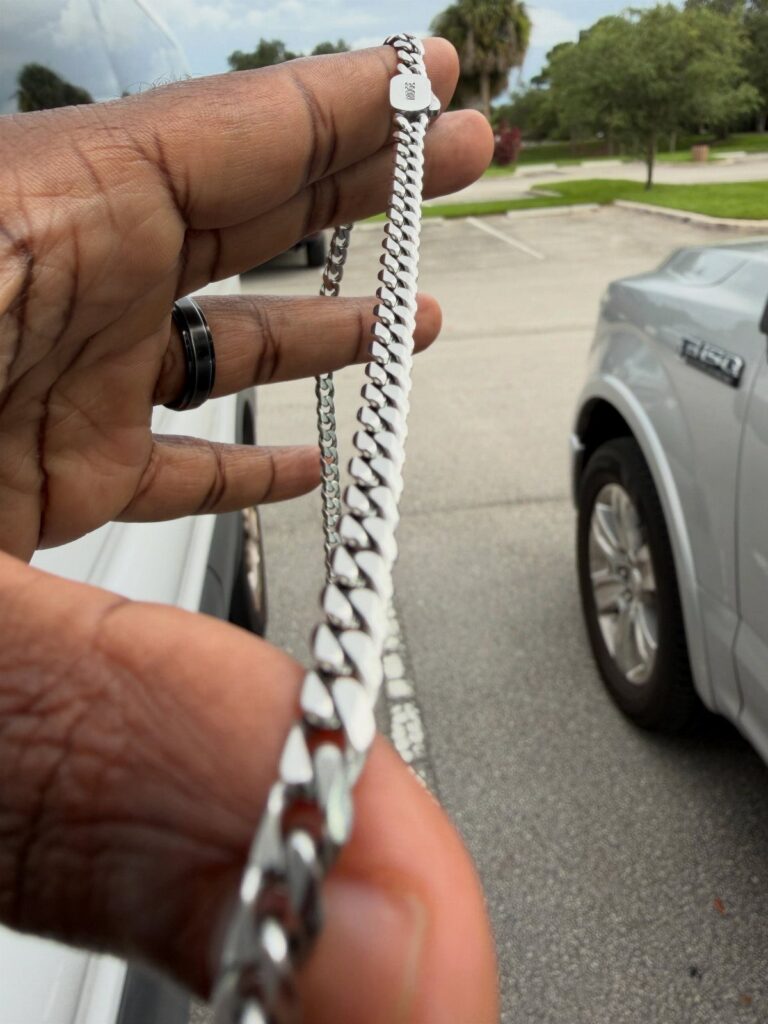
The chains here run from the plain cable, with small oval links that read as one clean line, to the dense, woven wheat or Byzantine, which carries the most weight and texture.
How much attention you want at your collar decides which one is yours: a quiet curb or cable suits a man who wants metal without detail, and a thick rope or Byzantine suits one who likes his jewelry noticed.
1. Curb Chain
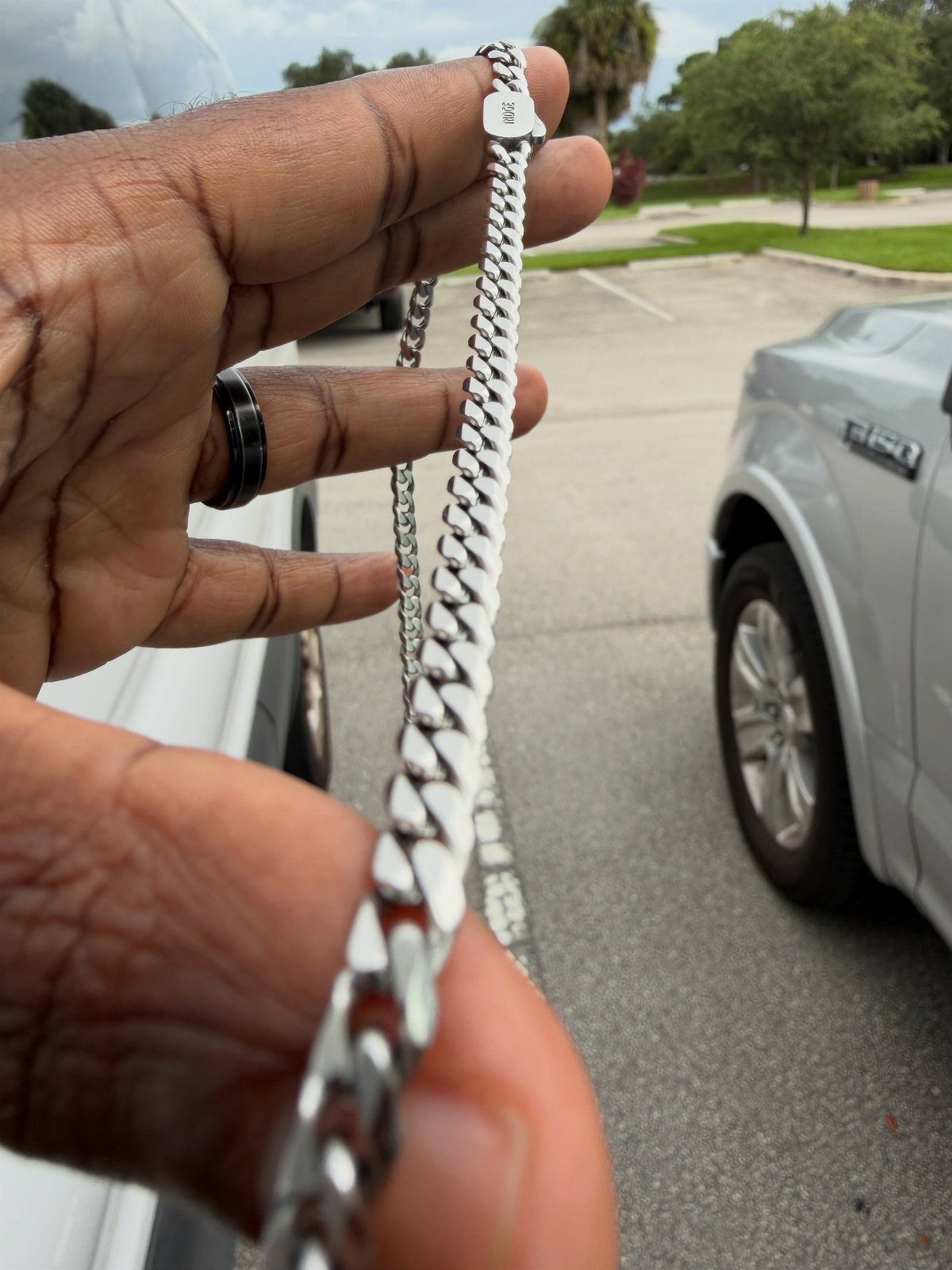
A curb chain is the one I would hand to a man who wants a single silver piece and no fuss. The flat, tightly interlocked links sit close to the skin and catch light in a bold, even line.
It works over a plain tee or under an open collar. If you pick a heavier width, let it be the only necklace you wear, since it already has presence.
2. Layering Silver Chains

Stacking several silver chains at different lengths turns a plain black jacket into something with texture. Keep the chains different from each other: one slim, one heavier, with a pendant on the longest so it hangs clear of the rest.
Start with two and add a third only when they lie flat without tangling. A leather jacket or a plain tee gives them room to read.
3. Rope Chain
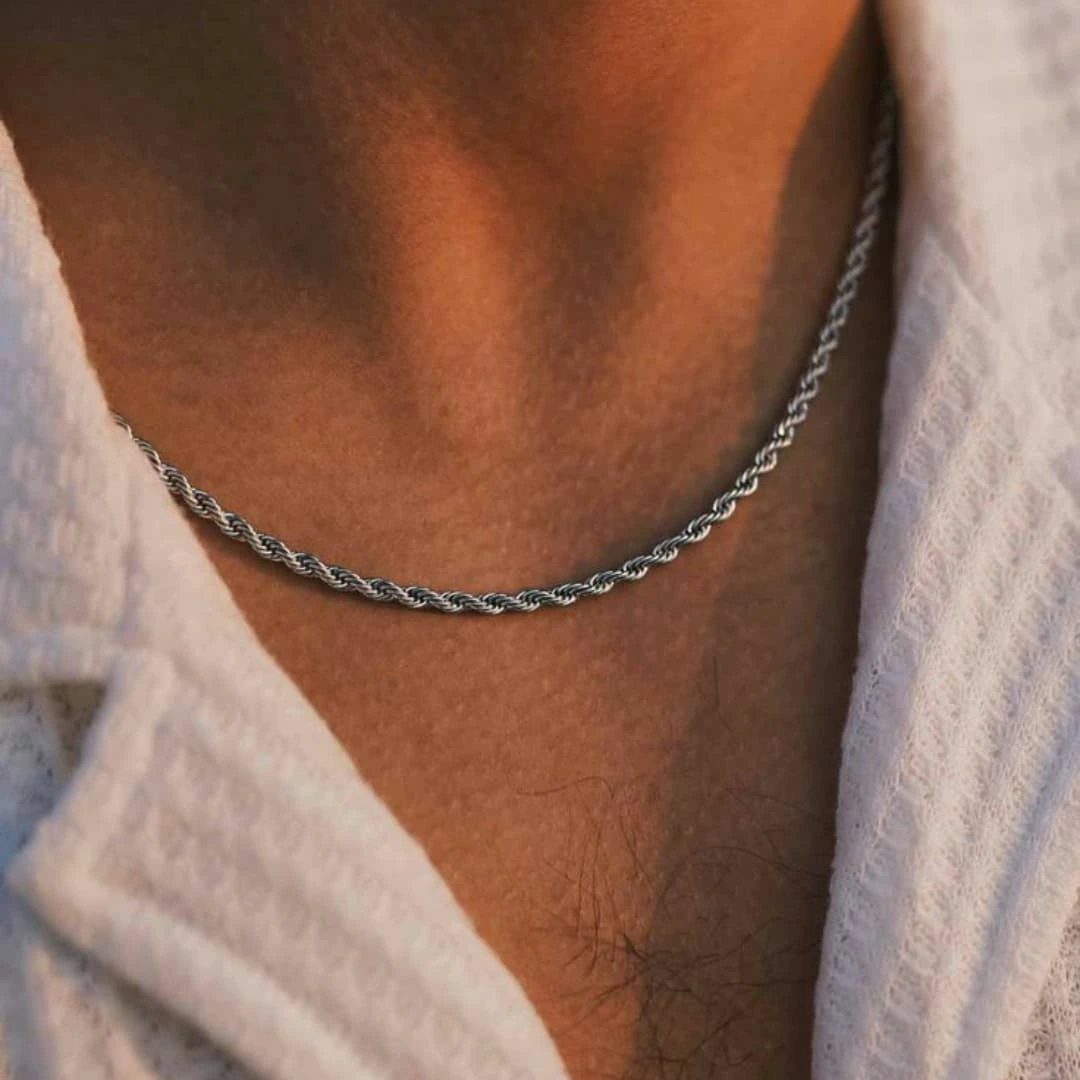
Twisted links give a rope chain its look: it reads as braided metal, and the surface throws light in tiny ridges. Against a white textured shirt, that sparkle is the whole effect, so I would keep the clothes quiet.
Choose rope when a smooth curb feels too plain but you still want one clean line at the collar.
4. Figaro Chain
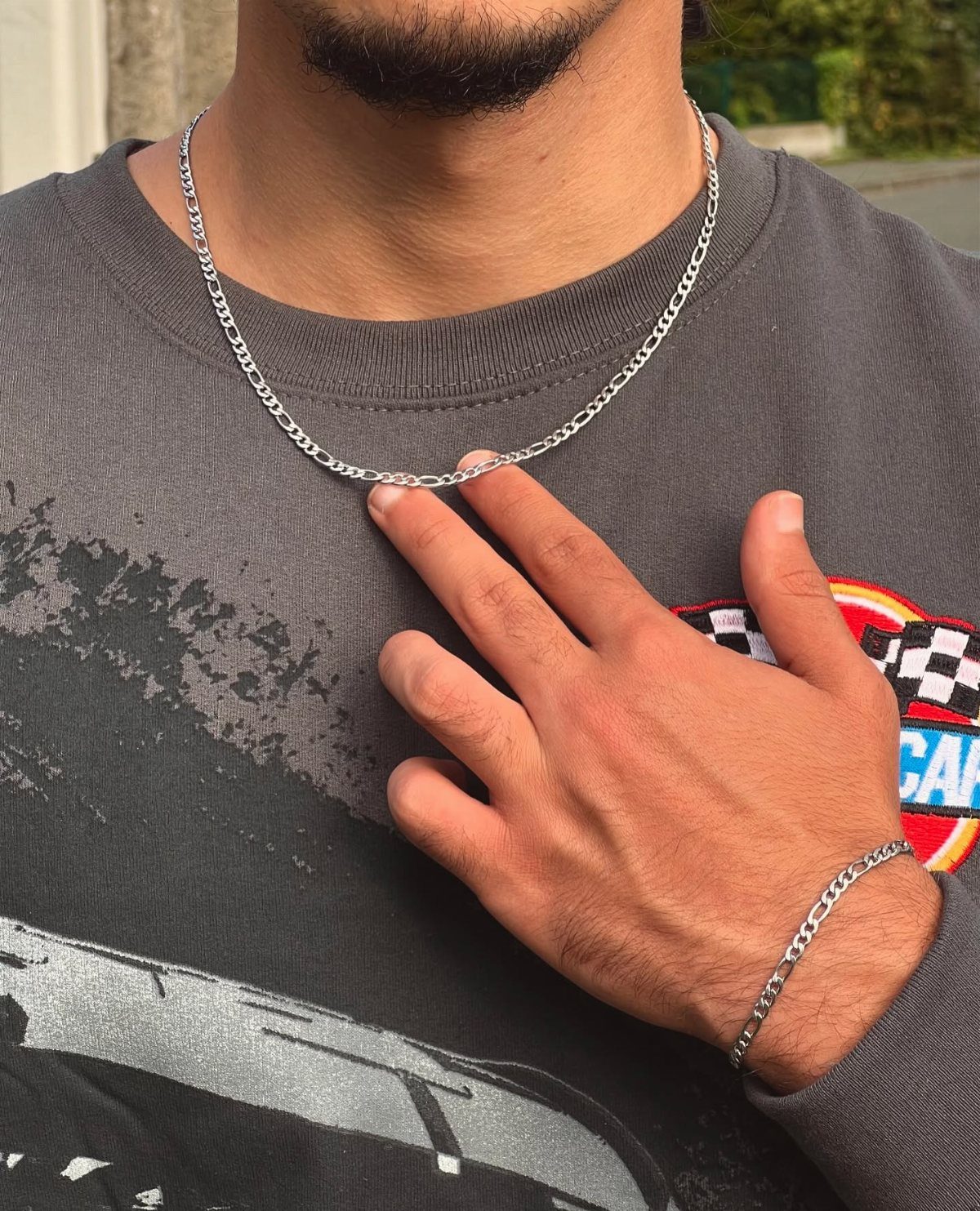
Long links followed by short ones set the Figaro apart, and that rhythm gives it a relaxed, slightly vintage feel. Few chains look better on a casual sweatshirt.
I like wearing a Figaro necklace and a matching bracelet together, since the repeated pattern ties them into one set. Buy both in the same width so they look planned rather than coincidental.
5. Franco Chain
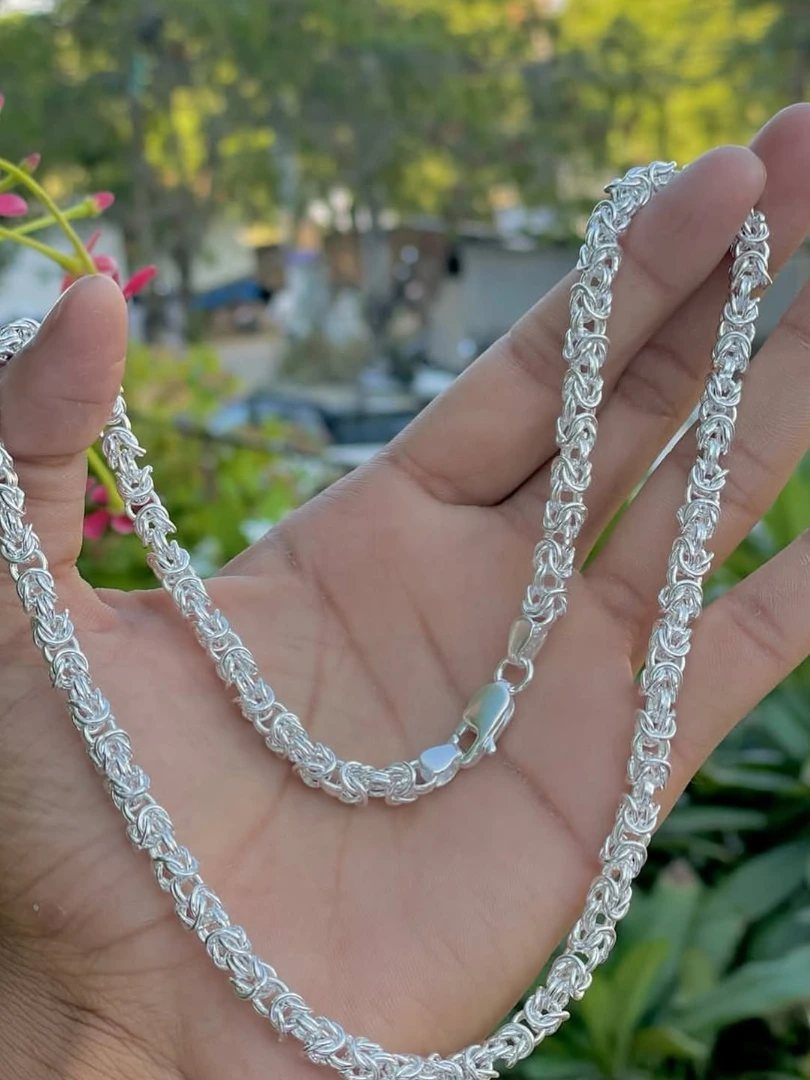
Franco is the chain for a man who wants texture without the busyness of rope. Its V-shaped, four-sided links pack together into a square, braided-looking surface that feels modern and sharp.
It suits solid tees and sweatshirts best. Skip a pendant, because the chain’s own pattern does the talking.
6. Wheat or Byzantine Chain
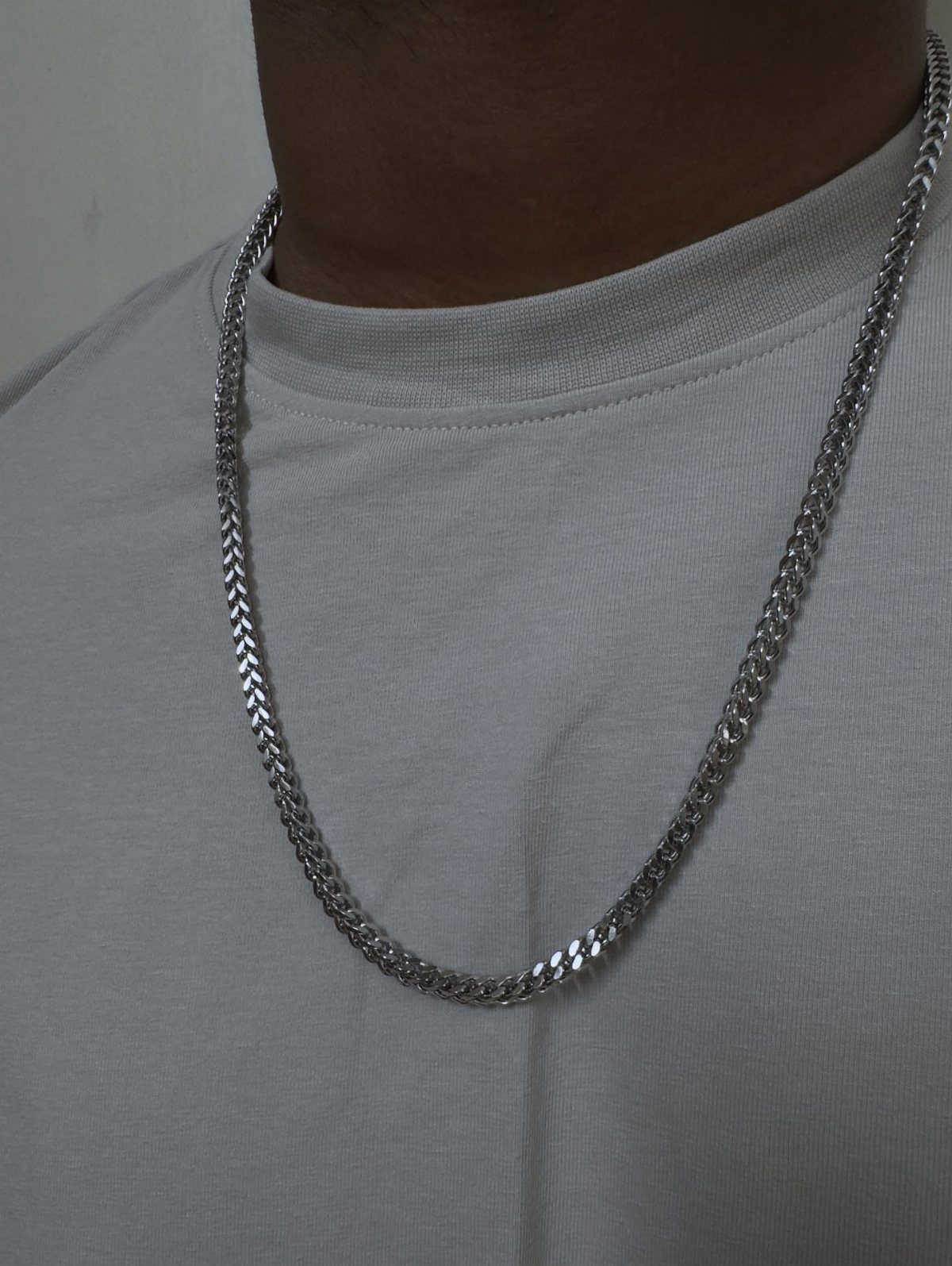
A wheat or Byzantine chain looks dense and woven, closer to a piece of fabric than a string of links. Thick, it makes a statement over a plain light tee, and the shirt should stay simple to let it.
This is the one I would call heaviest in look, so wear it alone. It suits a man who likes his jewelry noticeable.
7. Cable Chain in Jewelry Box
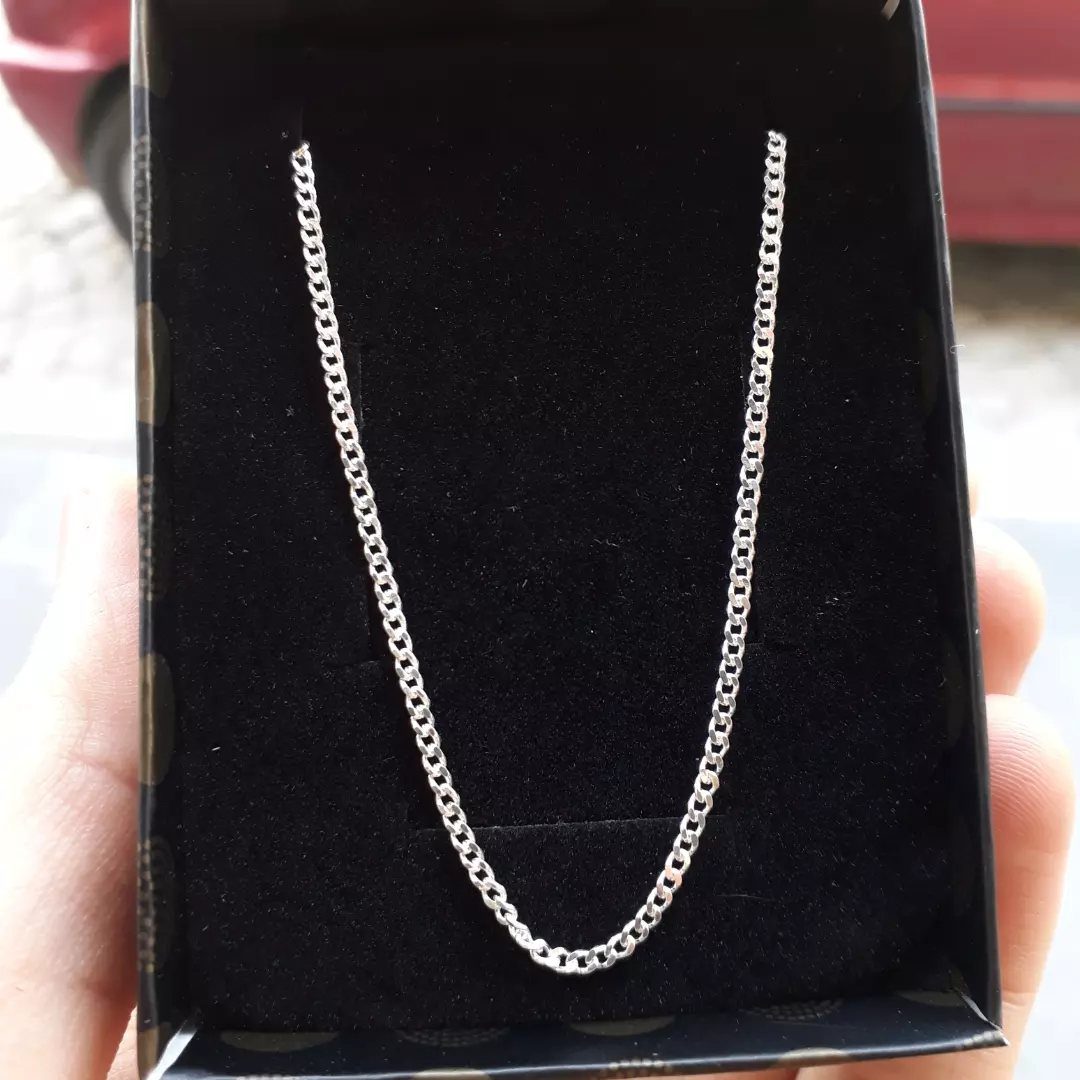
Small oval links, each one looped through the next, give a cable chain its plain, even look. Nothing twists or stacks, so the silver reads as a clean line, the quiet option when you want metal without detail.
Because the links are simple, it pairs with almost any collar and takes a pendant well. Keep it in a lined box like the black velvet one here, so the silver stays apart from other pieces and doesn’t tangle.
Caring for Sterling Silver Chains
Chemicals are what turn silver dull fastest, so take the chain off before cleaning, swimming or a workout. Sweat and pool water both speed up tarnish.
After wearing it, wipe the chain with a microfiber cloth. Then put it in a cloth pouch, and slip the pouch inside an airtight bag for extra protection.
If tarnish does show up, a home fix works. Drop the chain into a foil-lined bowl with hot water and a spoonful of baking soda, then pull it out after 3 minutes.
A soak in lemon juice, vinegar and water also works. Skip the Coca-Cola trick; it’s more novelty than method.
A little darkening isn’t a disaster. Light patina can look good, especially in the recesses of a textured chain.
Benefits of Sterling Silver
Sterling silver is marked 925, meaning 92.5% silver. The other 7.5% is usually copper or another harder metal, and that blend is what makes the chain stronger and longer lasting than soft pure silver.
That strength is why I’d pick it for a chain you plan to wear often. It handles daily use without much damage, and it costs less than pure silver.
Sensitive skin is the other reason. Nickel, found in some cheaper metals, can cause allergic reactions, so sterling is the safer choice if you’ve reacted to jewelry before.
Check for the 925 stamp near the clasp before you buy.
The ‘925’ refers directly to the percentage (92.5%) of actual silver element contained in the metals alloy. This remaining 7.5% is most often taken up by harder elements like copper, which bolster silver’s relatively softer composition, giving a stronger and longer lasting piece of jewelry.
— GQ
Common Misconceptions
Sterling silver is real silver.
Sterling contains other metals because pure silver bends and scratches too easily to hold up as jewelry. The alloy is the point.
The other myth is that sterling tarnishes quickly. It doesn’t need heavy-duty cleaning the way copper or cast iron does; regular polishing keeps tarnish down.
So buy it without worry, and wear it often. A chain that gets worn and wiped regularly stays brighter than one left sitting in a drawer.