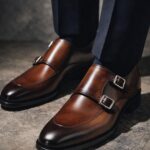
The boots here run from a soft-soled brown suede desert boot that suits weekends and casual offices to a black leather harness boot with buckled straps that belongs to evenings, with chelsea, captoe and balmoral styles filling the dressier middle.
How formal your week is decides which pair is yours: if you need one boot for the office and Saturday both, pick a mid-height leather style like the chelsea or captoe, and save suede and work boots for the days you can dress them up or down on purpose.
1. Chelsea Boot
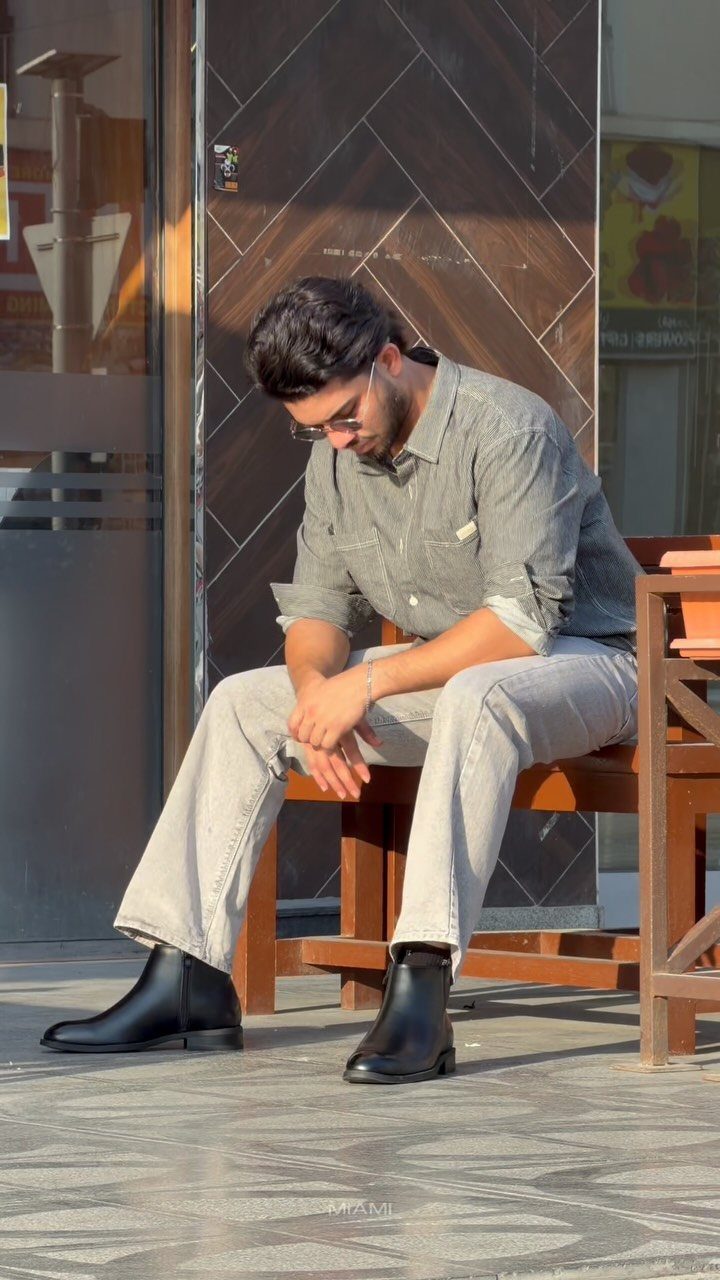
Black Chelsea boots are the quickest slip-on in this list: no laces, a sleek leather upper, and nothing to fuss with at 7 a.m. Pull them on and the outfit is done.
Against light trousers, the black gives a clean contrast, so a plain button-down is all you need above. I’d keep the trousers slim enough that the hem sits right at the top of the boot instead of bunching over it.
Black reads sharper than brown here, and it suits a minimal wardrobe well.
2. Work Boot
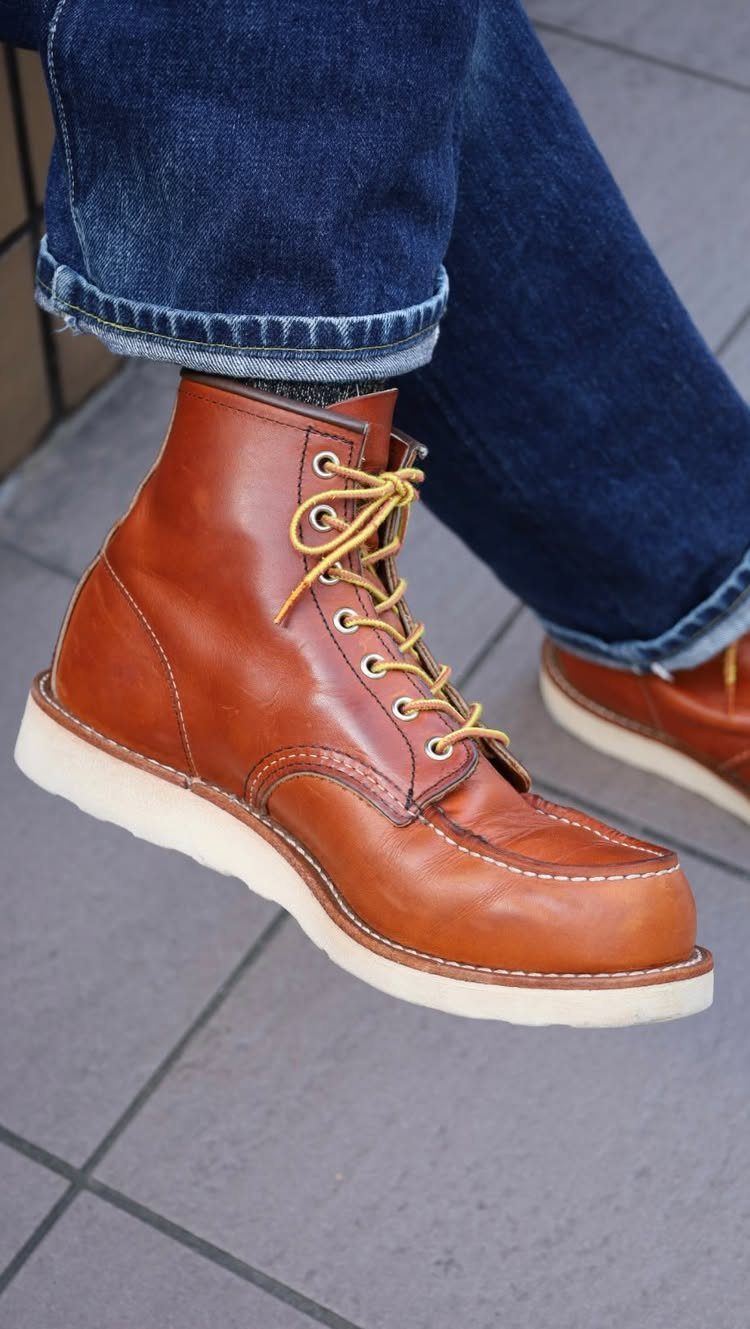
Tan leather lace-ups with white soles are what a work boot looks like when it’s meant to be worn every day. They’re built for tough conditions, and the pale sole keeps the look lighter than an all-black pair.
Cuffed blue jeans are the right partner. A single cuff, sitting above the boot, lets the leather and the sole show without looking staged.
Wear them with a plain tee or a flannel and leave it there. The boot already carries the outfit, and anything fussier fights it.
3. Chukka Boot
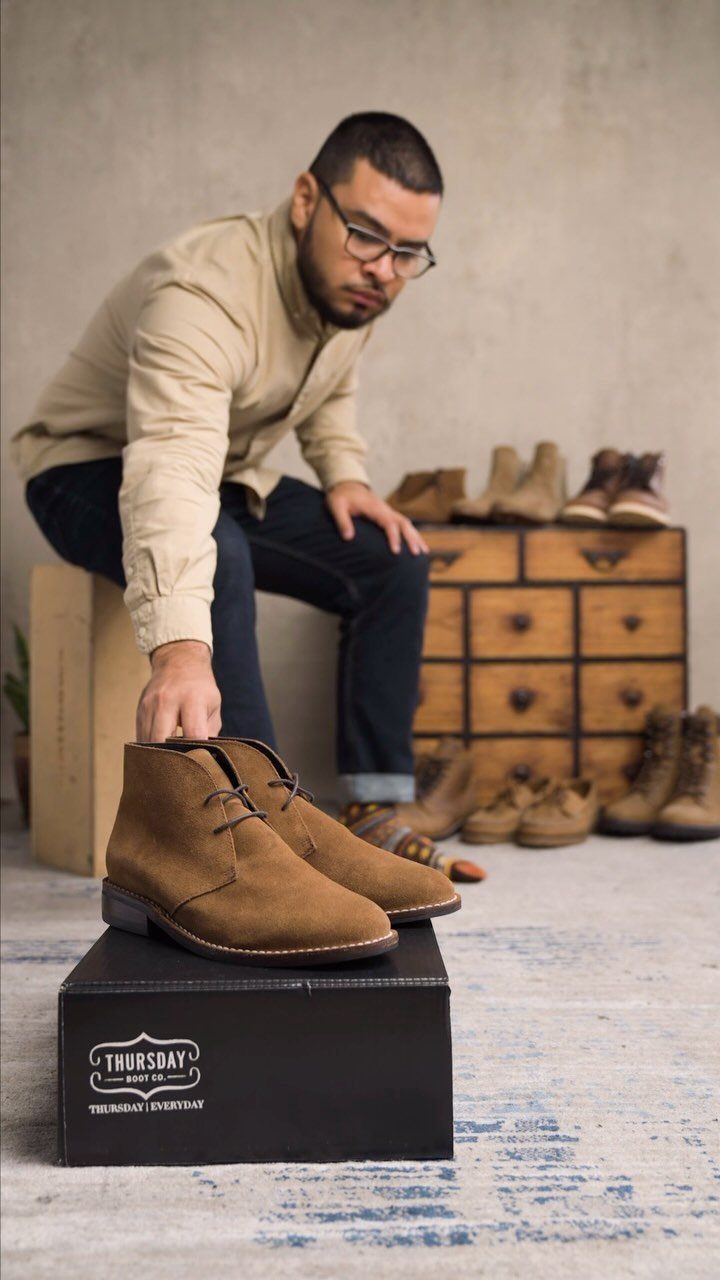
Short laces and an ankle-high cut make the chukka the easiest boot to wear with dark jeans.
Brown suede keeps it casual and warmer in tone than black leather, and it pairs well with a tan shirt or any earth color.
I’d pick brown over anything flashier for a first pair, since it works with navy, grey and olive alike. Suede does mark easily, so a brush and protective spray are worth buying with the boots.
Thursday Boot Co. is one brand making them, if you want a name to start from.
4. Desert Boot

Flexible gum soles give the desert boot its relaxed feel, and its military roots explain the plain, uncluttered shape. Brown suede with khakis and a light blue shirt is about as easy as dressing gets.
Pick it for weekends, walks and casual offices where a leather dress boot feels like too much.
The soft sole makes it comfortable from the first wear, but it’s a casual boot, so don’t expect it to pass at a formal event.
Keep the pants slim and slightly cropped, so the boot gets seen.
5. Captoe Boots
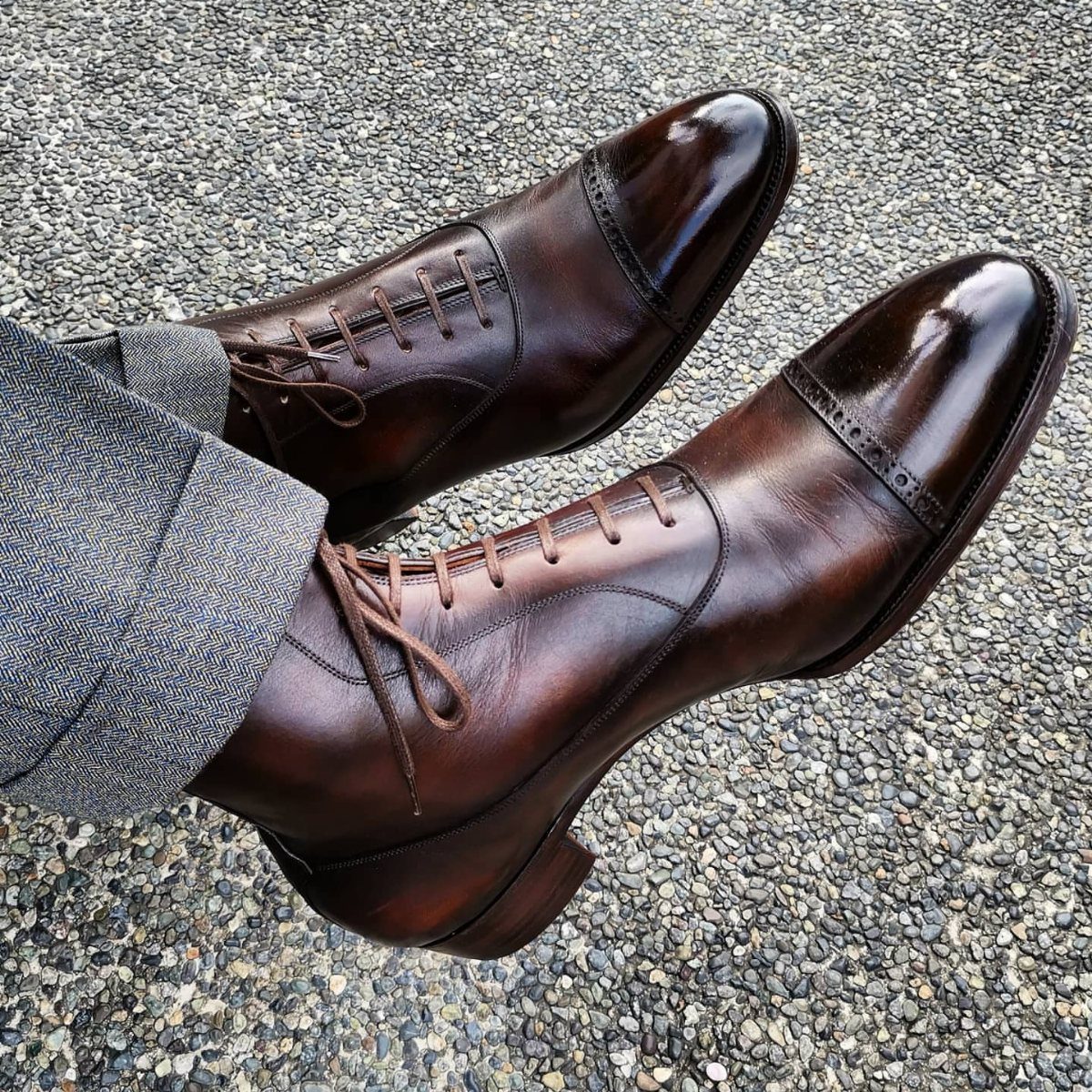
A captoe boot sits at medium height and moves between dressy and casual better than most.
The toe cap is a simple stitched panel, so the boot looks tidy without shouting. That makes it a good choice if you want one pair to cover work and weekends.
Choose brown leather first. It goes with grey, navy and denim, and a shine takes it dressier in a minute.
6. Wingtip Boot
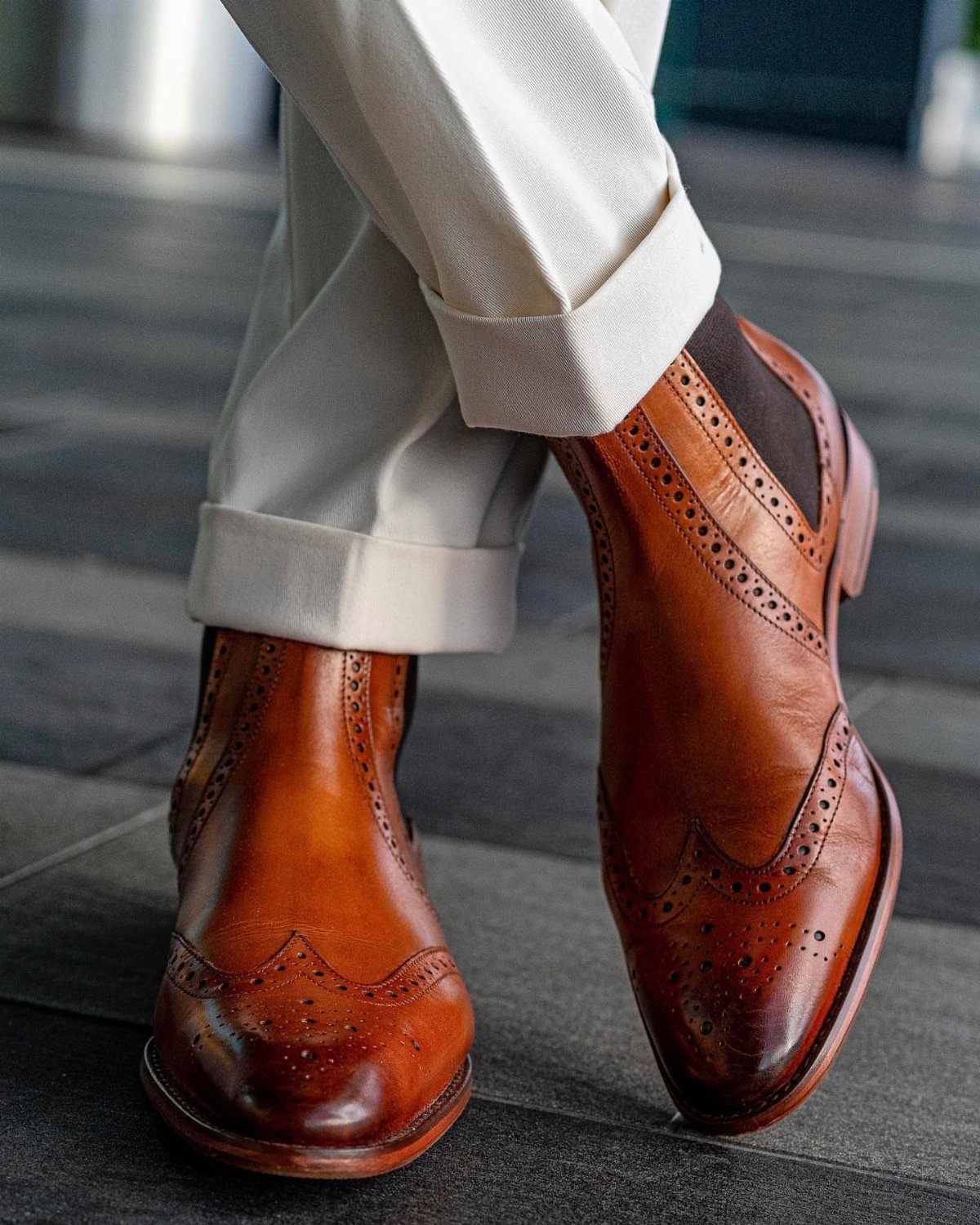
Wingtip boots take the brogue’s decorative perforations and put them on a dress boot. Tan leather with that detailing already has plenty of texture, so keep everything else quiet.
A cuff should land just above the boot’s top edge.
This is the dressiest look of the bunch, though the busy toe means it won’t suit a minimalist wardrobe. Wear it when you want the shoes to be noticed.
7. Brogue Boot
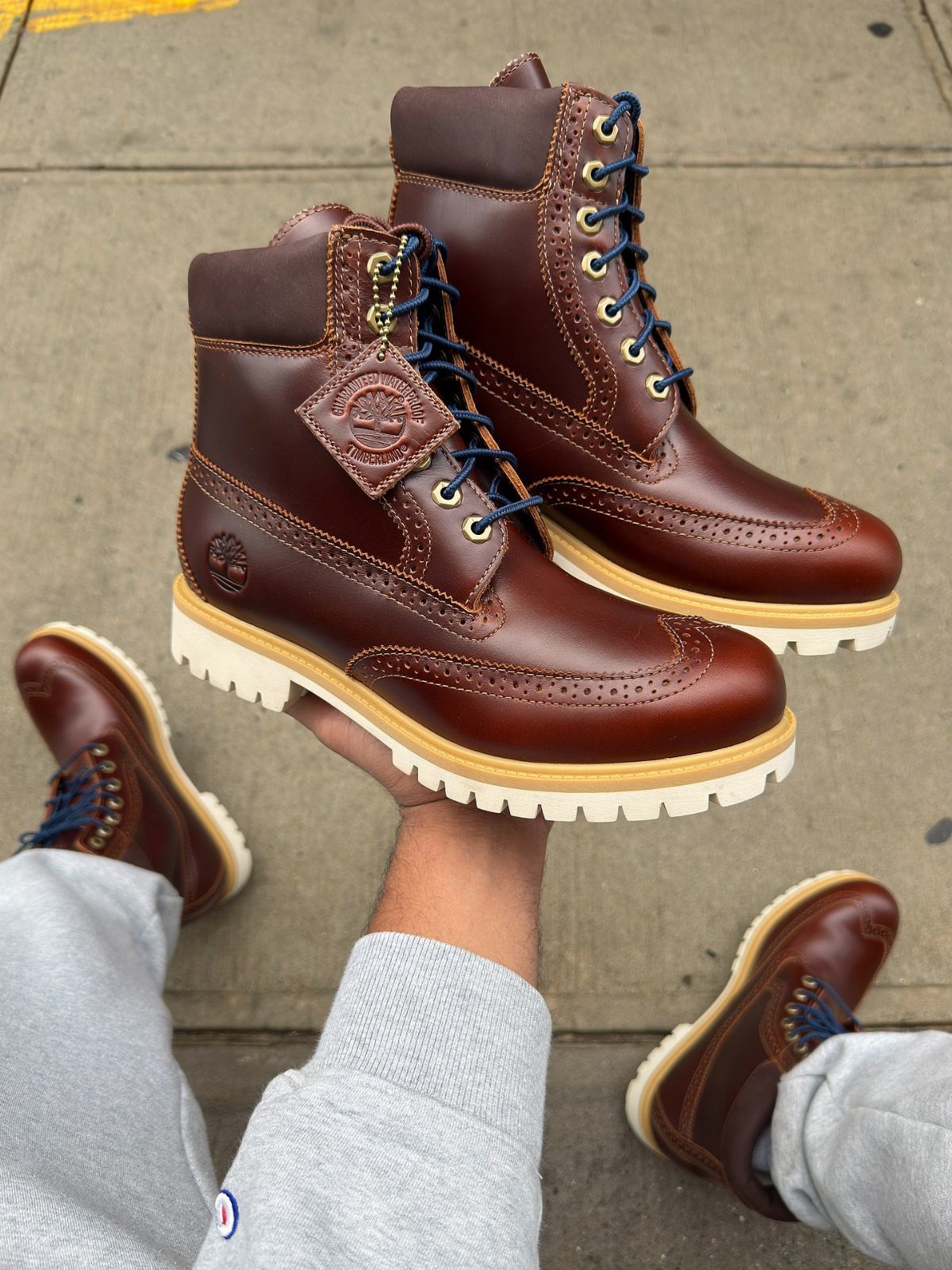
A brogue boot takes the oxford’s neat lace-up front and puts it on a boot. Brown leather with blue laces and white soles keeps that dressier shape from getting stiff.
Grey pants suit it well, since the laces and soles become the only color in the outfit. I’d keep the rest plain and let the laces do the talking.
Blue laces are an easy swap if you’d rather tone it down.
8. Cowboy Boot
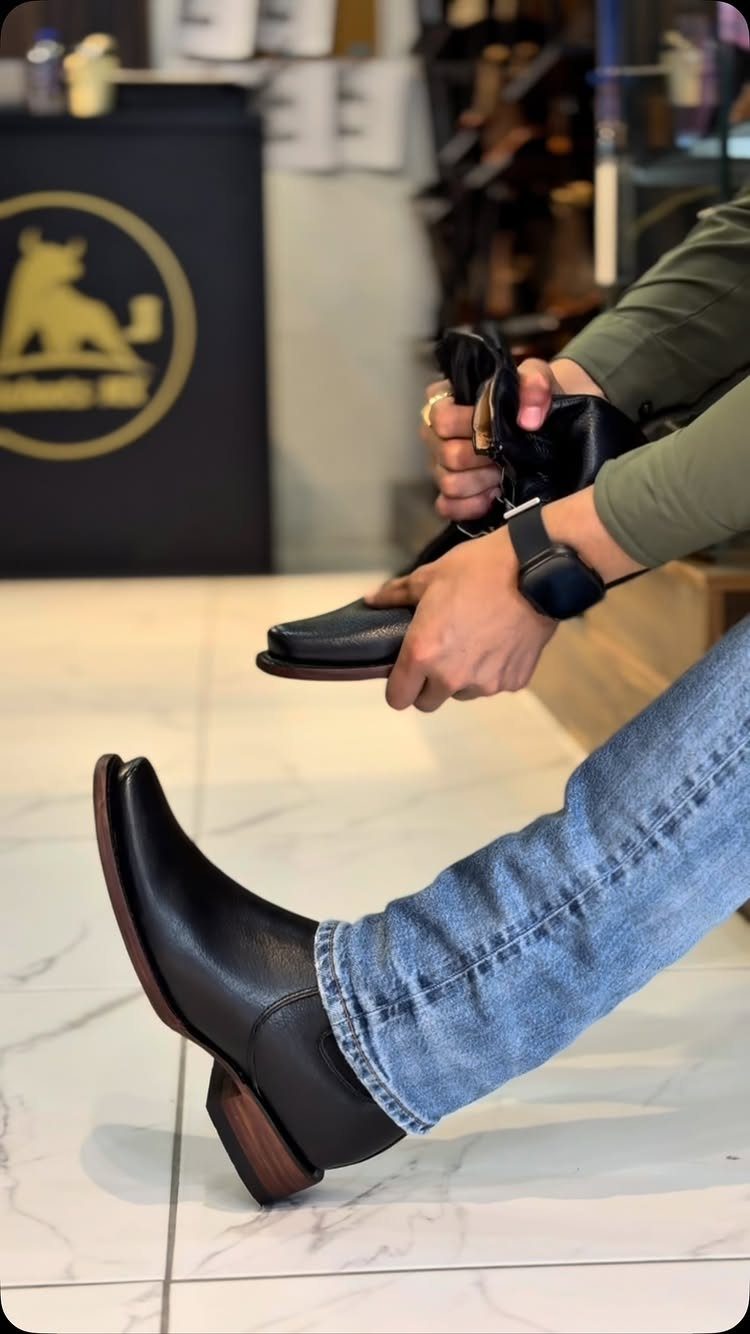
Pointed toes on black leather give the cowboy boot its sharp, Western outline, and the style has a long history behind it.
Wear the jeans over the boot shaft so the hem falls cleanly and the toe still shows. A plain tee or denim shirt is plenty above.
Black is the easiest color to wear for a first pair. Skip the fancy extras and let the shape do the work.
9. Rocker Boot
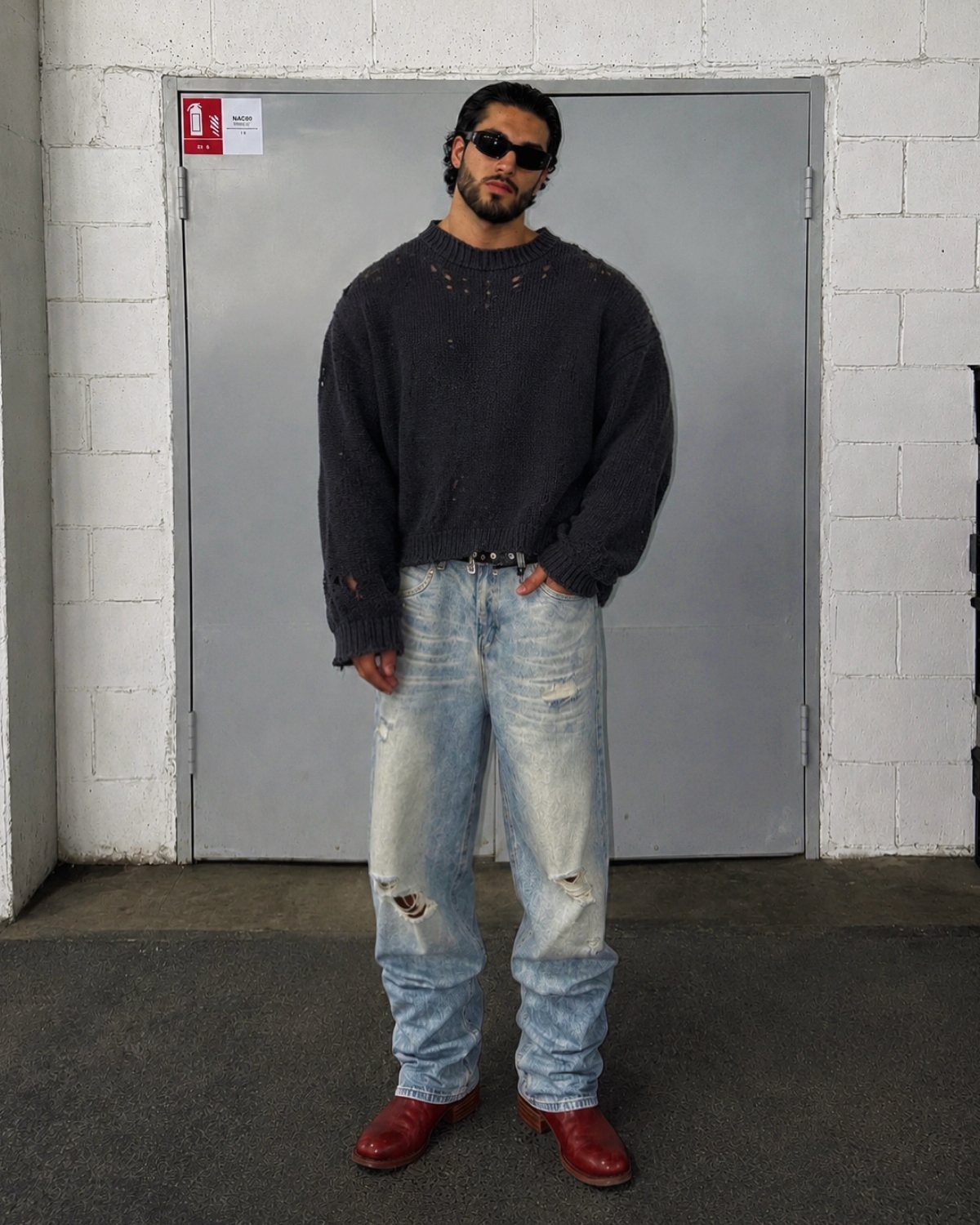
Ripped light-wash jeans and an oversized sweater lean into the rock attitude without needing hardware. The warm boot color is what stands out against all that faded, loose fabric.
Keep the sweater and jeans in muted tones, as grey and light denim do, so the boots lead. I like this look for casual days when you want some edge without a costume.
Distressed jeans are the one risk: they’re loud, so don’t add a second statement piece.
10. Harness Boot
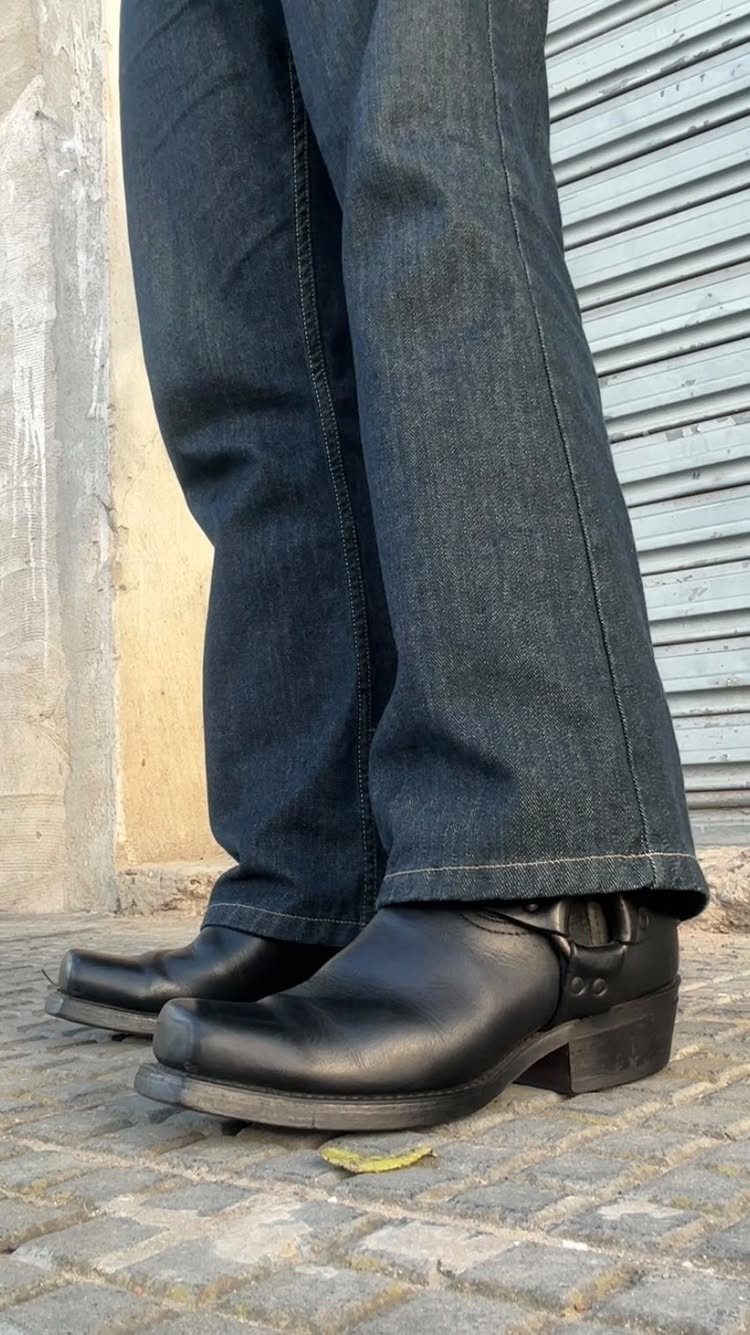
Black leather with buckled straps gives the harness boot its tough, riding-boot character, and it was designed for durability.
I’d wear the jeans straight and let them rest over the top of the boot. A plain tee or dark jacket keeps the outfit simple.
It’s a heavy-looking boot, so pick it for evenings and weekends rather than a quiet office.
11. Balmoral Boot
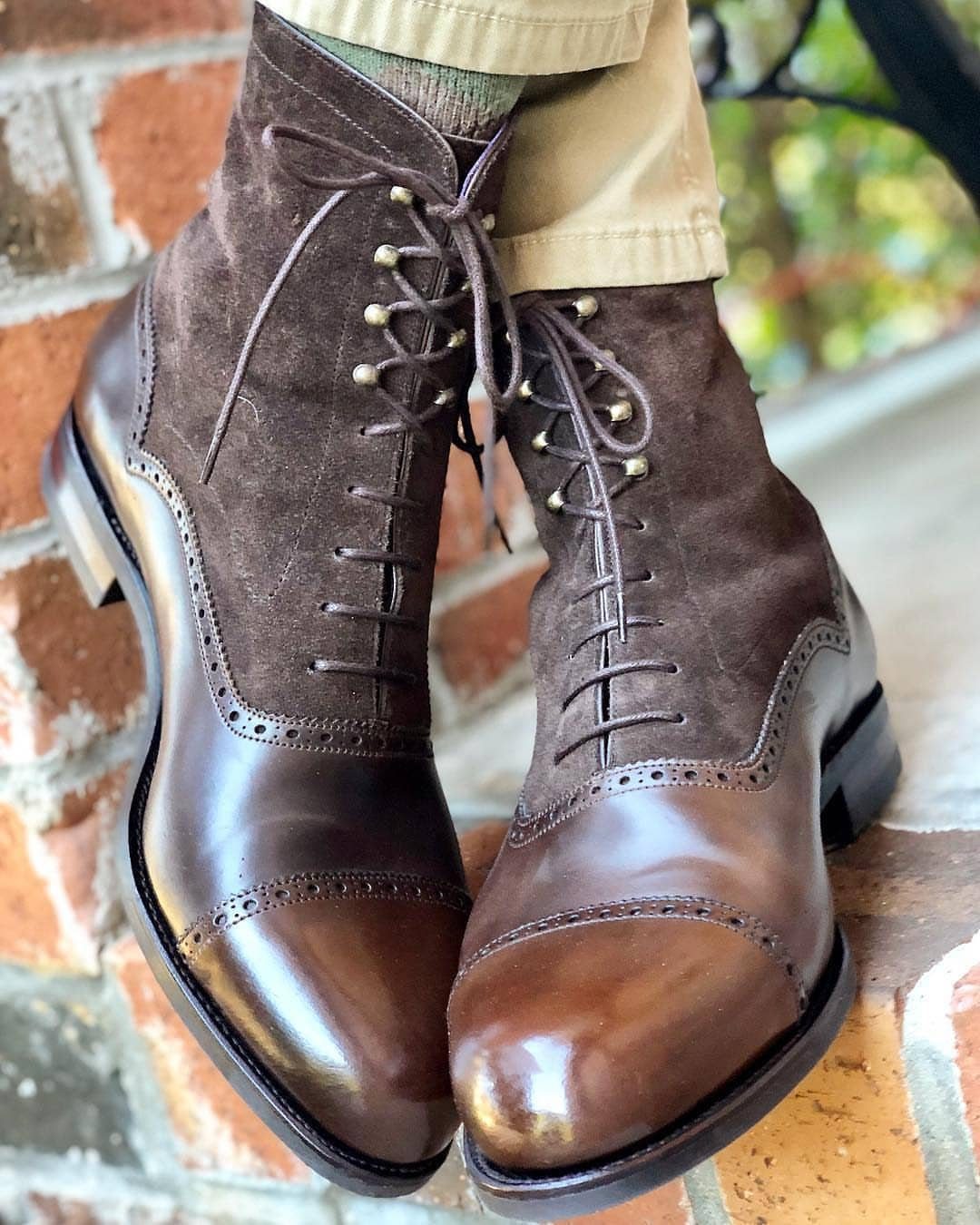
Brown leather paired with suede panels makes the Balmoral boot a dressier stand-in for a dress shoe, and the mix of textures adds interest without any loud detail. Khaki trousers are an easy match.
Add a light shirt and a navy or grey jacket, and the outfit reads polished without much work. I prefer the two-texture version over plain leather, since it looks richer.
Suede marks easily, so a protective spray helps if you plan to wear them often.
Choosing the Right Materials
Leather is the safest upper for most men. Full-grain and nubuck are the grades to look for, because they’re tough, age well, and keep your feet dry when the weather turns.
Suede has a softer hand and a richer texture, but it stains more easily and needs regular brushing. If you rarely brush a pair of shoes, buy leather.
Check the outsole before you buy. Rubber or Vibram soles give you traction on wet pavement and slick floors, and a smooth leather sole will not.
For a boot you plan to wear several days a week, pick leather with a rubber or Vibram sole. Save the suede for dry days and a second pair.
Versatility of Boots
Plenty of boots work across a week that runs from the office to the weekend. The skill is choosing a pair that handles both, so you buy once instead of twice.
Look at the profile first. A classic dress-boot shape looks right with jeans and with dressier pants, which is why it can go to concerts, dinners and weddings.
Construction matters too. A Goodyear welt, and the toe stitching on some Tecovas pairs, give a boot a finished look that reads as dressy without extra effort.
Chelsea boots are the clearest example of this range. They go back to the Victorian era, when one was designed for Queen Victoria herself, and they work for a Monday-to-Friday job and then relax for the weekend.