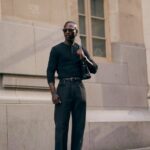
Formality decides which boot you reach for: the styles here run from dressy dress boots and monk-straps down to combat and motorcycle boots that belong with jeans and a tee, so match the boot to everything else you’re wearing before anything else.
Finish moves a pair along that scale too: a matte or burnished full-grain leather reads casual, and a high shine pushes the same shape back toward dressy, which matters most on dress boots, brogue boots and monk-straps.
1. Chelsea Boots
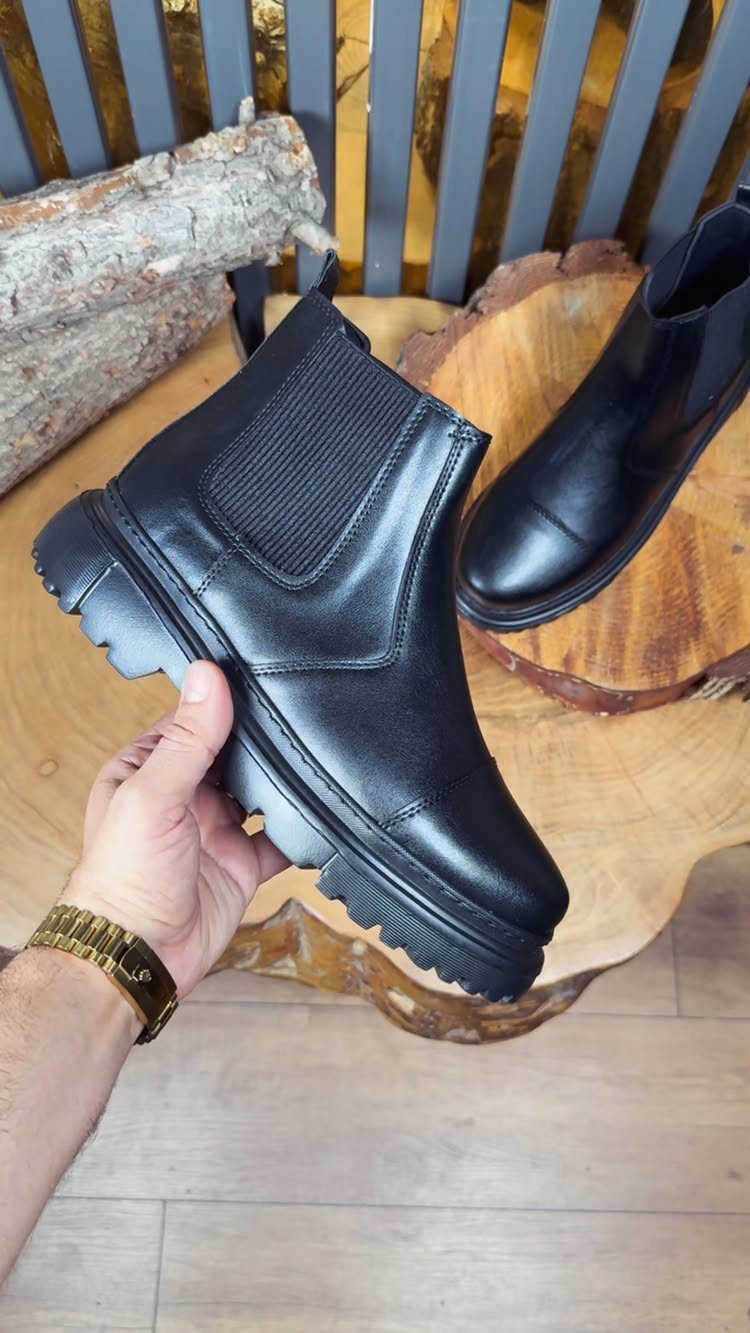
A chunky sole changes the whole character of a Chelsea. The slim, dressy version sits under a suit, while this heavier black one reads as streetwear and holds up under jeans or work pants.
Black leather is the easiest color to wear with dark denim, grey trousers and charcoal knits.
2. Chukka Boots
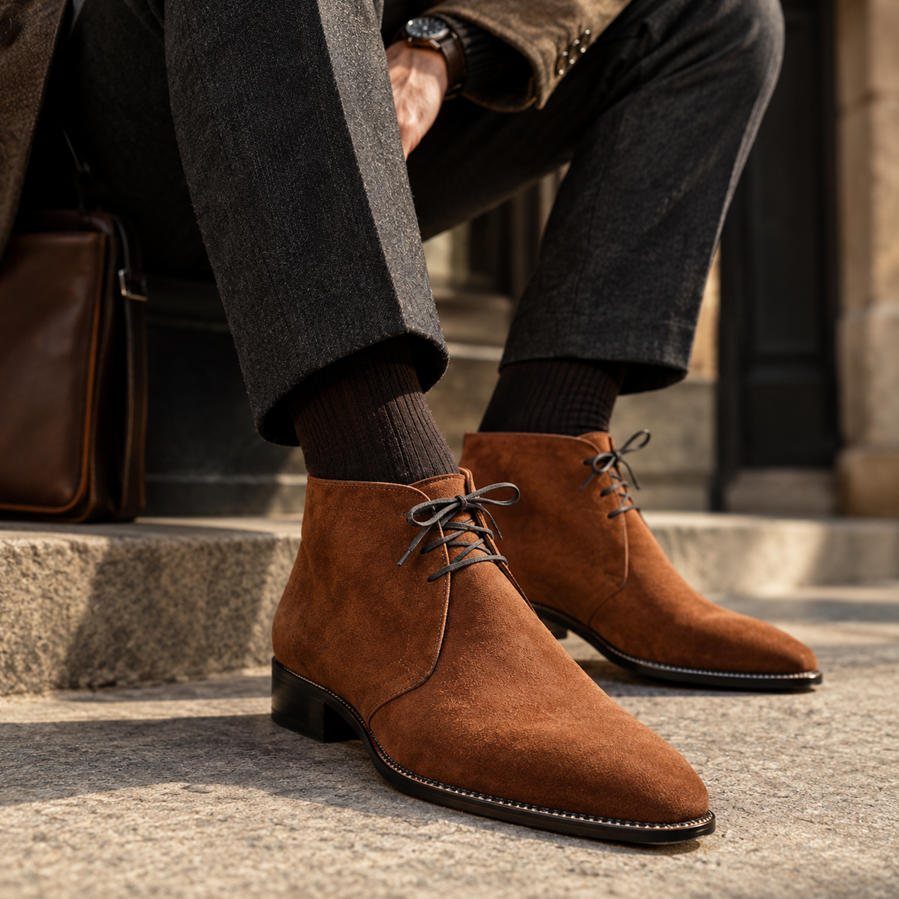
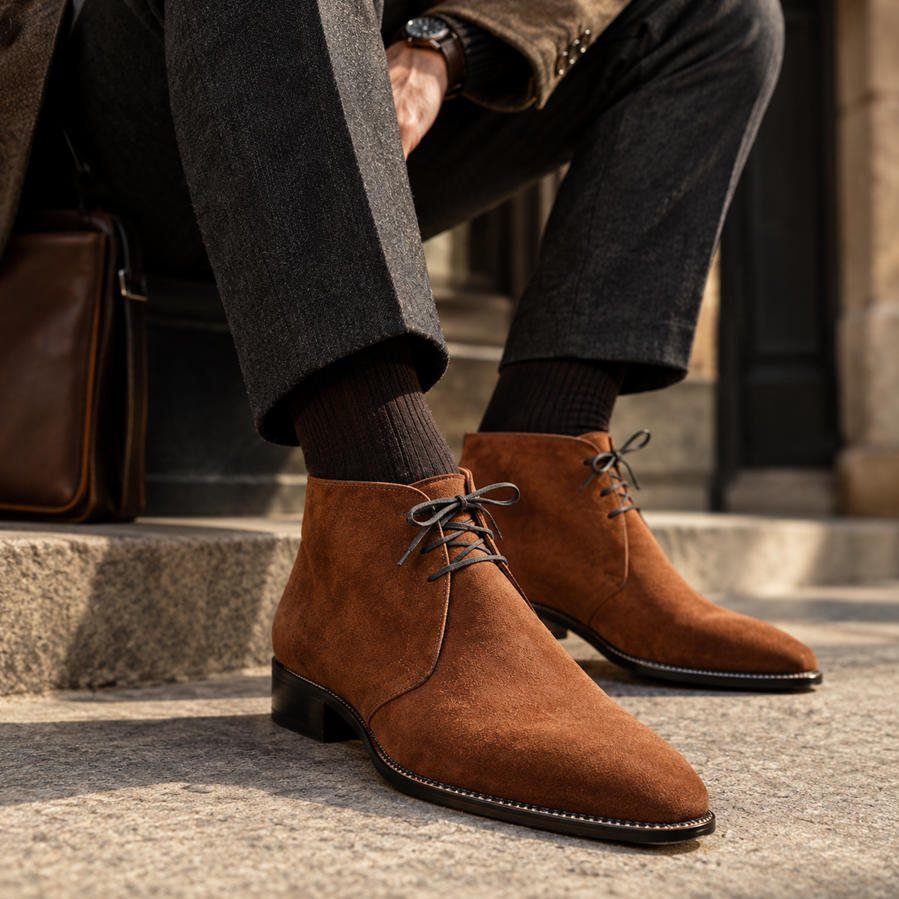
Brown suede and grey trousers is a pairing I trust on almost any weekday. Chukkas stop at the ankle and use open lacing, which makes them looser than a dress boot and tidier than most sneakers.
Matching the socks to the trousers or the boots keeps the line from ankle to shoe quiet. Dark grey, chino tan or navy pants all work, and a leather bag in the same brown ties it together.
Suede marks easily, so a suede brush is worth owning.
3. Casual Boots for Everyday Wear
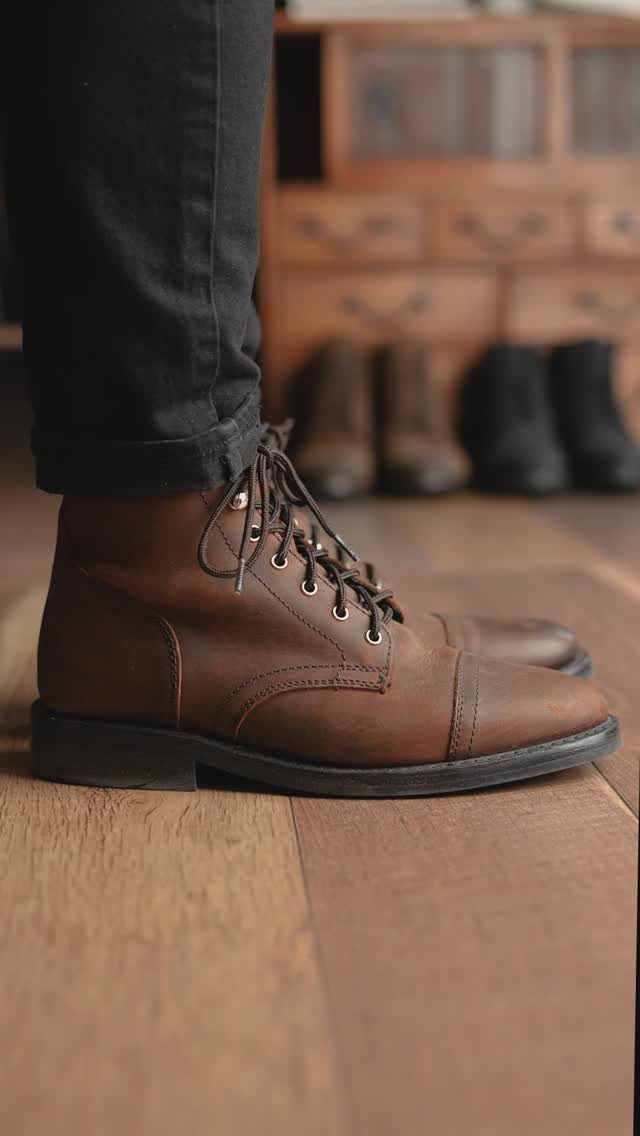
Cap-toe leather boots with a lace-up front are the pair I’d tell most men to buy first for daily use. They sit between a dress shoe and a work boot, so they cover both an office day and a weekend.
Cuffed black pants show off the boot shape, so roll the hem once or twice and let the toe do the talking.
Brown leather goes with dark denim, grey wool and olive chinos, which keeps the outfit to a few pieces that mix.
4. Western Boots
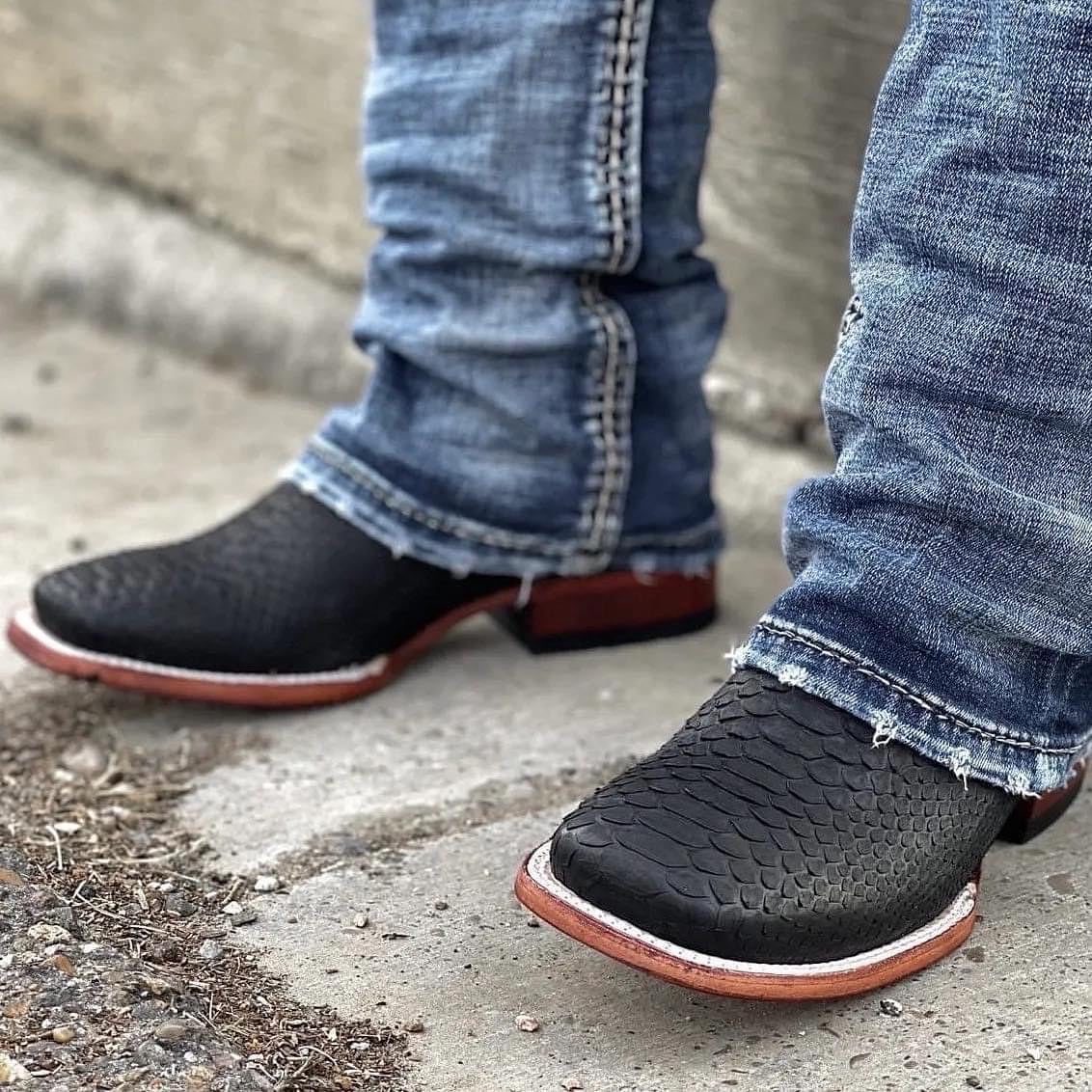
Textured black leather gives a Western boot enough edge to wear without looking like a costume. Brown soles add a little warmth against the dark upper.
Blue jeans are the obvious partner, and they work. Wear them straight and let the hem fall over the boot top, so the shaft stays mostly hidden and the toe and sole show.
Keep everything else plain: a white tee or a grey sweater is plenty. The boot already supplies the attitude, and a belt in a similar black ties it back together.
From Dwight Yoakam to A$AP Ferg, here’s how a handful of style icons have sported the rough-and-tumble boots.
— GQ
5. Sneaker Boots
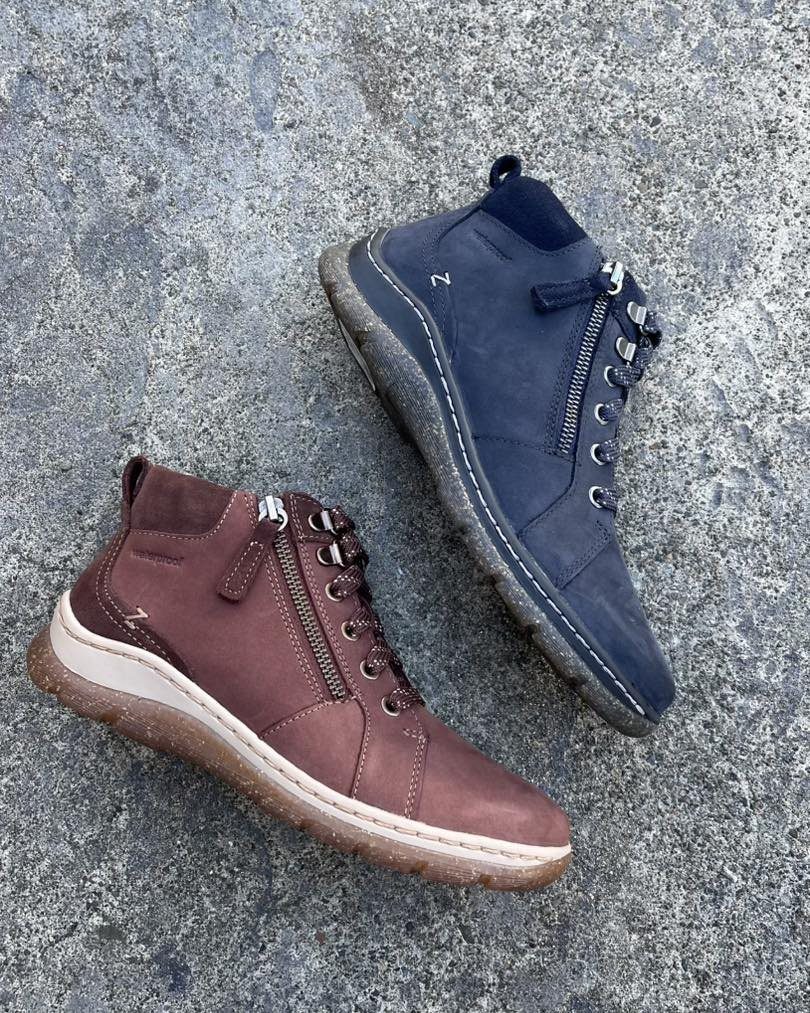
Zippers set these sneaker boots apart from a regular lace-up: you step in and go. Brown and navy are the 2 colors to start with, since both pair with denim, grey and black without effort.
I like them best with slim joggers or tapered jeans, where the ankle-high shaft stays visible instead of disappearing under fabric.
They suit the man who wants boot height but lives in sneakers. They are not a dress boot, so skip them with tailoring and keep them for casual days.
6. Moc-Toe Boots
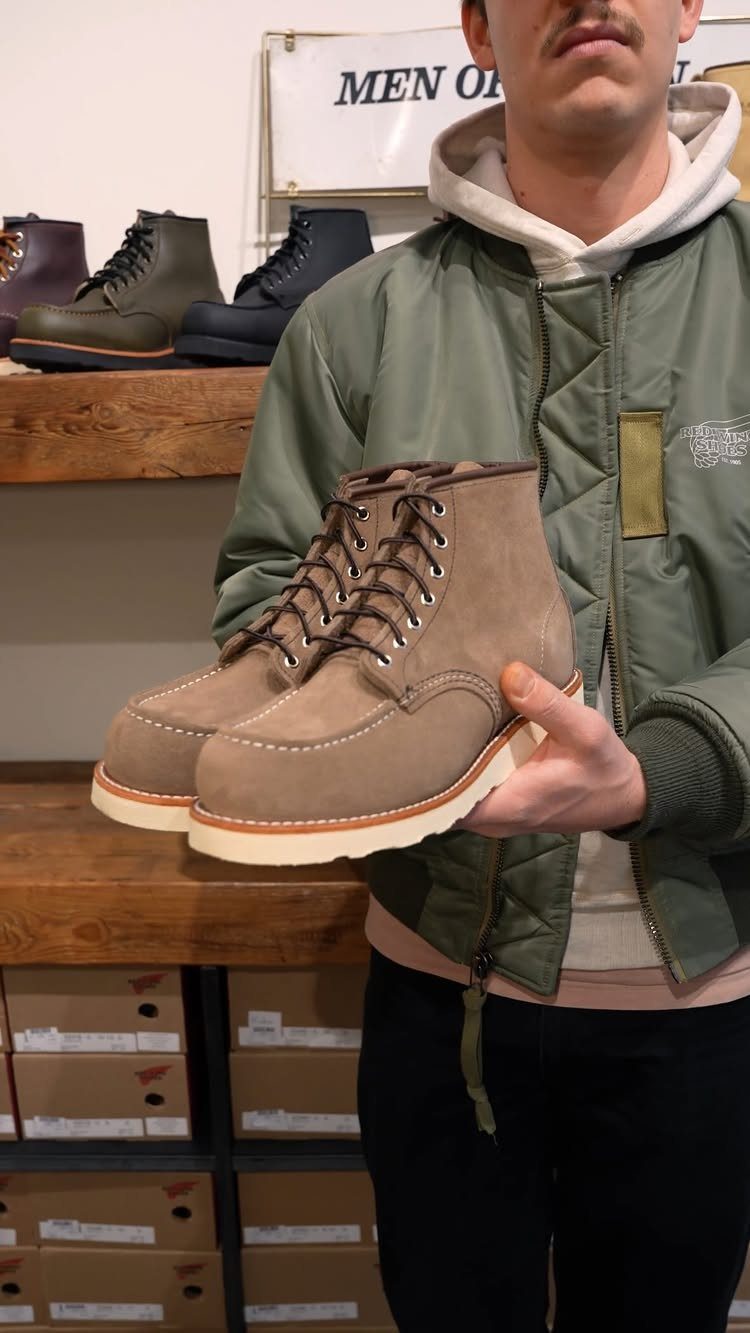
Tan suede with a white wedge sole is the classic moc-toe look, and it leans on the work-boot tradition. The wedge is a single flat block of sole, which gives a soft, cushioned step.
Pair them with dark denim or olive chinos and a plain jacket. That light sole draws the eye, so pull back on pattern and color everywhere else.
Suede and pale rubber both show dirt, so expect to clean them often.
7. Dress Boots
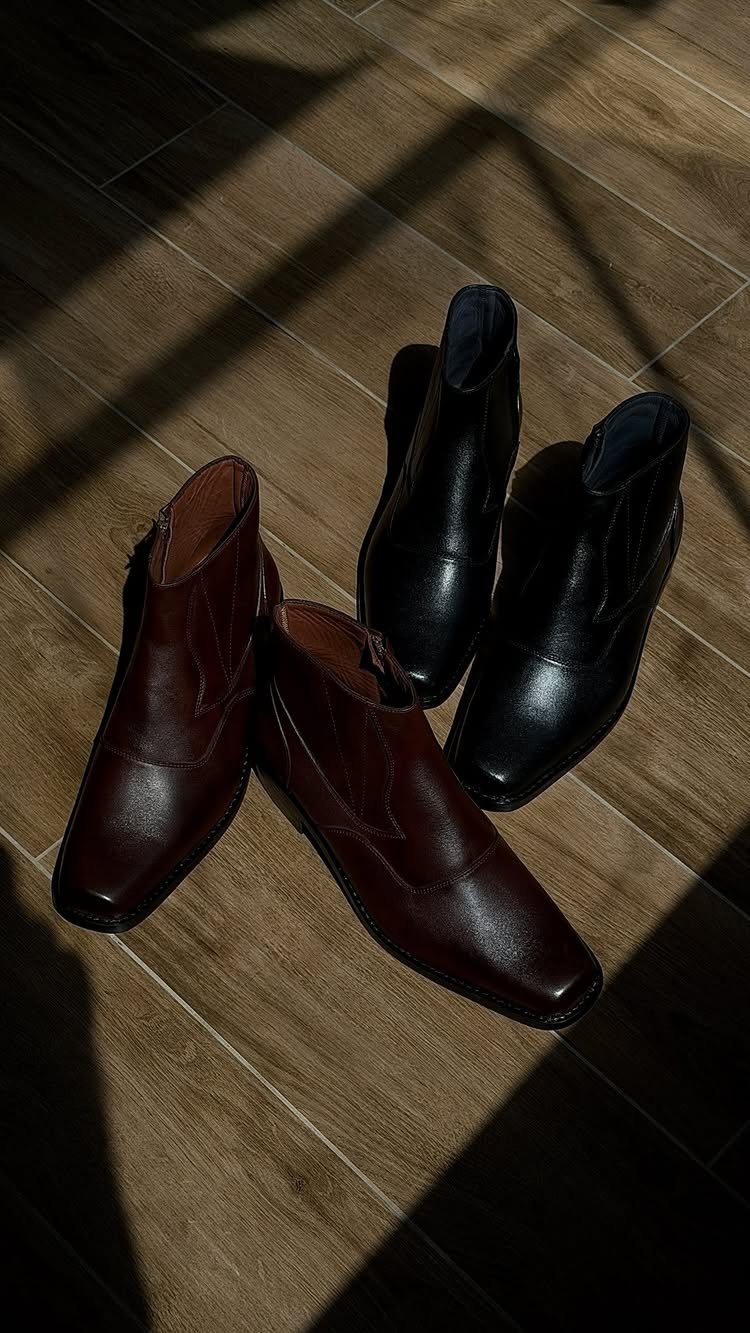
Black and burgundy are the 2 dress boot colors worth owning, and burgundy is the more interesting of the pair. It reads as a deep brown-red in daylight and goes with navy, grey and charcoal.
Black is the formal choice and the one I’d pick for a dark suit. Keep the leather polished, since a dull toe undoes the whole outfit.
Wear dress boots under trousers with a clean, straight hem so the shaft stays hidden.
8. Brogue Boots
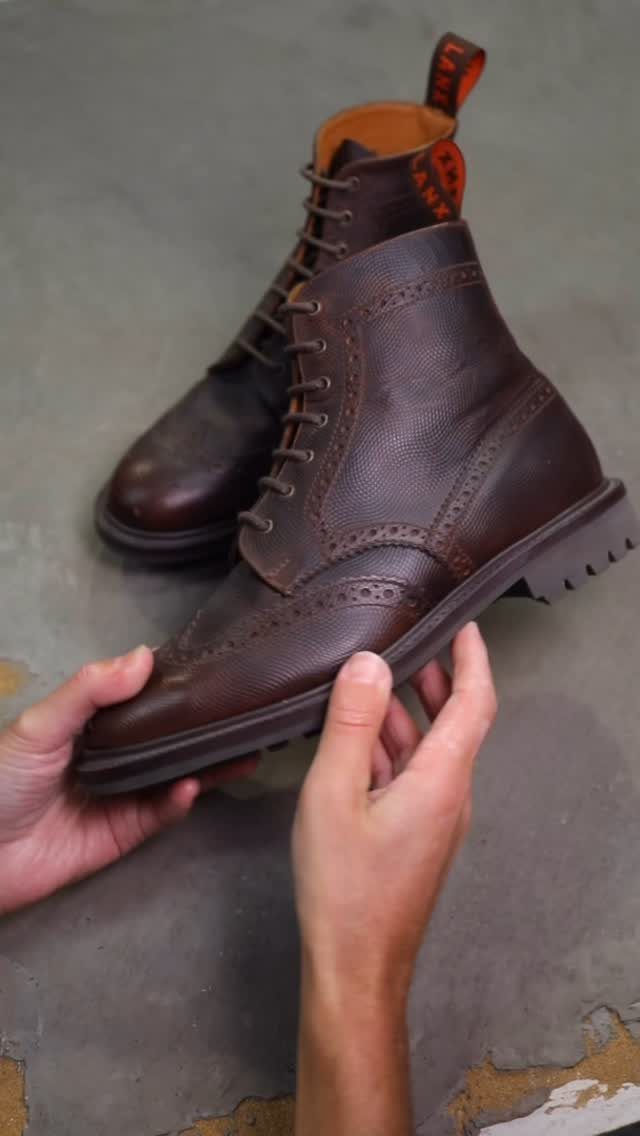
Perforations on the toe and seams give a brogue boot more texture than a plain leather pair, and dark brown keeps that detail from getting loud. The holes are decoration, so the boot sits between casual and dressy.
Olive chinos and charcoal trousers work as well as dark denim, and each one lets the toe pattern stand out. Because the leather already has pattern, I’d keep the knit or shirt above it solid.
For everyday wear, brown pairs with more of your closet than black does.
9. Motorcycle Boots
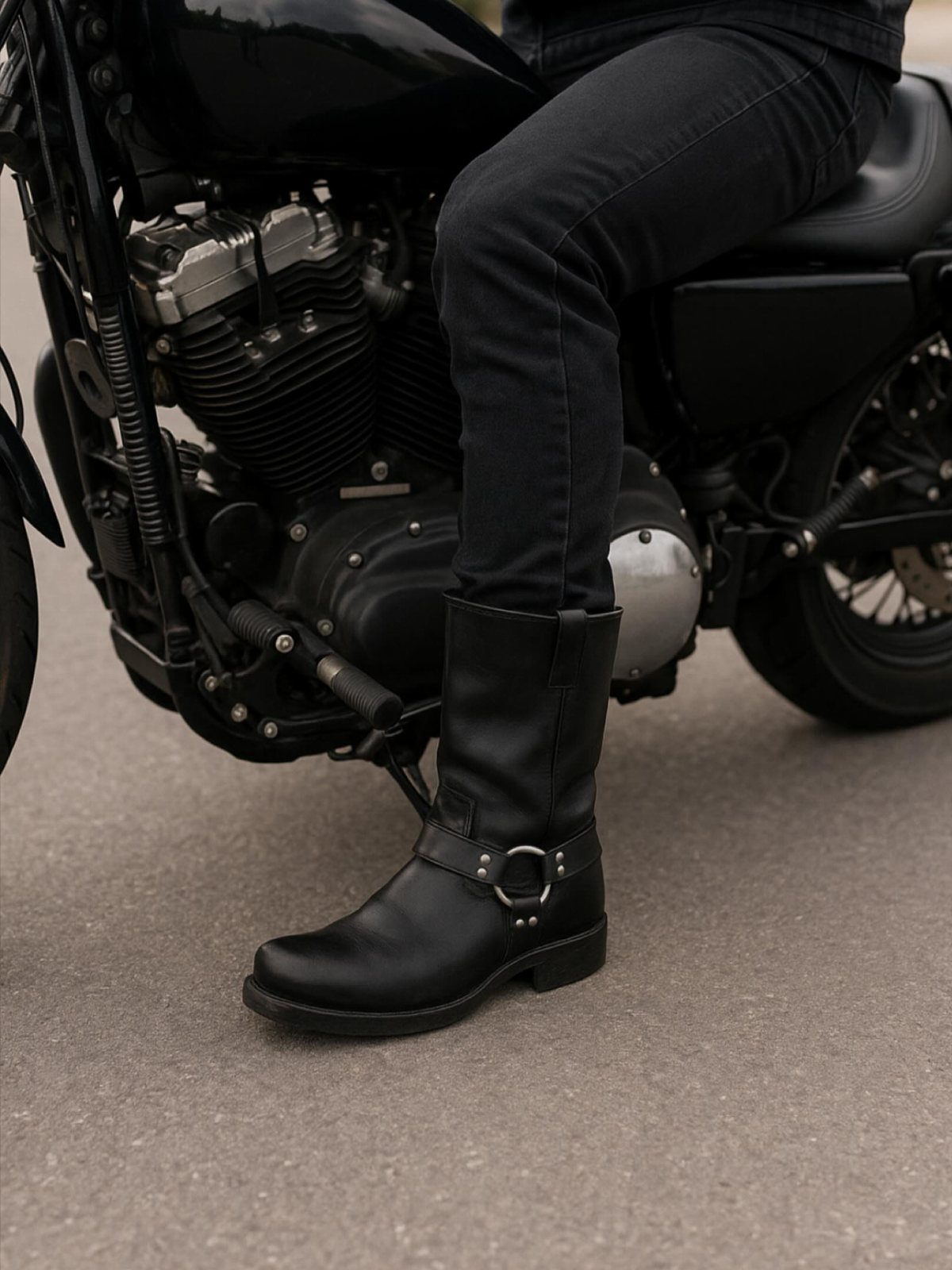
Buckle straps are what mark a motorcycle boot, and black leather keeps them looking sharp instead of costumey. A boot like this suits the man who wants edge without sneakers.
A pair of dark jeans in indigo or black is the easiest thing to wear with them.
Let the hem rest over the shaft or stack slightly, then keep everything else plain: a simple tee, a grey sweater or a leather jacket in the same black.
Choose one buckled detail and stop there.
10. Combat Boots
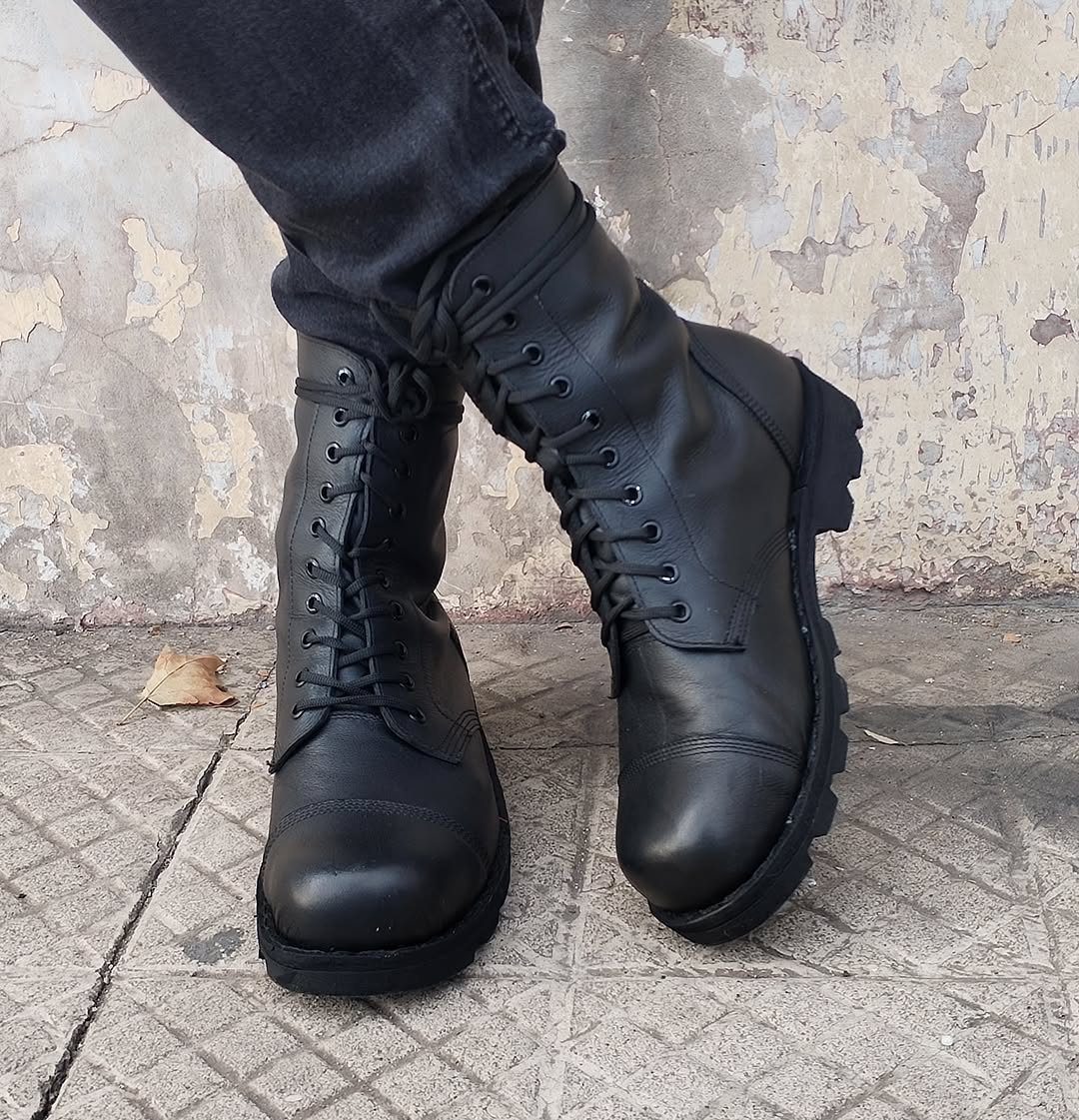
Black leather lace-ups with a plain, rugged shape are what make a combat boot. They look best against dark jeans, where the boot and the denim sit in the same tonal range and the outfit stays quiet.
Grey or black pants both work. A tee, a flannel or a bomber jacket is enough on top.
Skip them with tailoring. They are a weekend and casual boot, and I’d let the outfit around them stay plain.
11. Monk-Strap Boots
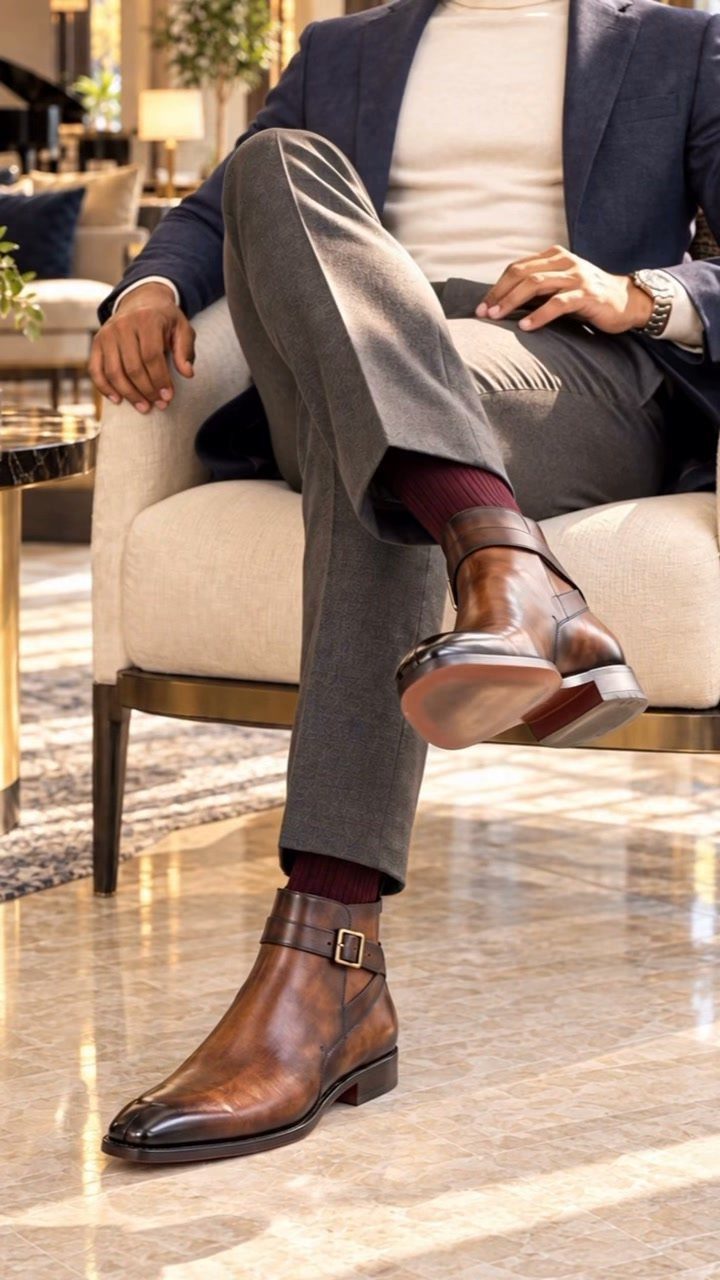
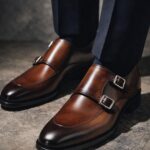
A navy blazer with grey trousers is about as easy as tailoring gets, and brown monk-strap boots make it more distinctive than a lace-up would. The buckle replaces laces, so the boot looks clean and a little formal.
Burgundy socks tie into the brown leather without matching it. Keep the trousers slim enough that the strap stays visible.
Polish matters here: a shined brown boot looks deliberate, while a scuffed one looks tired.
How to Style Boots
Formality is the first thing to check before pairing any boot with an outfit.
Chelsea boots sit somewhere in the middle for formality, and they still pair well with casual clothes. Wingtip boots add decorative detailing to a work boot silhouette, giving you more pattern to work with.
Monk-strap boots look formal but can read as unorthodox, so wear them with confidence or skip them. Cuban heels are dressy too, though they come across as niche and fashion-forward.
Blucher boots sit at the casual end. They grew out of blue-collar work boots and share the open construction of a derby, so pair them with jeans and chinos instead of a suit.
Match the boot’s formality to everything else you’re wearing, and let one piece at most pull the other way.
Materials Used in Boots
Material sets the look, but finish matters just as much.
Full-grain leather is normally a formal choice. Give it a matte or burnished finish and it turns casual, while a high shine pushes it back toward dressy.
Rubber boots are now a real fashion option. Rubber boots now come in the tall, calf-high Wellington shape, but the fashion versions are more often shorter, chunkier puddle boots with a workwear feel.
For daily wear, I’d pick a Chelsea-style puddle boot in neutral green, grey or black. Bold colors work in streetwear outfits, but they’re harder to repeat across a week.
Boot Care Tips
Wipe boots down with a soft brush or damp cloth after wearing them, so dirt doesn’t settle into the leather or seams.
Condition leather every few months, or whenever it looks dry. Use a small amount and let it absorb fully before buffing.
Store boots in a cool, dry spot, away from radiators and direct sun. Cedar shoe trees help hold their shape and absorb moisture, and rotating pairs gives each one a day to dry out between wears.
Frequently Asked Questions
What are the best types of boots for men?
Chelsea, chukka and moc-toe boots are the popular picks, but for daily use I’d tell most men to start with a lace-up cap-toe leather boot. Black or burgundy dress boots come next if you wear tailoring often.
What materials are best for boots?
Full-grain leather wins for me, and the finish steers the look: matte or burnished leans casual, while a polished shine pushes the boot toward dress.
Suede looks great in tan or brown but marks easily and shows dirt, so it needs a brush and regular cleaning. Rubber is a real option now, mostly in short, chunky puddle boots.