The shoe you reach for should match the dress code on the invite, because the range here runs from patent-leather opera pumps for black tie to low-top white sneakers with black side stripes for jeans and shorts.
Between them sit oxfords, monk straps, derbies, brogues, wingtips, chukka boots and driving shoes, and each has a spot on that scale of polish.
1. Oxford Shoes
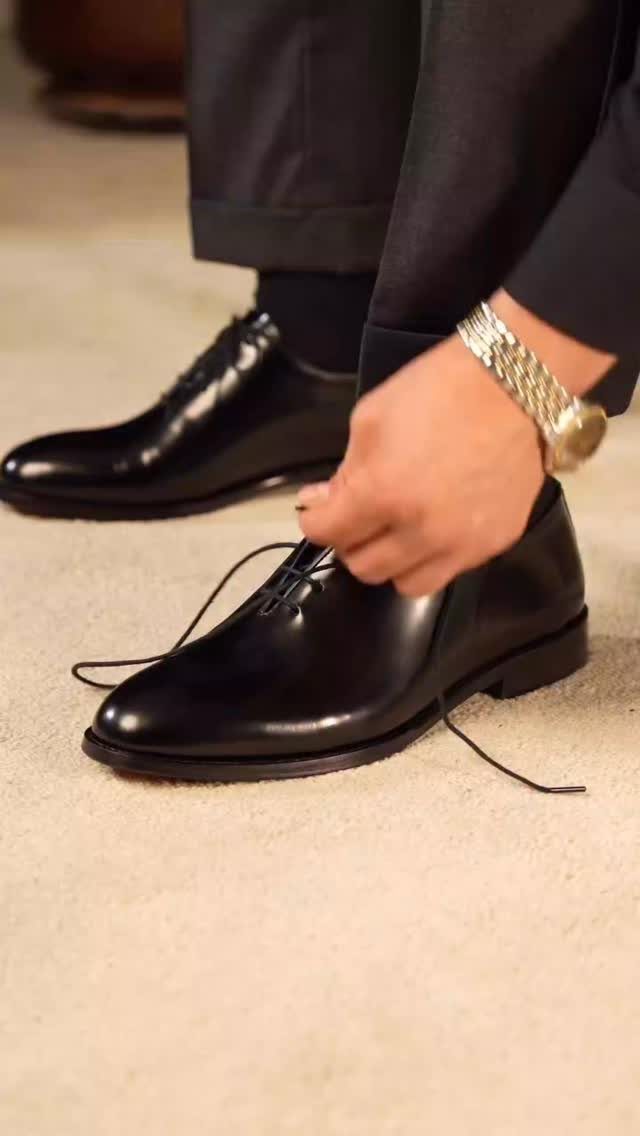
Closed lacing is what makes an Oxford the dressiest lace-up you can own. The eyelet panels sit under the front of the shoe, so the line stays sleek and narrow.
Black leather is the safest first pair, and it works with black trousers as well as charcoal and navy. I’d wear them with suits, interviews and anything formal, and skip them with casual chinos, where the polish reads as overdressed.
Keep them laced snugly and the shoe looks its best. Loose laces undo the clean shape.
2. Monk Straps
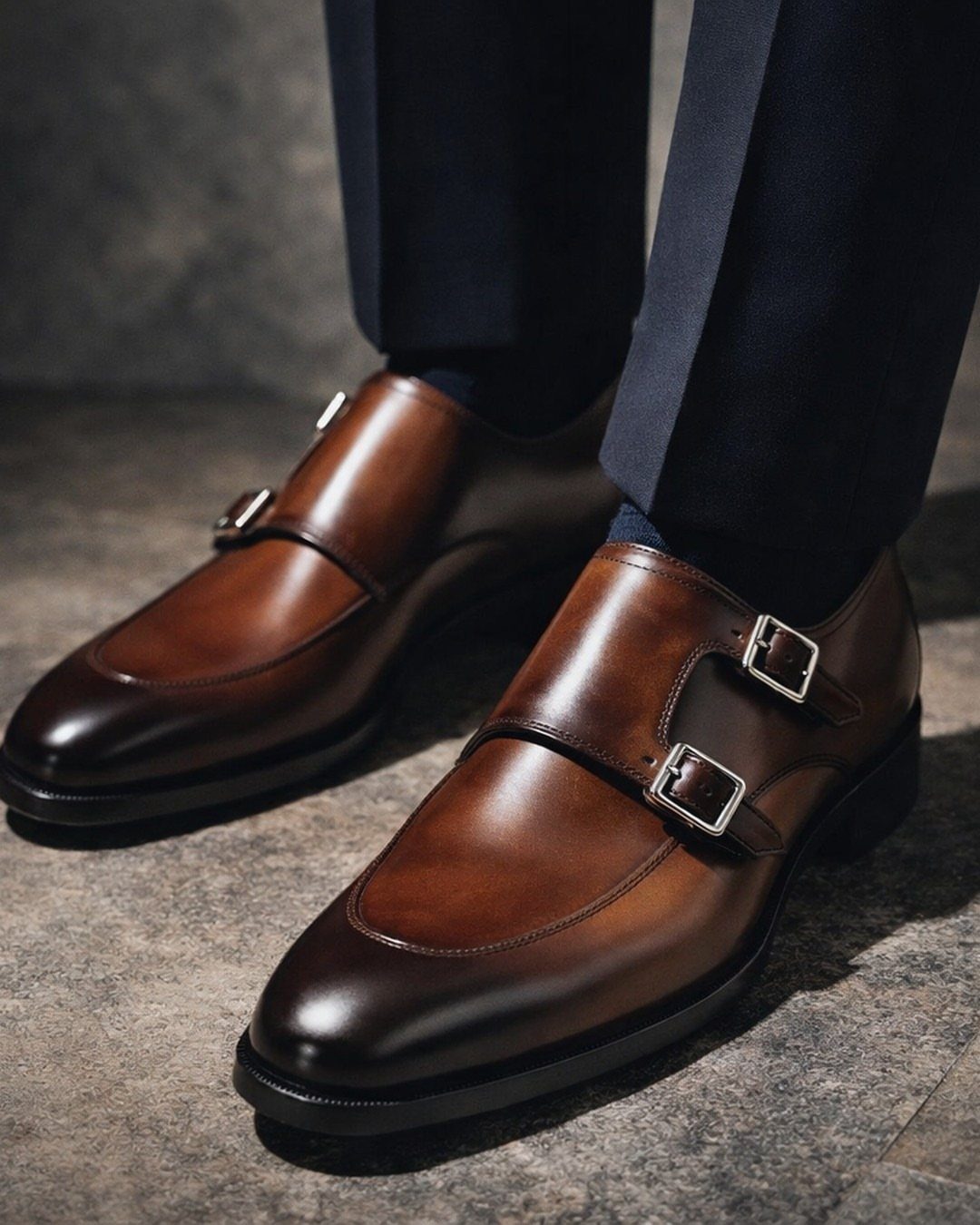
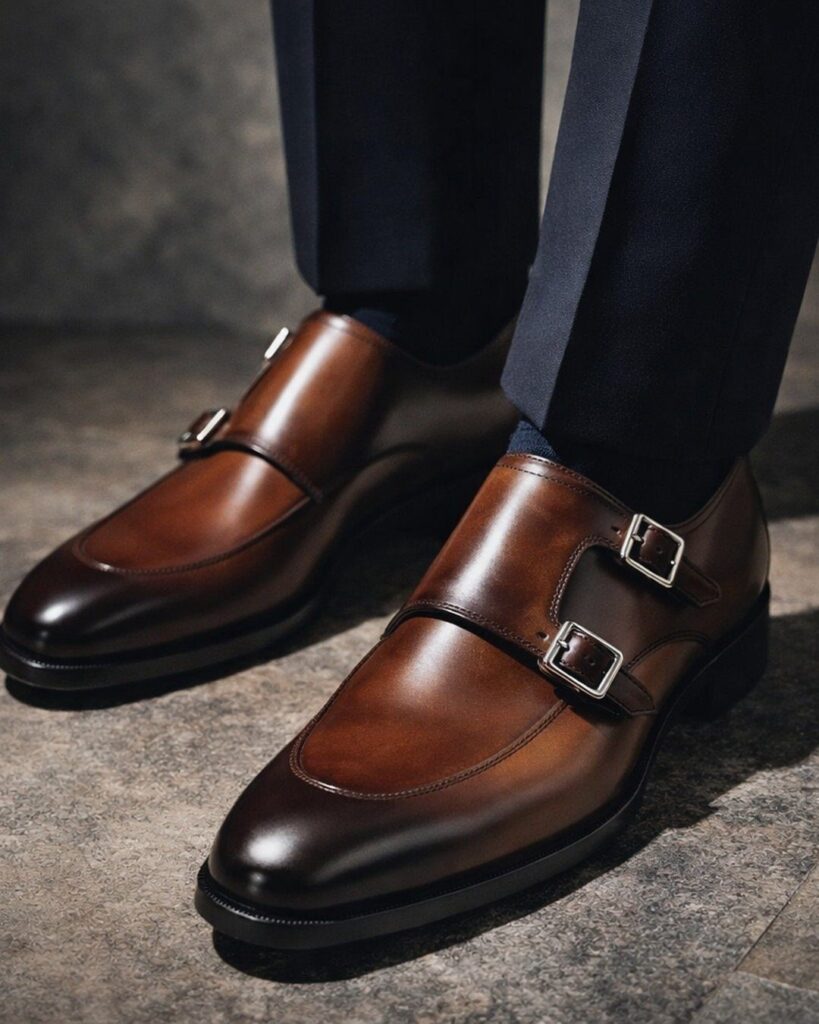
Buckles do the work of laces on a monk strap, and a double strap like this one gives the shoe a more deliberate look.
For a man who dislikes tying shoes every morning, they’re a practical choice. They sit between dress shoes and casual ones, so I’d wear them with tailored trousers on a workday or a dinner out.
Pick brown for versatility. Black can work, but brown pairs with more of what’s in a normal closet.
3. Derby Shoes
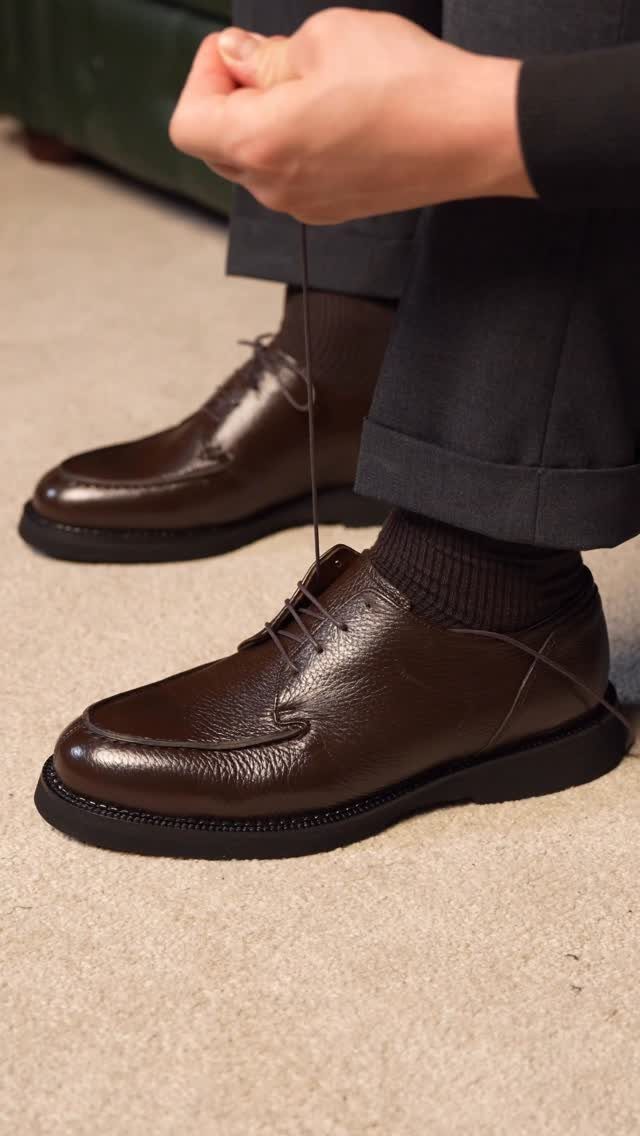
Open lacing is what sets a Derby apart from an Oxford: the eyelet tabs are sewn over the vamp, so the shoe opens wider and reads a little more relaxed. That’s why I reach for Derbies more often than Oxfords.
Dark brown leather goes with grey trousers, navy, olive and jeans. It covers office days and weekends with one pair.
For a single lace-up, I’d pick this style in dark brown. It’s easy to wear and rarely looks out of place.
4. Brogue Shoes
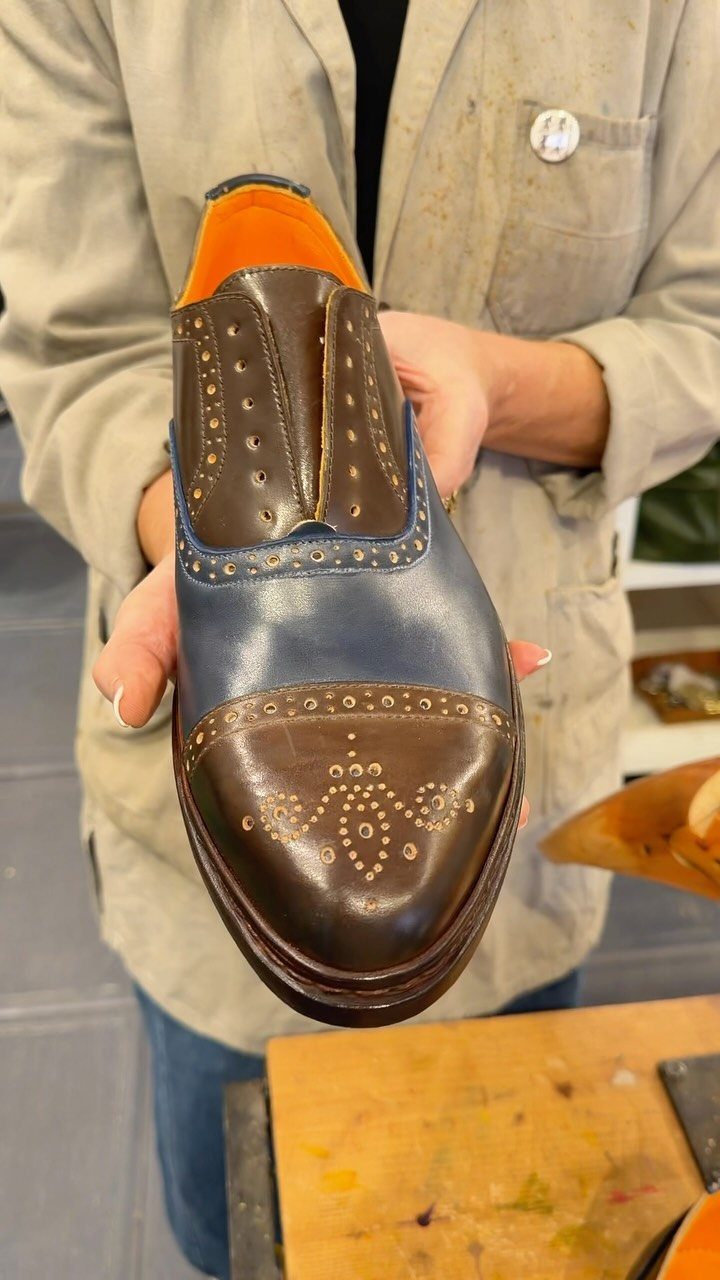
Perforations are what make a shoe a brogue, and they can sit on almost any lace-up shape. The decorative punching adds texture, so the shoe looks busier than a plain toe.
Two-tone leather, like the navy and brown pairing here, pushes the look further toward casual. I’d wear it with chinos or denim and a simple jacket, not with a formal suit.
Plainer colors keep brogues easier to wear. A single-color pair in brown works with more outfits than a bold one.
5. Wingtip Shoes
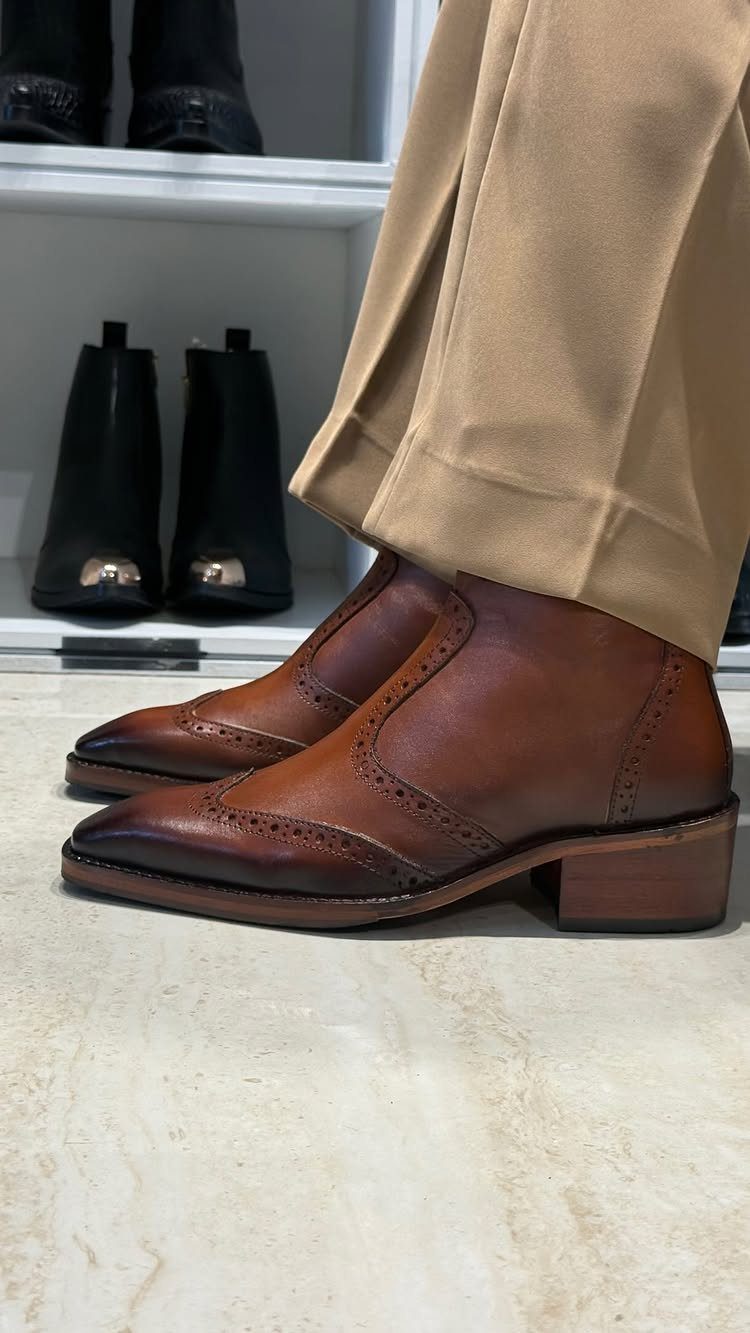
Wingtips have a toe cap that sweeps back along both sides in a W shape, and the boot version carries that detail up over the ankle.
Because the shape suits so many men, wingtips are a good everyday option. They offer solid support underfoot, which matters if you’re on your feet a lot.
Try them with jeans, chinos or heavier trousers. For a suit, I’d choose a sleeker shoe instead.
6. Chukka Boots
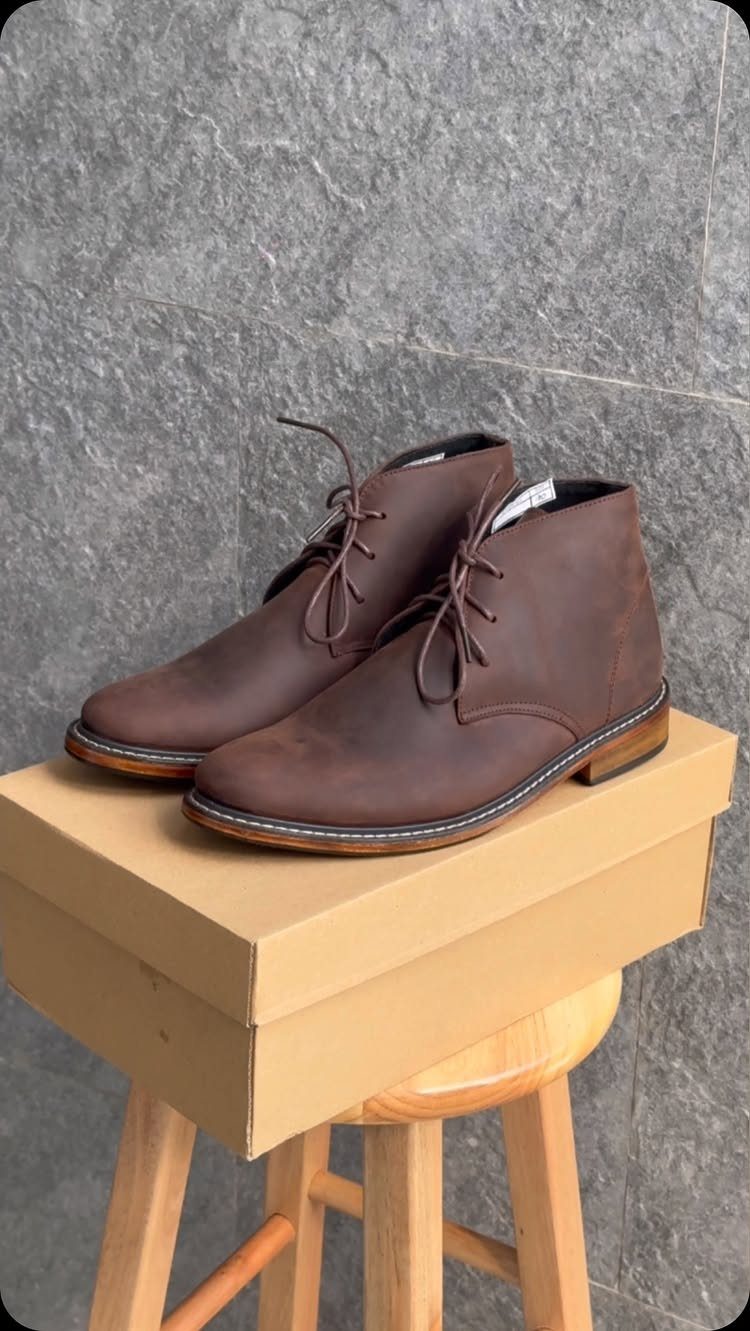
A chukka stops at the ankle and uses open lacing, which makes it the easiest boot to start with. Brown leather works with most colors in a normal wardrobe.
Chukka boots bridge the gap between sneakers and dress shoes, so they suit offices that don’t require a suit.
They’re simple enough to wear often. For one boot that isn’t rugged, this is the one I’d buy.
7. Driving Shoes
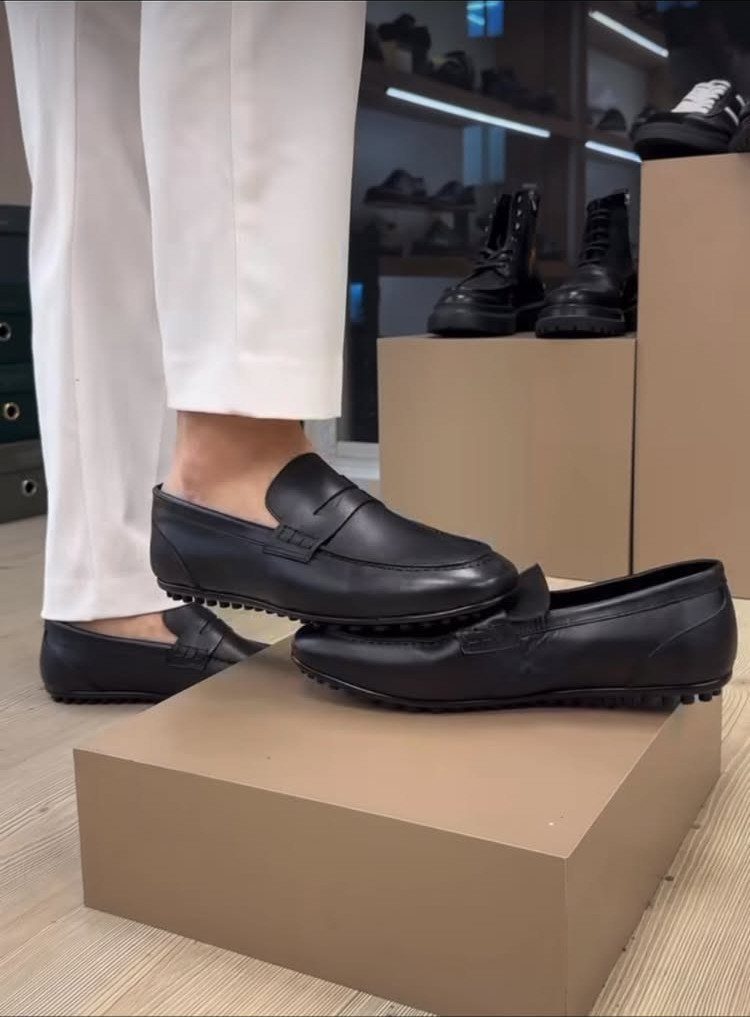
Soft, flexible loafers made for comfort behind the wheel: that’s the driving shoe. The pebbled soles on this black pair are part of the design, and the look pairs easily with light trousers, white ones included.
I’d wear them on warm days, with chinos or linen trousers, when a lace-up feels too stiff. Black leather keeps them sharper than tan or suede.
They’re a casual shoe, so skip them with a suit.
8. Opera Pump
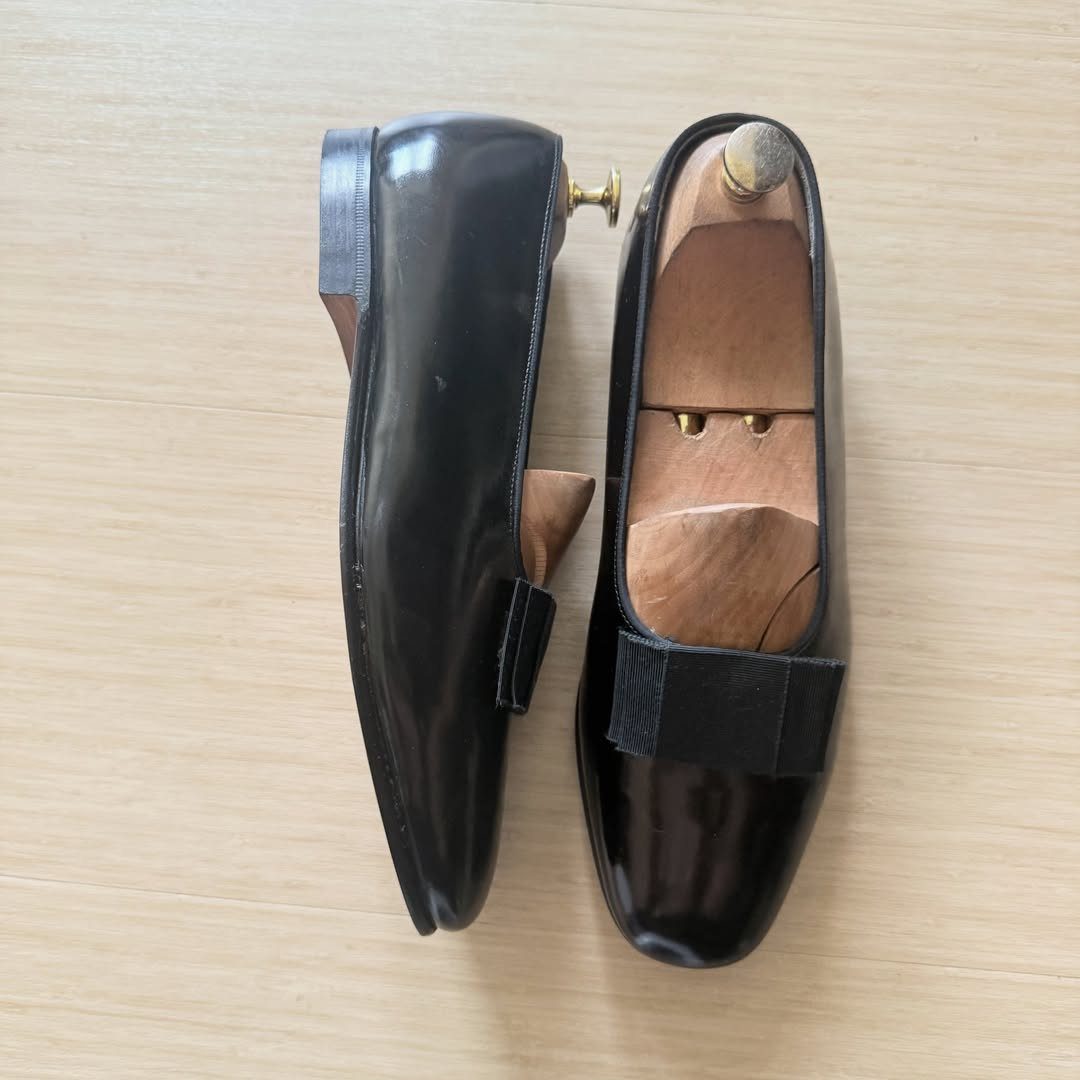
Patent leather and a grosgrain bow make the opera pump the most formal shoe a man can wear. It’s a dress slipper, not a loafer, and it belongs with black tie.
Wooden shoe trees pull moisture out of the lining and keep the glossy leather from creasing, so slip a pair in after every wear.
Unless black-tie events show up on your calendar a few times a year, skip opera pumps and rent or borrow a pair when you need one.
For anything less than that, a plain black Oxford does the job and works the rest of the year.
9. Tuxedo Dress Shoes
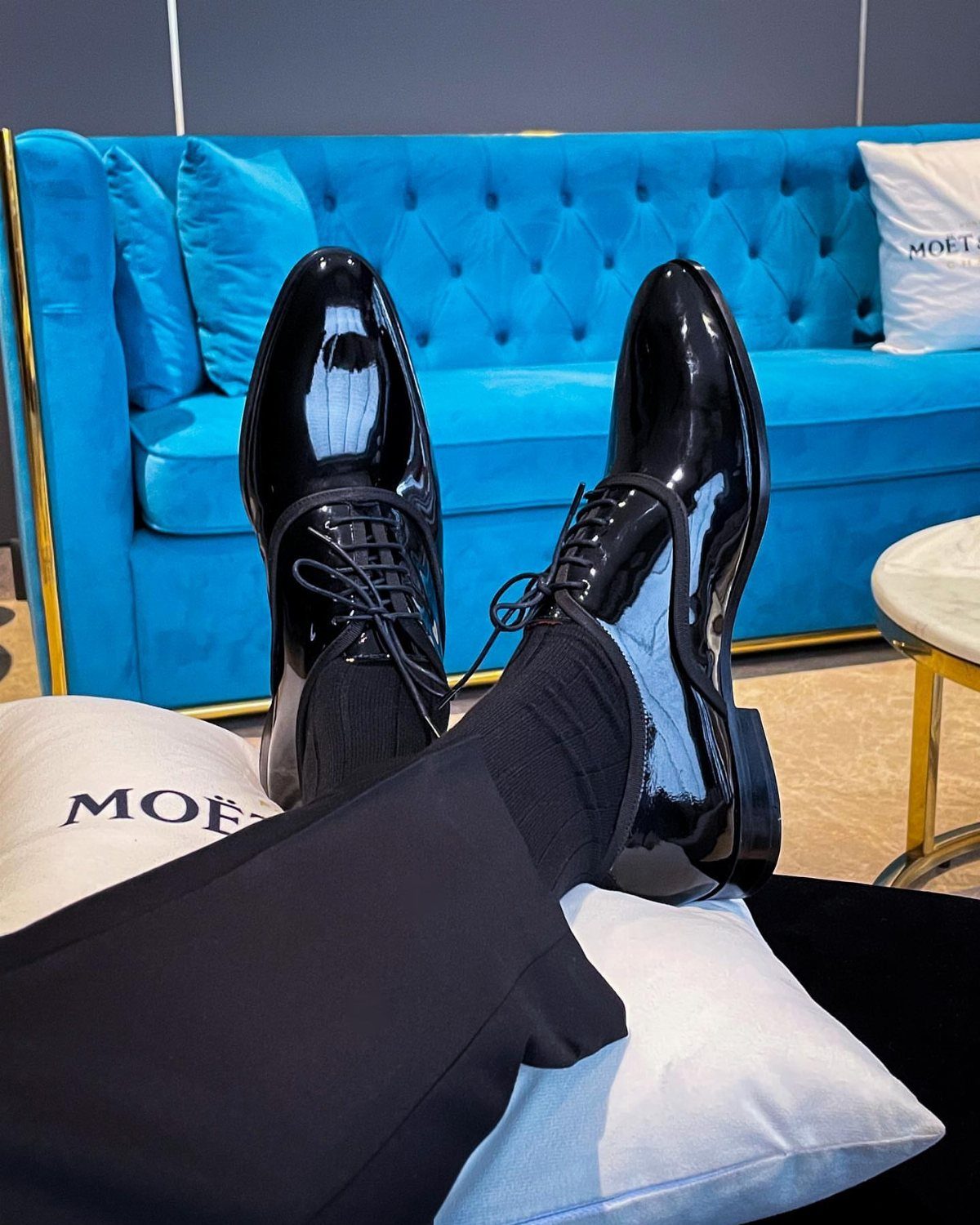
Tuxedo shoes are defined by their black patent leather; a regular dress shoe in calf leather never quite matches the shine of a tuxedo.
The high shine matches the satin on a tuxedo, and nothing else in a closet looks quite like it.
Wear them with black socks and black trousers, so the line from hem to toe stays unbroken. I’d choose a plain, sleek shape over anything with perforations or extra stitching.
A pair costs you a few evenings a year, so buy one good pair and keep them clean.
10. Casual White Sneakers
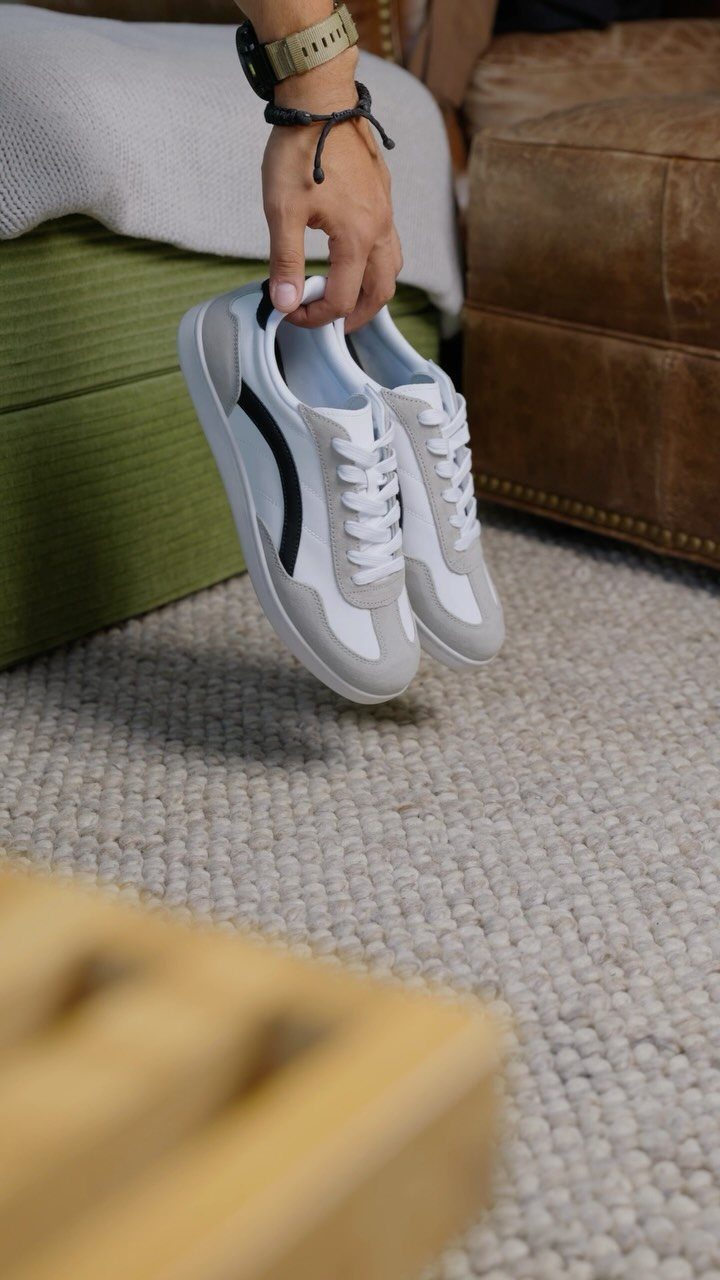
Low-top white sneakers with black side stripes give a plain shoe some definition, and the stripes break up all that white. They’re the easiest sneaker to dress up or down.
Jeans, chinos and shorts all work, topped with a plain tee or a thin knit. The contrast stripes keep them from looking blank, though a fully white pair is the safer pick for maximum flexibility.
Wipe them down often. White shows dirt faster than any other color.
Choosing the Right Shoe
Start with the dress code on the invite, then work backward to the shoe.
Black tie, a suit, business casual and weekend drinks each call for a different level of polish, and the wrong pair stands out faster than a wrong shirt.
Formal dress shoes have enclosed lacing, a modest heel and leather polished to a shine.
When you’re unsure, go one step dressier than the room; a sharp shoe in a casual setting looks like a choice, while a casual one at a formal event looks like a mistake.
Shoes also change how you carry yourself. Polished dress shoes in a meeting or a refined loafer at dinner make you stand a little straighter, and that confidence shows.
Shoe Care Tips
Rotation matters more than any product. Give each pair a day or two off between wears so the leather can dry out, and the shoes hold their shape longer.
Wipe off dirt when needed, and polish leather about once a month. Suede needs protection before the first wear, so spray it before you step outside.
Watch the soles.
Replace them once they wear down, before the damage reaches the upper. A resole costs far less than a new pair of good shoes.
Looked after this way, good shoes can last for years.
Building a Versatile Collection
Before buying another brown boot, ask what your closet can’t handle yet.
Aim for three groups: one formal pair, one or two smart-casual pairs, and a clean casual pair. That covers black tie, business casual and weekend drinks with no gaps.
Count the pairs you actually wear.
If you own six and rotate three, the other three are dead weight. Sell them or donate them, and put the money toward the gap in your lineup.
Buy to fill a gap, not to repeat a pair you already have.
Frequently Asked Questions
What are some common types of shoes for men?
Oxfords, Derbies, monk straps, brogues, wingtips, chukka boots, driving shoes and white sneakers cover most of what men wear.
Oxfords close the lacing under the vamp, which gives them a narrow, formal silhouette that works best for business and dress occasions.
Derbies have open lacing, which makes them a bit more relaxed. Chukkas and sneakers handle the casual end.
What are the different types of shoes and their names?
Men’s shoes sort into dress shoes, smart-casual shoes, casual shoes and boots.
Oxfords, opera pumps and patent tuxedo shoes are dress shoes. Derbies, monk straps, brogues and wingtips sit in the middle.
Driving shoes and white sneakers are casual, and chukkas are the easy boot. Each name points to a detail: closed lacing, a buckle, perforations or a W-shaped toe cap.
What types of shoes should every man own for a stylish wardrobe?
A working rotation covers 3 needs: dress shoes for formal settings, leather shoes that swing between casual and smart, and sneakers or boots for everyday wear.
A black Oxford covers weddings, interviews and most dressy events, a dark brown Derby handles office days and weekends, and white sneakers take care of casual days.
That set leaves no gaps from black tie to weekend drinks. Each purchase should open up outfits you can’t build now, rather than offering a second version of something you already own.
What men’s shoes are trending now?
White sneakers are a safe bet, and low-top pairs with black side stripes add some definition.
They dress up or down with jeans, chinos or shorts. Clean white leather every few wears, before dirt works into the grain and becomes permanent.