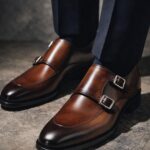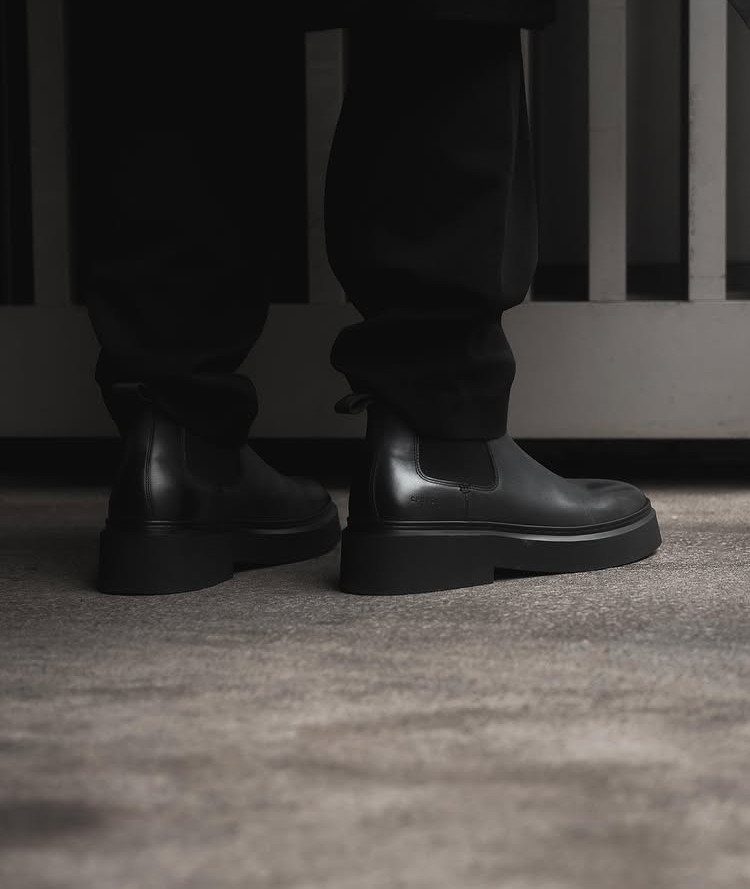
Boot color sets the mood for these winter boots outfits: black Chelseas dress up with a camel overcoat, while tan work boots and an olive jacket stay on the weekend side.
Chelseas suit work and dinners, tan work boots suit Saturdays. Across the 5 looks, the thing that changes least is the palette, which stays at 2 or 3 colors, with the jeans or trousers anchoring everything.
1. Chunky Chelseas
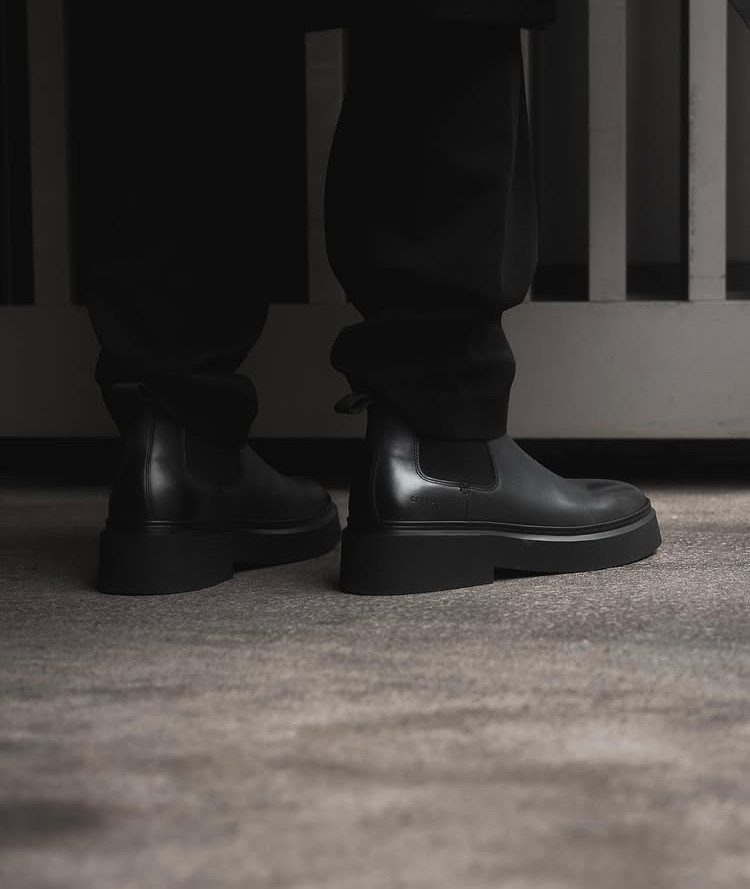
Laceless boots are the easiest winter shoe to get dressed in: pull them on and you’re done. A chunky sole gives a Chelsea more presence than the sleek version, and it balances wider trousers well.
Black on black keeps the look clean, so I’d keep everything above the boot simple and dark. Let the trouser hem sit just over the elastic gusset so the boot’s shape stays visible.
2. Chelsea Boots with Camel Overcoat
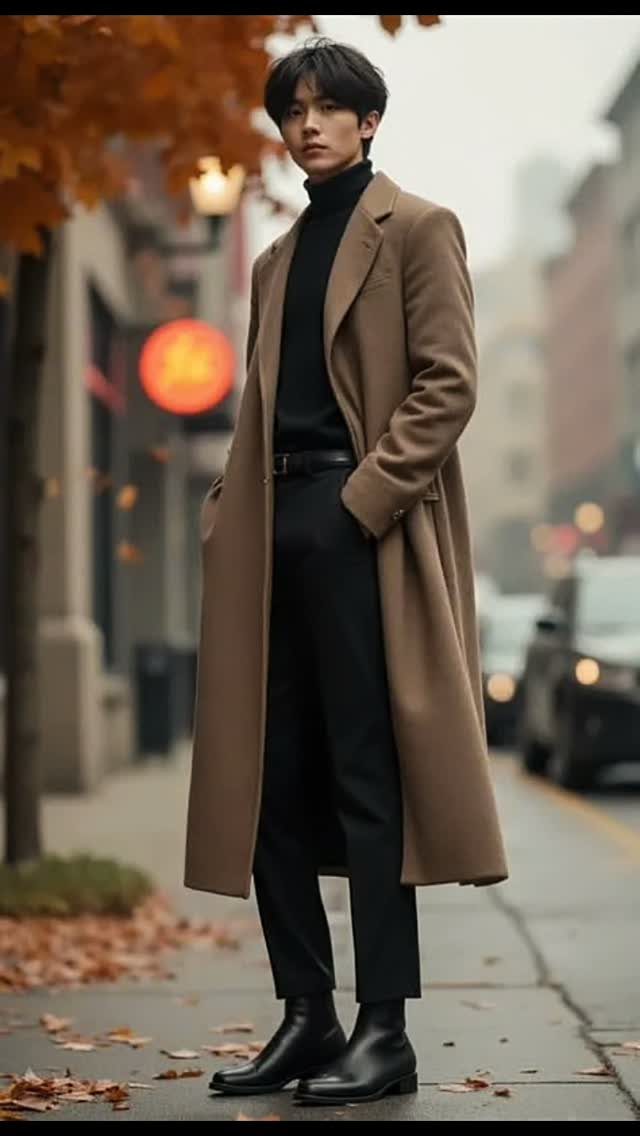
A camel overcoat does most of the work here. Pair it with a black turtleneck and black trousers, and the coat becomes the only color in the outfit.
Black Chelseas finish it without adding a single lace to think about.
I like this combination for work and dinners because it looks planned without much effort. Cold-weather cost: a turtleneck is thin, so add a scarf if the wind picks up.
3. Tan Boots with Blue Sweater

Tan boots look best against dark denim, and a blue knit sweater sits between the two without fighting either. Add a cream beanie and the palette stays soft: blue, tan, cream, with the jeans anchoring everything.
Wear the sweater loose over the jeans rather than tucked. This is a weekend outfit, and I’d choose it over black boots when you want something lighter on a gray day.
4. Tan Work Boots and Olive Jacket

Olive and tan share the same earthy range, so an olive jacket over beige trousers and classic tan work boots looks intentional without effort.
Wide-leg trousers suit work boots because the hem falls over the boot shaft and keeps the outline relaxed.
A grey beanie adds a neutral that doesn’t compete with the olive. Pick trousers a shade lighter than the boots so the boots still read as the anchor.
5. Plaid Flannel and Black Boots
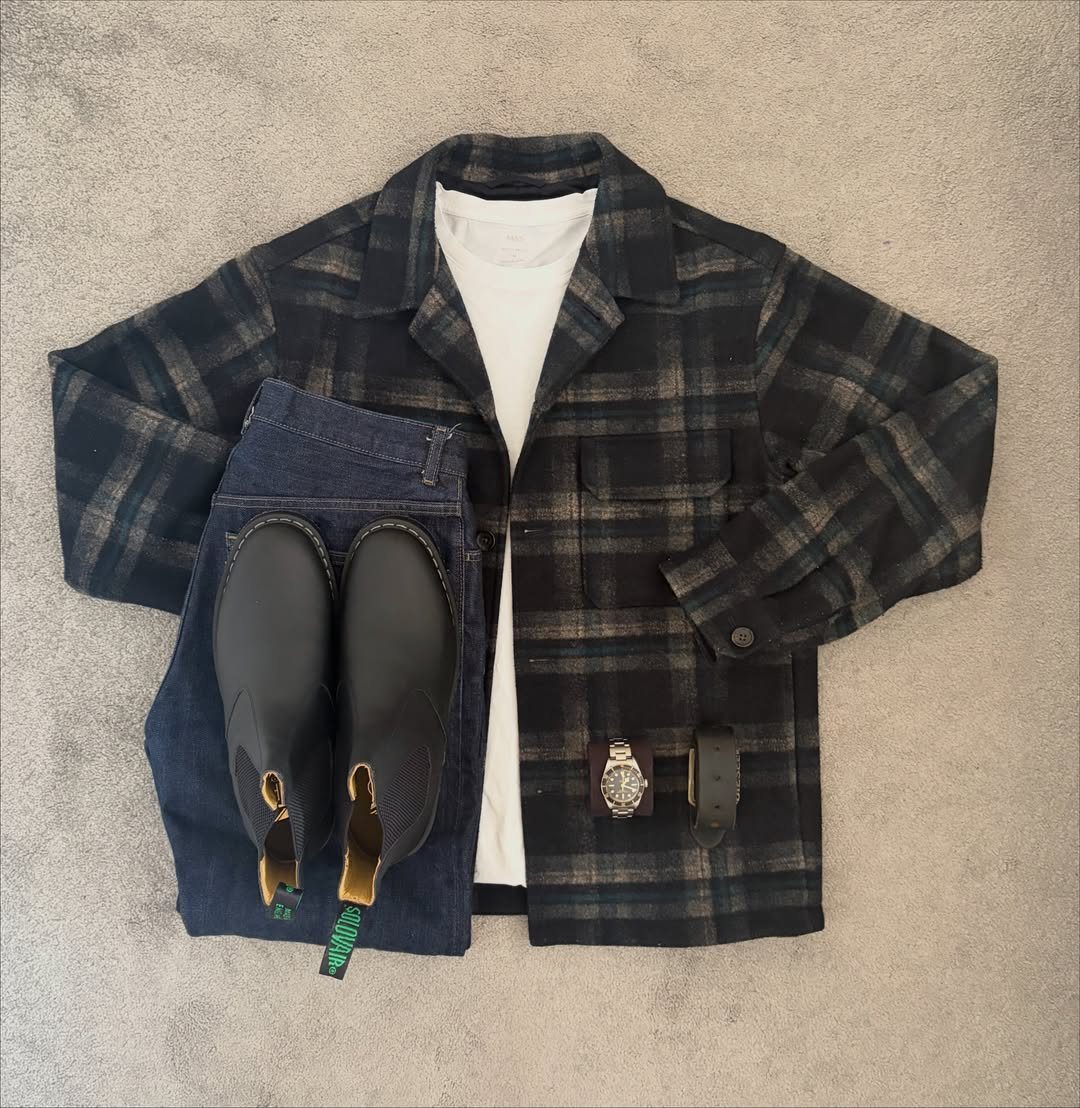
Nothing is easier to repeat than jeans, a white t-shirt and a dark plaid flannel worn open on top. Black boots keep the outfit sharper than the flannel alone suggests.
Match the belt leather to the boots, and add a watch for a little polish.
I prefer the flannel unbuttoned so the white tee shows, since that contrast stops the dark plaid from looking heavy. It’s a plain outfit, and that’s why it works.
Choosing the Right Winter Boots
Durability comes first.
A boot that isn’t built like a tank is a sneaker with a taller shaft, and you’ll be shopping again next year. Check the exterior material and the stitching before anything else.
Waterproofing is the second filter. Slush and wet snow ruin leather and suede that aren’t treated, and soaked socks end the day early.
Warmth and traction matter just as much, and they’re easy to overlook in a store.
Insulation keeps your feet comfortable through long stretches outside. A lugged rubber outsole grips icy sidewalks far better than a smooth leather sole.
Fit ties it all together. Try boots on with the thick socks you’ll wear in January, and make sure your toes can move.
Shaft height is worth a look too: a taller shaft keeps snow out, while a shorter one is easier to wear under trousers.
Styling Tips for Winter Outfits
Build warmth in thin layers instead of one heavy piece. A base layer, a sweater and a coat trap more heat than a single thick sweatshirt, and you can peel one off when you walk into a heated room.
Match the weight of your socks to the boot. Wool or a wool blend stays warm even when damp, and cotton does not.
Let the coat length decide how the boots show.
A coat that ends at the thigh or knee leaves the boot and trouser hem visible. A longer coat hides more, so pick pants slim enough to avoid bulk.
Finish with a scarf, gloves and a hat in one or two shades from your coat. Matching a few accessories looks deliberate, and it covers the spots where cold gets in.