The list covers black cap toes for the office, patent leather for evening events, tan pairs with white soles for weekends, suede for casual wear, and wingtip brogues that split the difference.
The list runs from chunky lug soles and suede to a mirror-finish tuxedo shoe, plus a look at pricing and how custom pairs are made.
What every version shares is the closed lacing system, with the eyelet tabs sewn beneath the vamp, which is why even the casual ones look dressier than a derby.
1. Leather Oxford Shoes Polishing
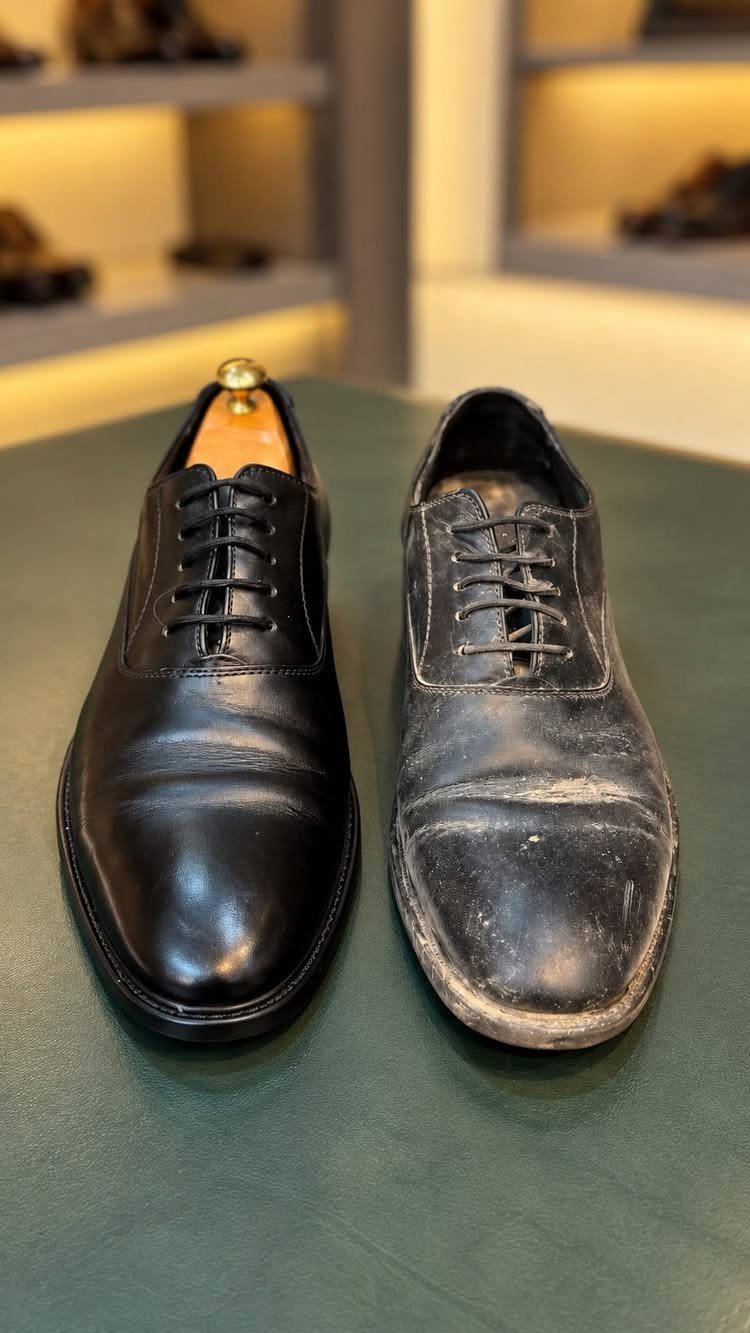
A shoe tree does half the work here. A polished black oxford holds its shape and catches the light; skip the care and the leather dulls and creases.
Put cedar or wooden trees in after every wear, and polish before the finish goes flat, not after. Black Oxfords look sharp only when the toe cap gleams.
2. Balmoral Cap-Toe Oxford Shoes
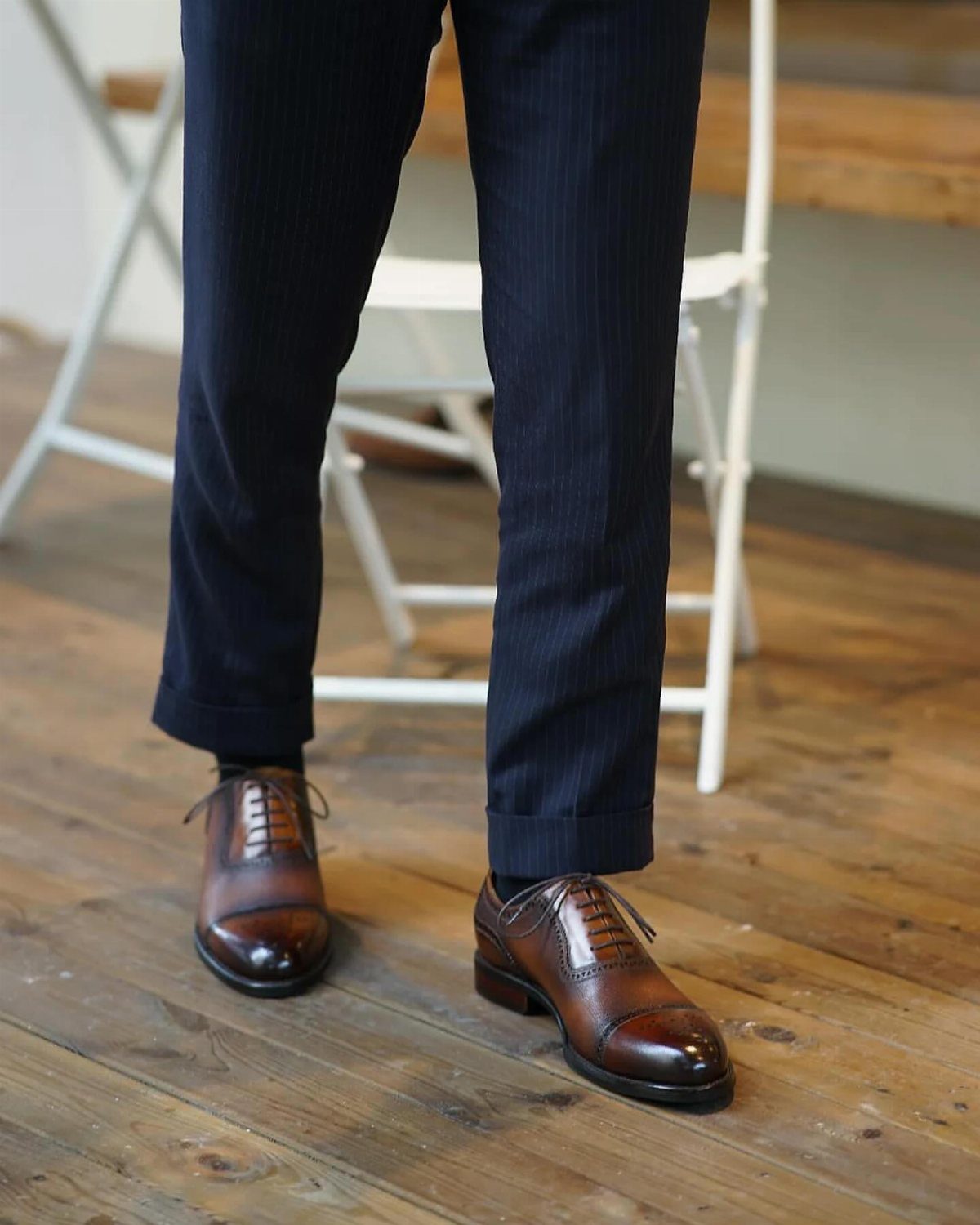
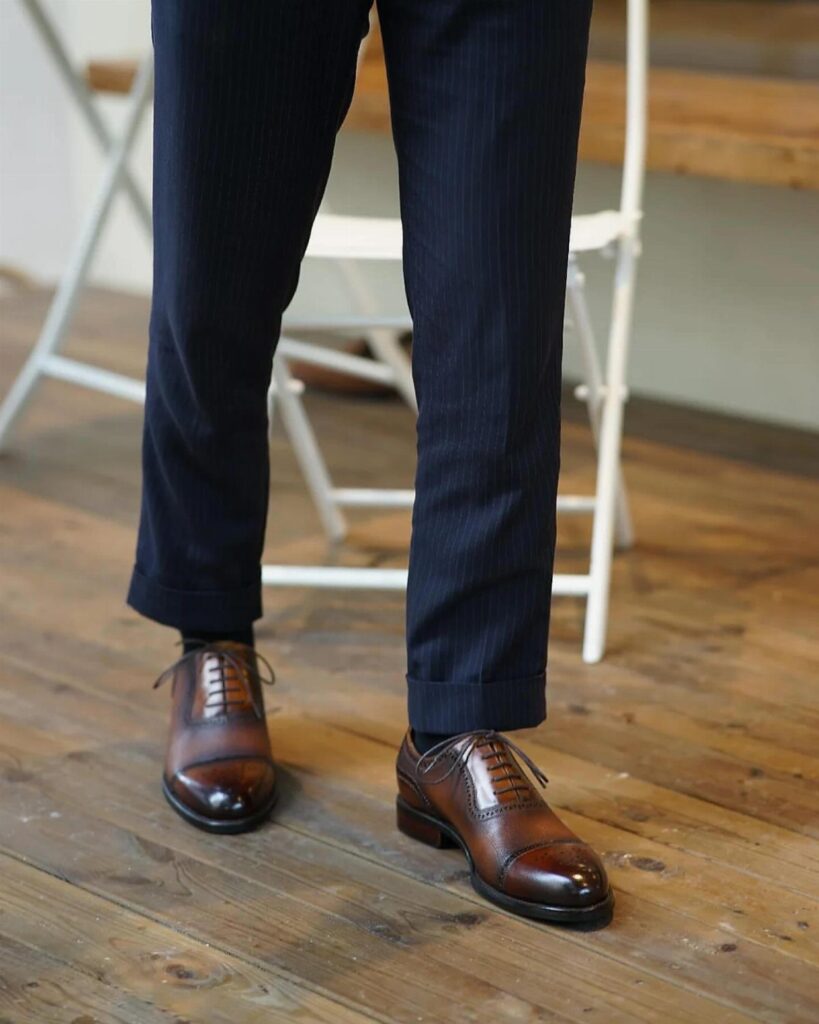
Brown cap-toe Oxfords with navy pinstripe trousers make a quiet, confident pairing. The Balmoral is the Oxford in its plainest, most classic form: a straight cap across the toe and a closed lacing system.
I like brown here because it softens the formality of pinstripes. Keep the trouser break slight so the cap toe stays visible.
For work, this is the pair I would buy first.
3. Whole Cut Oxford Shoes
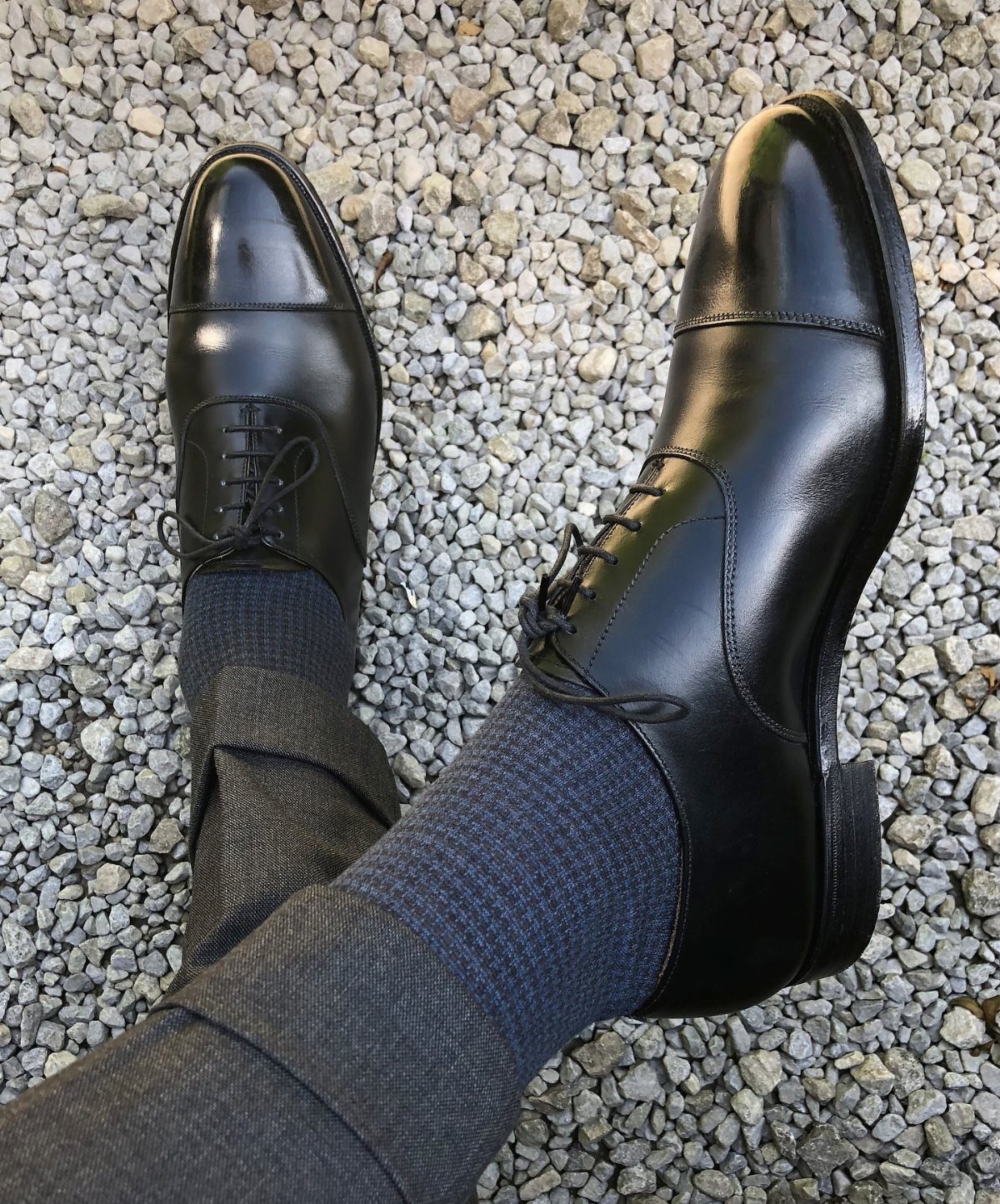
Whole cuts have no seam across the toe, so the leather reads as one clean piece. That makes black the right choice for a sleek, minimal look.
Grey trousers are an easy match, and a textured sock in blue adds interest without fuss. Slim trousers hemmed just at the ankle leave the line of the shoe unbroken.
4. Oxford Shoes with Flexible Soles
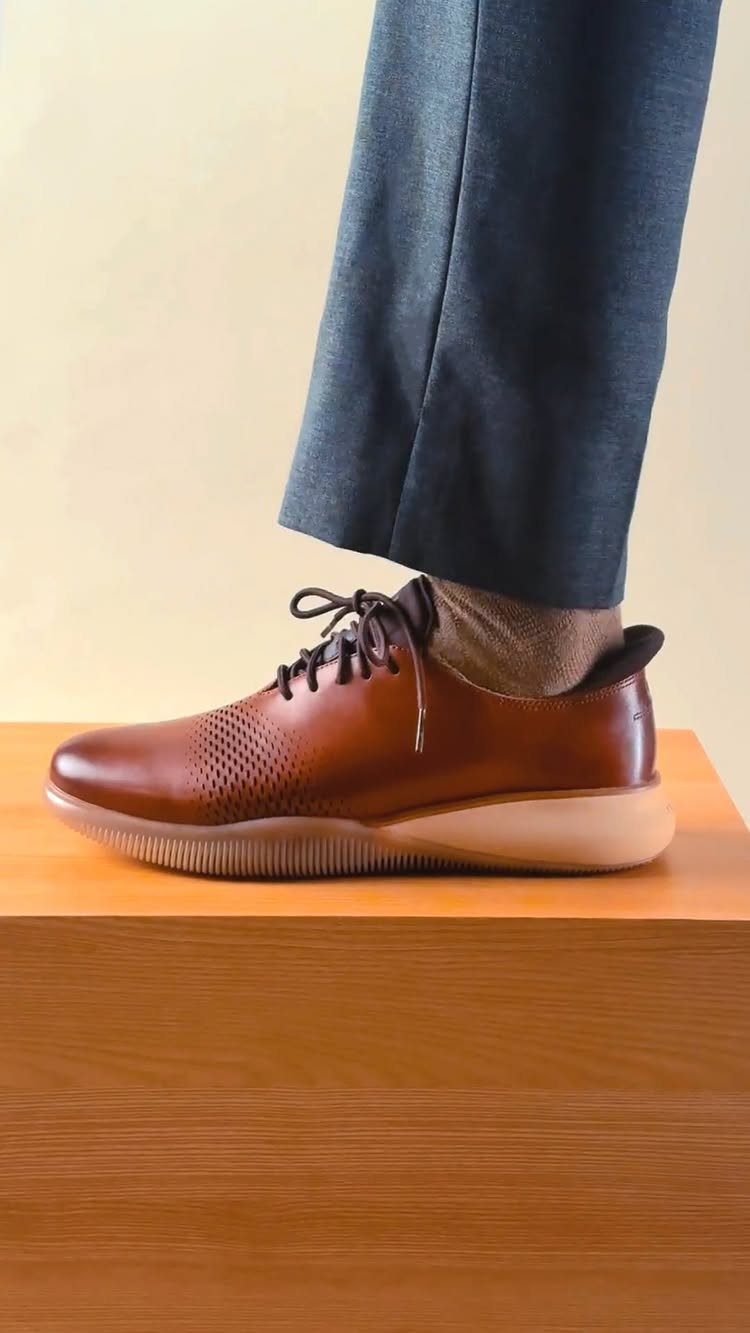
A flexible sole changes how an Oxford wears on an ordinary day. Rubber gives a softer step than stiff leather, which suits men who walk to the office or stand a lot.
A thicker rubber sole reads slightly less dressy than thin leather, so save the more formal pair for occasions that call for it.
5. Suede Oxford Shoes
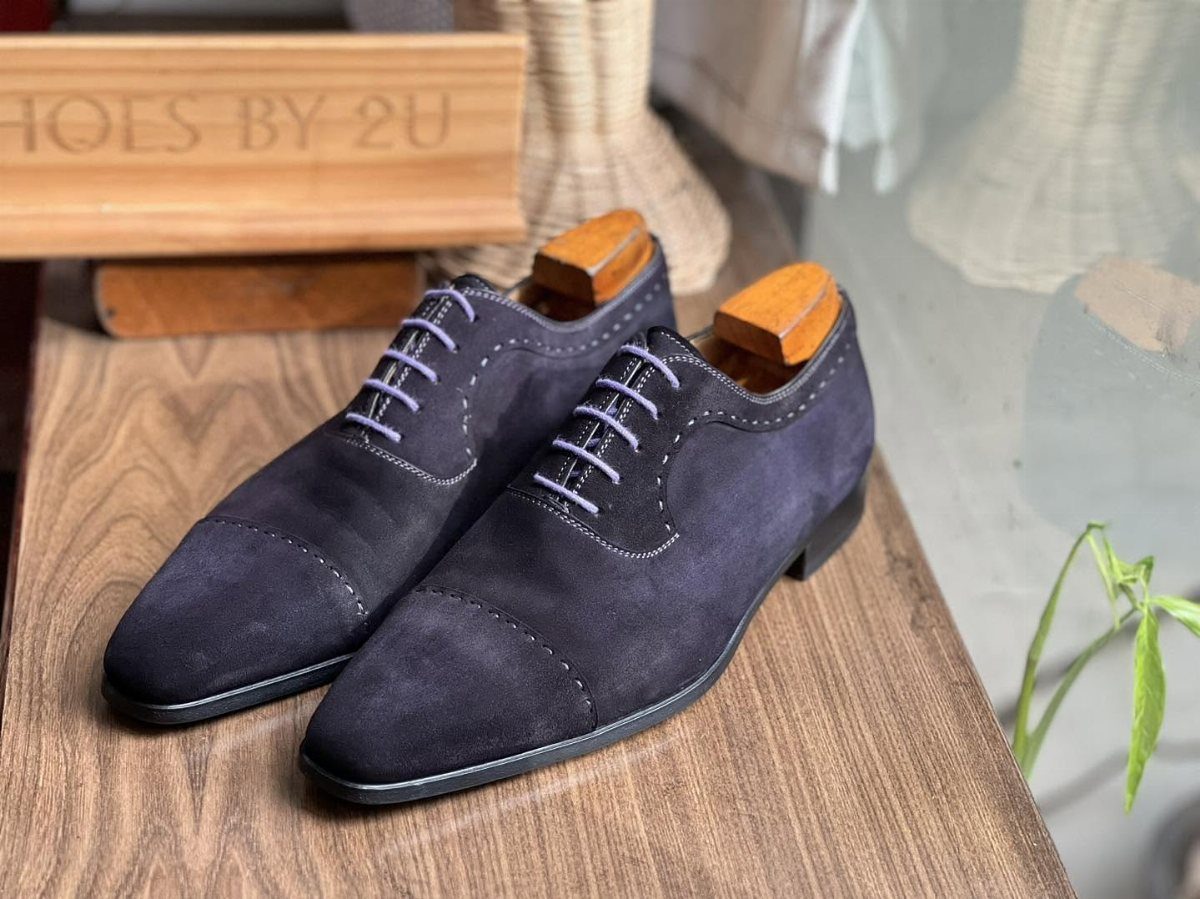
Suede brings texture to an Oxford, and a deep navy or purple shade makes it feel deliberate rather than safe. Cap toes keep the shape dressy.
Shoe trees stop the toe from crumpling between wears. Suede and rain don’t mix, so I save it for dry days.
Wear it with dark trousers and let the color do the talking.
6. Oxford Shoes with Jeans
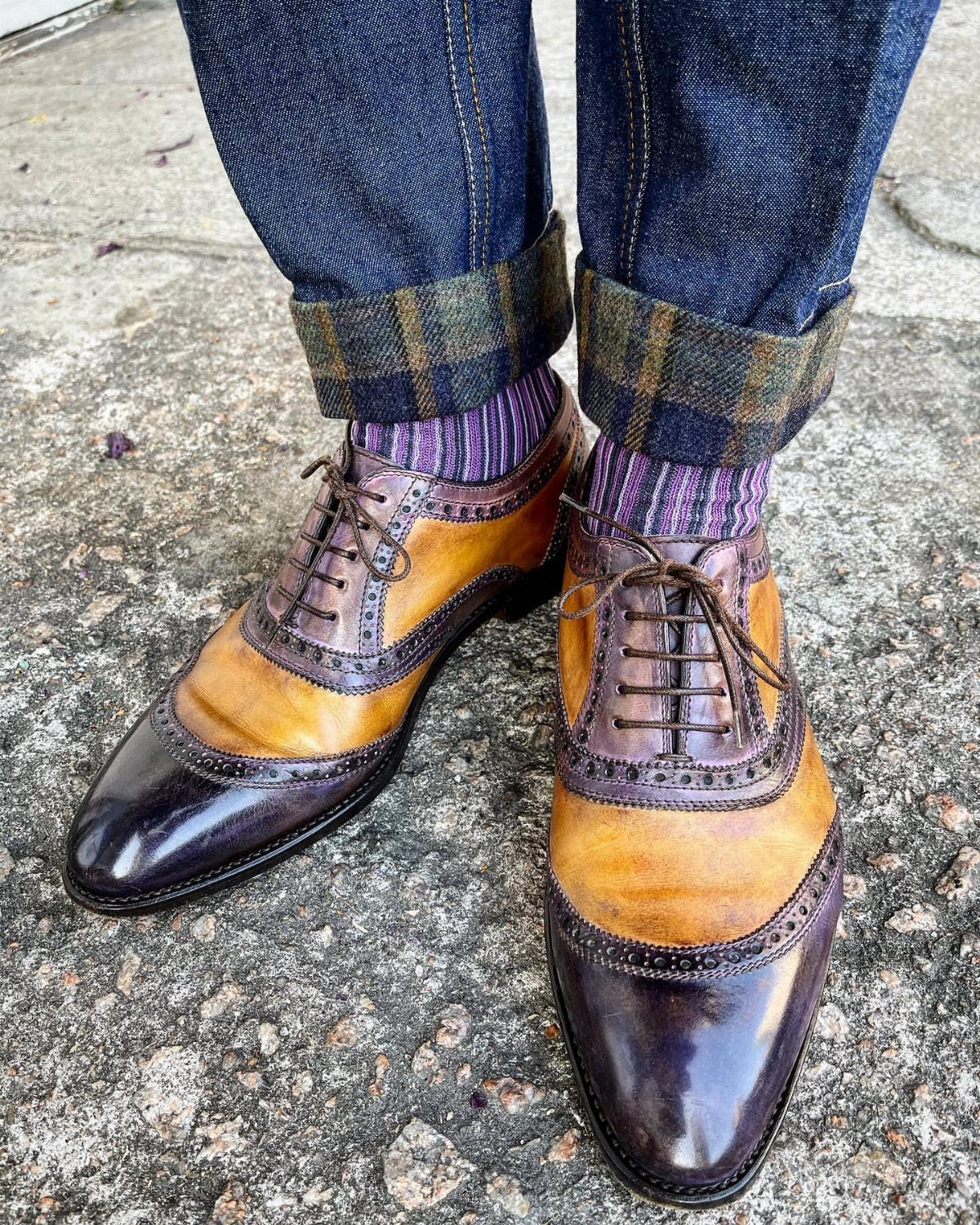
Jeans and Oxfords work when the denim is dark or mid-blue and the cuff is neat.
Cuff the jeans once or twice to show the ankle. Striped socks that echo the purple tie the outfit together without extra effort.
I prefer slim, not skinny, jeans here so the shoe doesn’t look swamped.
7. Brown Oxfords with Grey Trousers
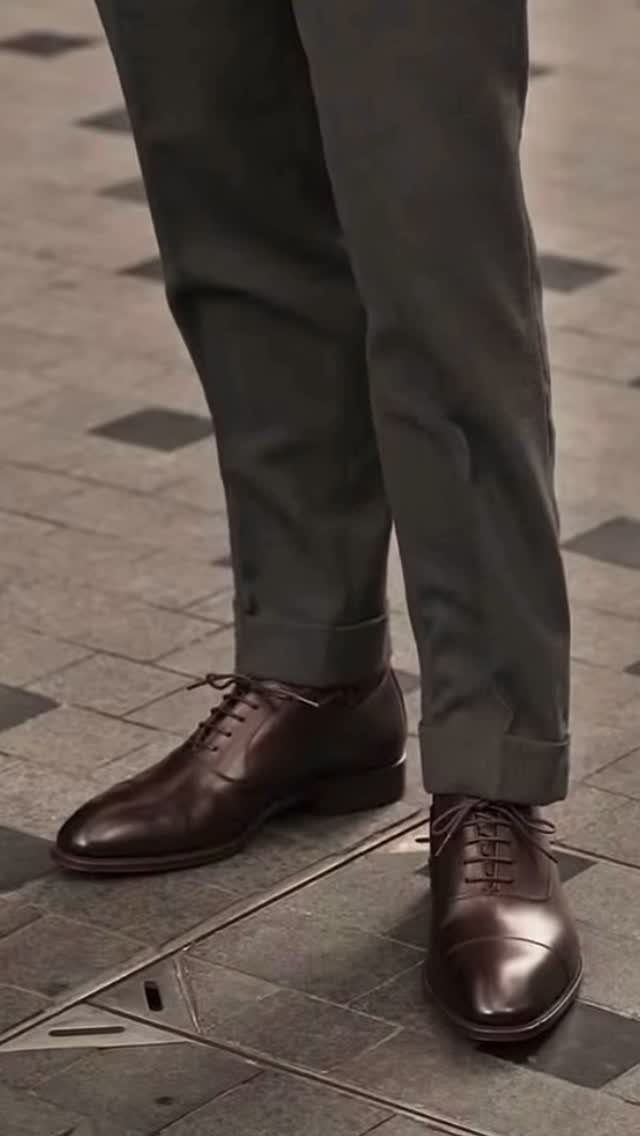
Dark brown oxfords against mid-grey trousers is a pairing that rarely goes wrong. The warmth of the leather keeps grey from looking flat, and a cuffed hem shows off the shoe.
I would pick this over black for days when the dress code is loose. Keep the cuff narrow so the line from trouser to shoe stays tidy.
A navy or white shirt finishes the outfit with no extra thought.
8. Black Oxfords with Statement Socks
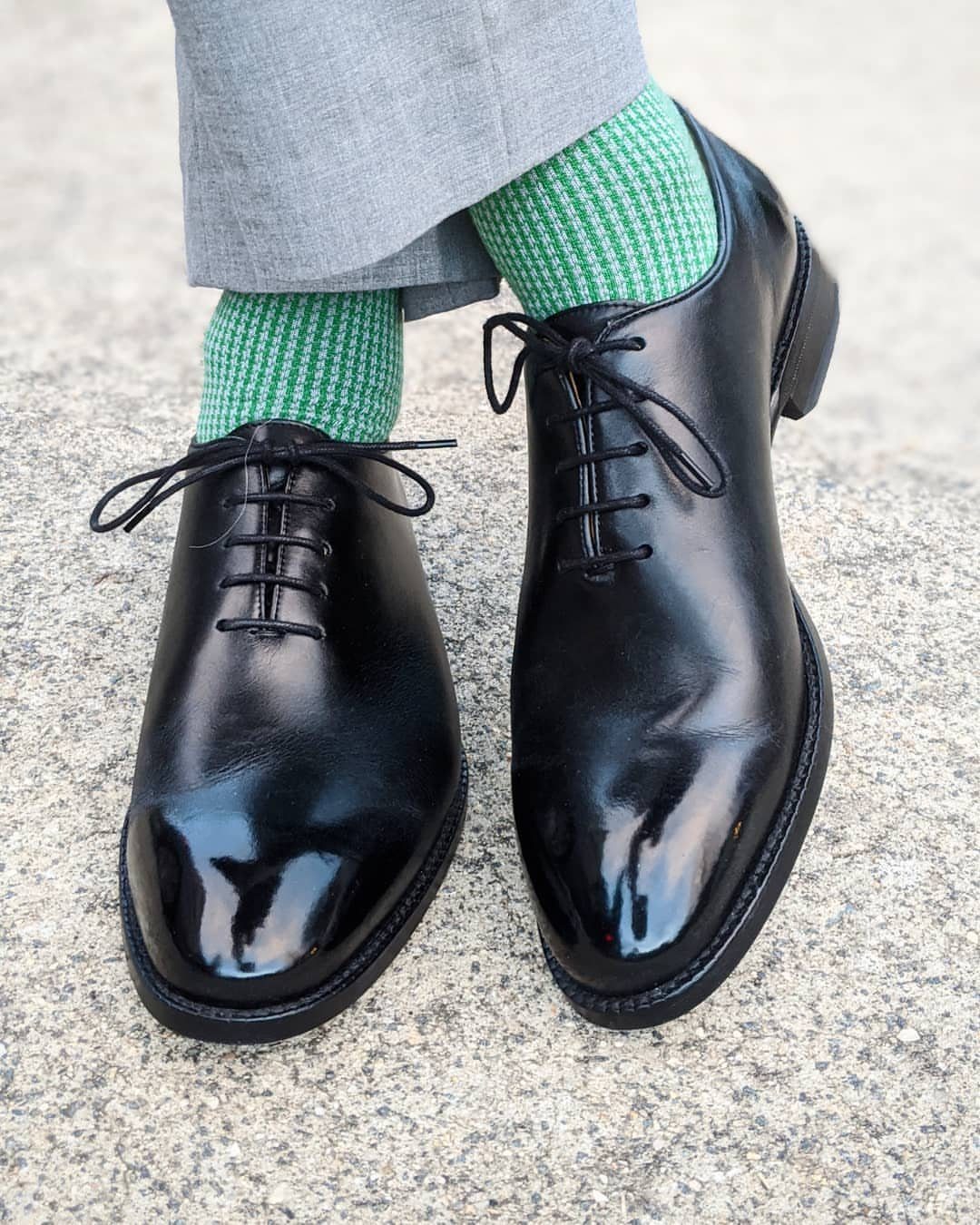
Bright green ribbed socks turn a plain black oxford into the one thing people notice. Grey trousers are the right backdrop because they keep the color from competing with anything else.
Rib adds texture, so the sock reads as deliberate instead of loud. Hem the trousers high enough to show an inch or so of sock when you sit.
Keep the shoes well polished and everything else quiet. One bold item is enough.
9. Patent Leather Tuxedo Oxfords
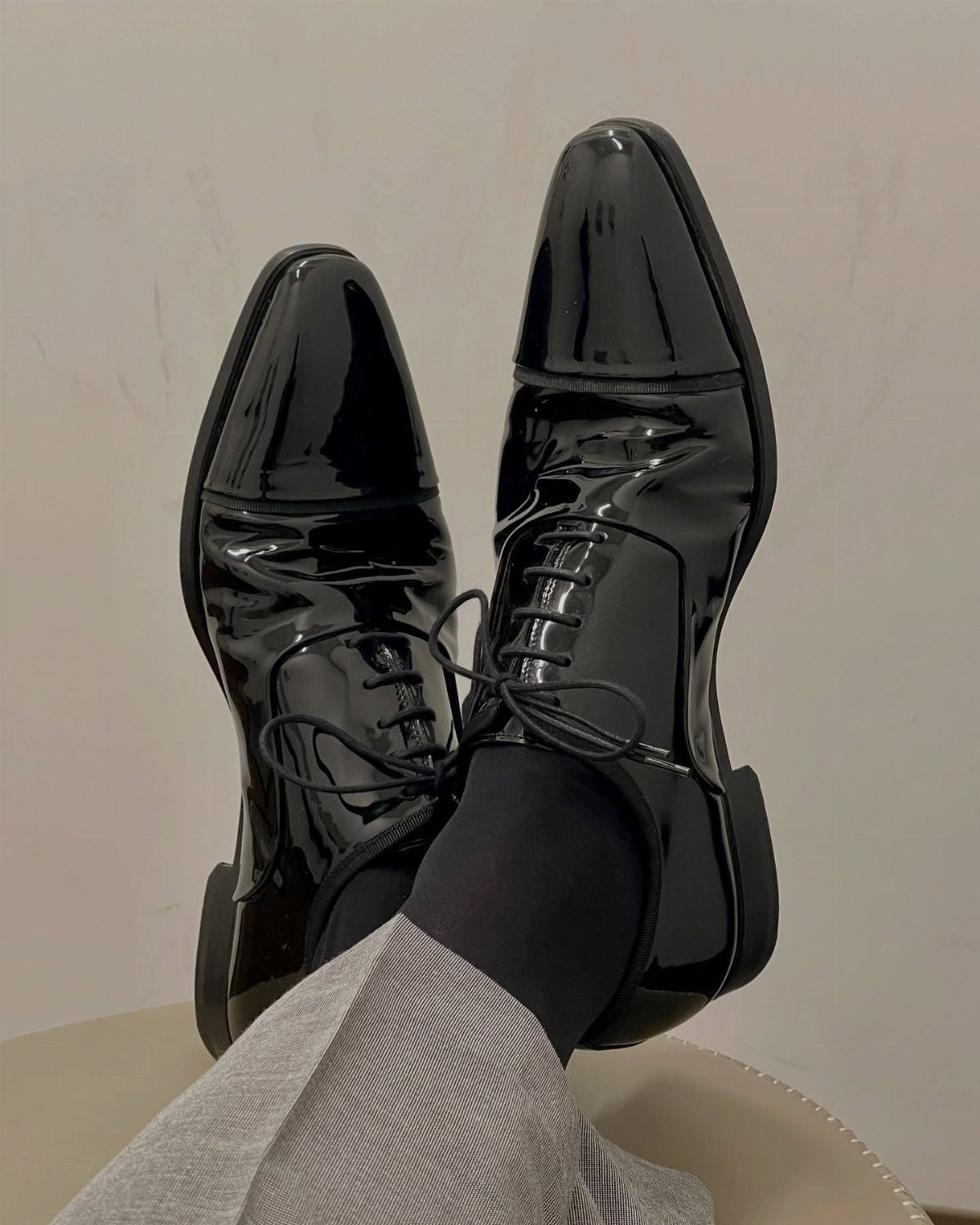
Patent leather gives the black oxford its formal edge: a mirror finish that catches light and belongs at evening events. Black socks keep the line clean from shoe to hem.
Wipe the surface with a soft cloth after each wear.
I would not wear patent to a daytime office. It is built for after dark.
10. Wingtip Brogue Oxford Shoes
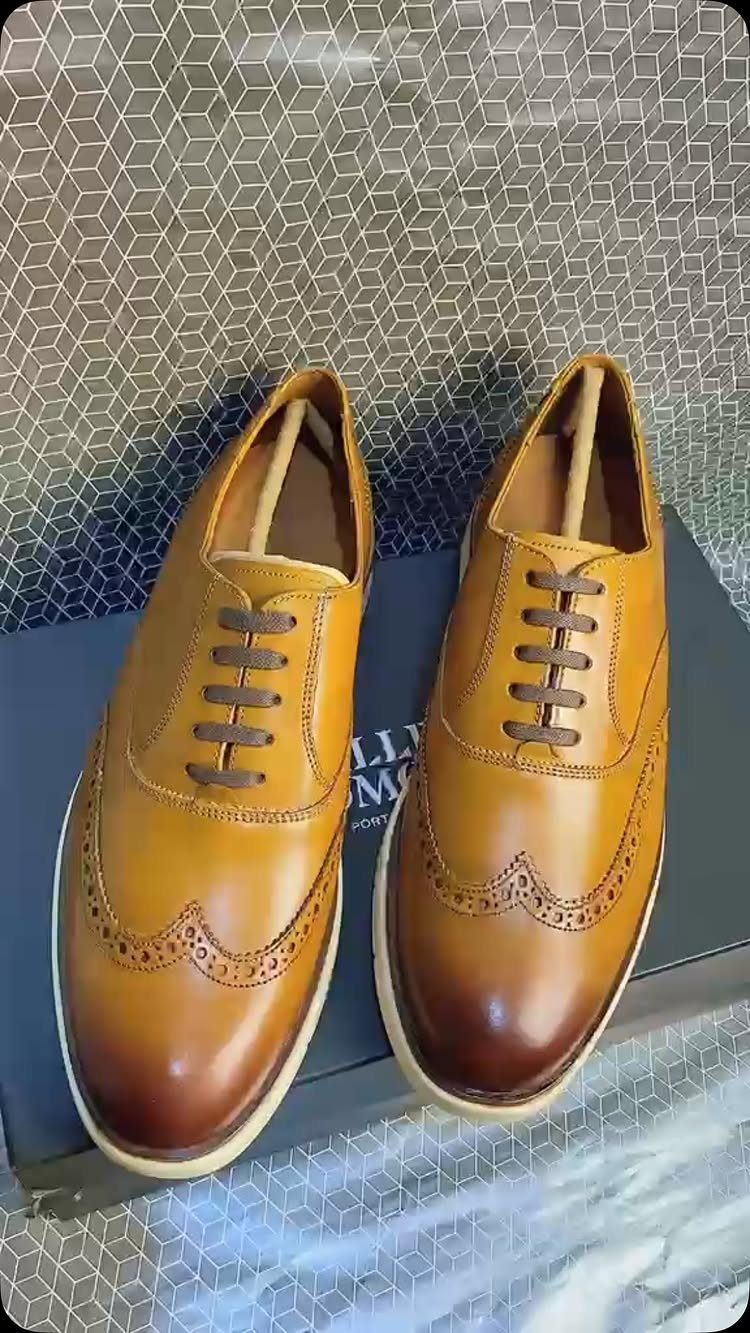
A tan wingtip brings detail to an Oxford: the pointed toe cap wraps back along the sides, and the perforations add character. Tan leather is lighter and more casual than black, so it fits weekends and relaxed offices.
I like it with navy or olive trousers and a plain shirt, since the shoe already supplies the pattern. Pair them with understated pieces.
For one pair of wingtips, tan is the one I would choose.
11. Brown Oxfords with Beige Trousers
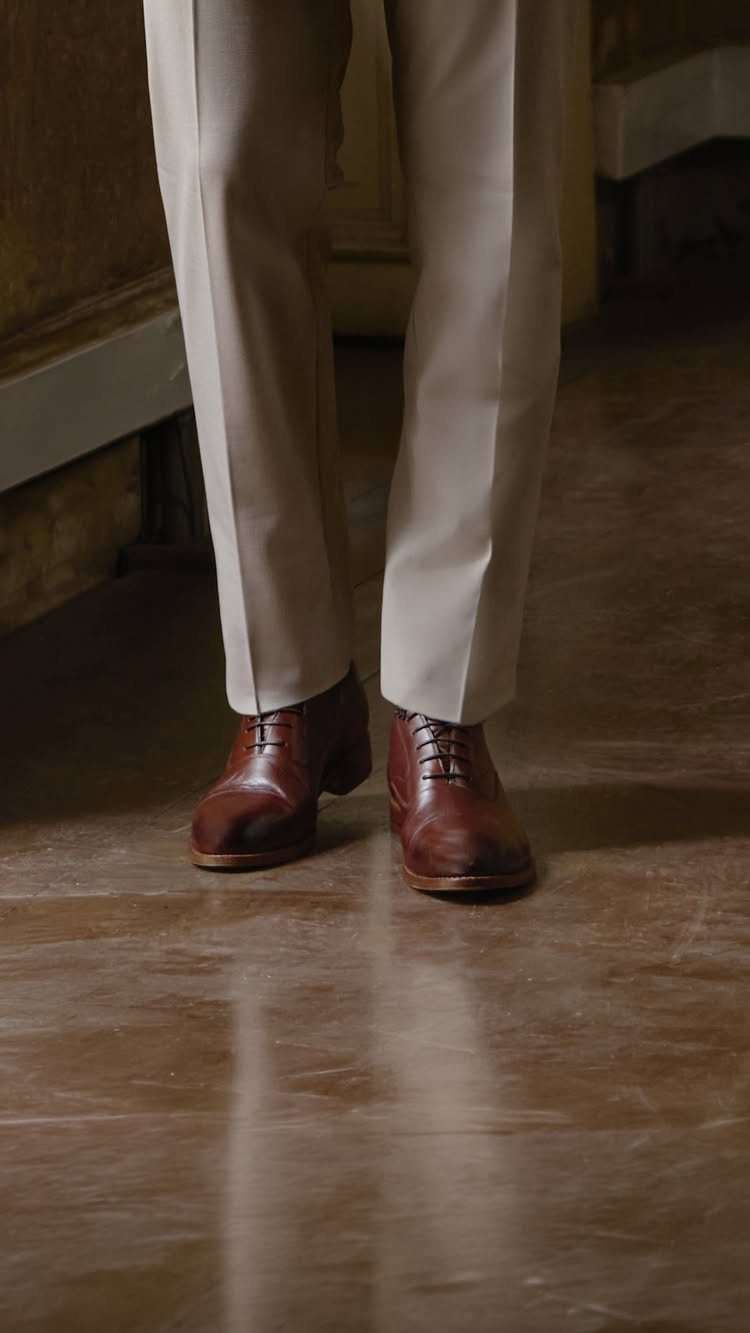
Brown oxfords on beige trousers make a warm, low-contrast outfit that suits spring and summer days. Pick a mid or dark brown so the shoe stands out against the lighter fabric.
Beige shows scuffs and creases quickly, so keep the shoes polished and the trousers pressed. A slim leg hemmed to rest just above the shoe lets the design show.
A white or light blue shirt keeps the whole look fresh.
12. Black Oxfords with Grey Trousers
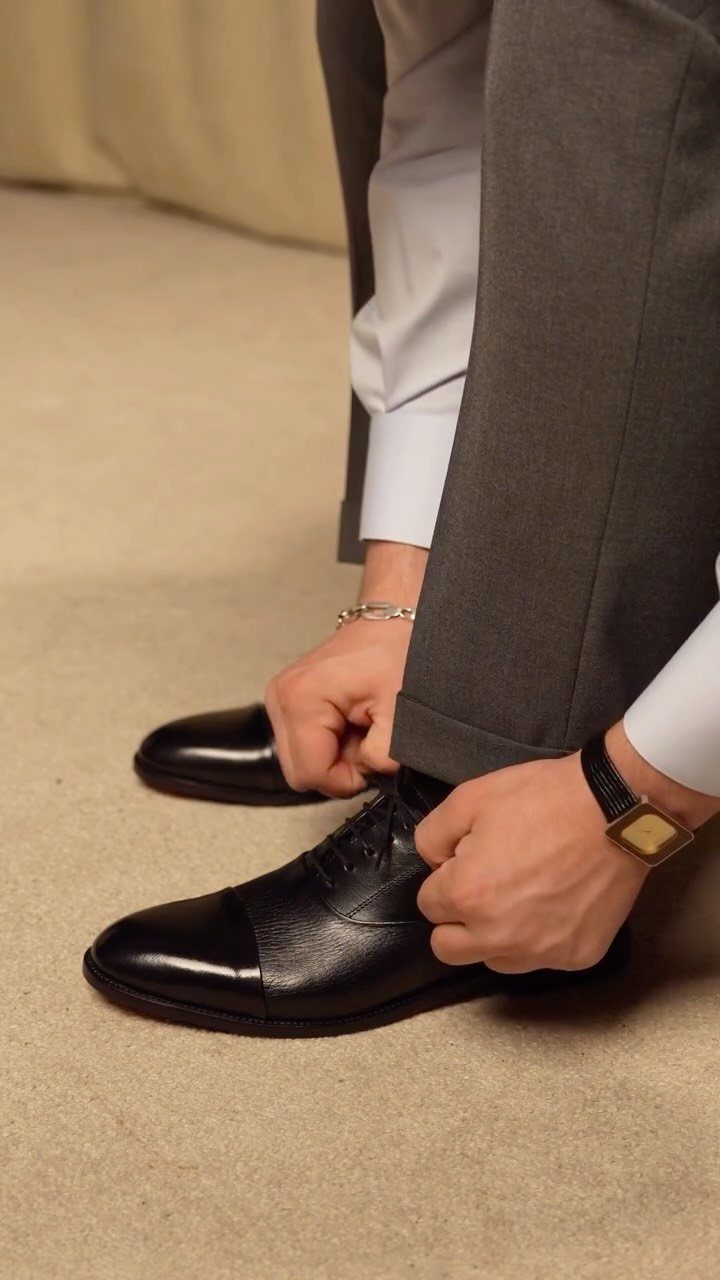
Black oxfords with grey dress trousers and a white shirt is the plainest office uniform there is, and it works. Lace the shoes snugly, since loose laces ruin a sharp outfit faster than a wrinkled shirt.
Choose charcoal grey for a more formal feel and a lighter grey for something relaxed. Let the hem touch the shoe with a single fold at the front.
Add a navy tie if the day calls for one.
13. Casual Tan Oxfords with White Soles
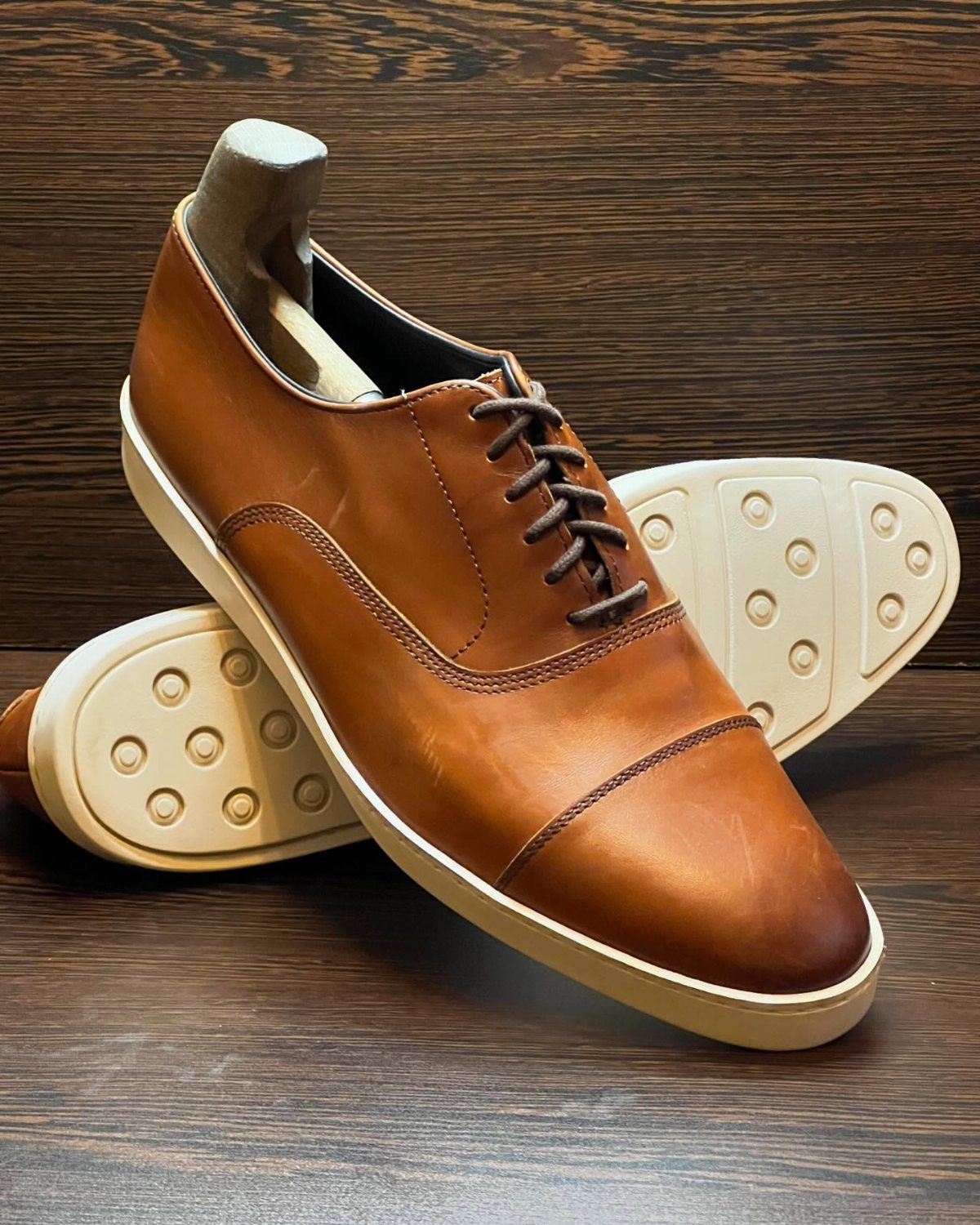
Tan leather with a white sole is the most relaxed way to wear an oxford. The pale sole breaks up the dressy outline and pairs naturally with brown laces.
Chinos in navy or olive and a solid white or gray T-shirt are all it needs. Roll the hem once so the sole shows.
White soles pick up dirt fast, so wipe them down after a wet day.
14. Chunky Lug Sole Oxford Shoes
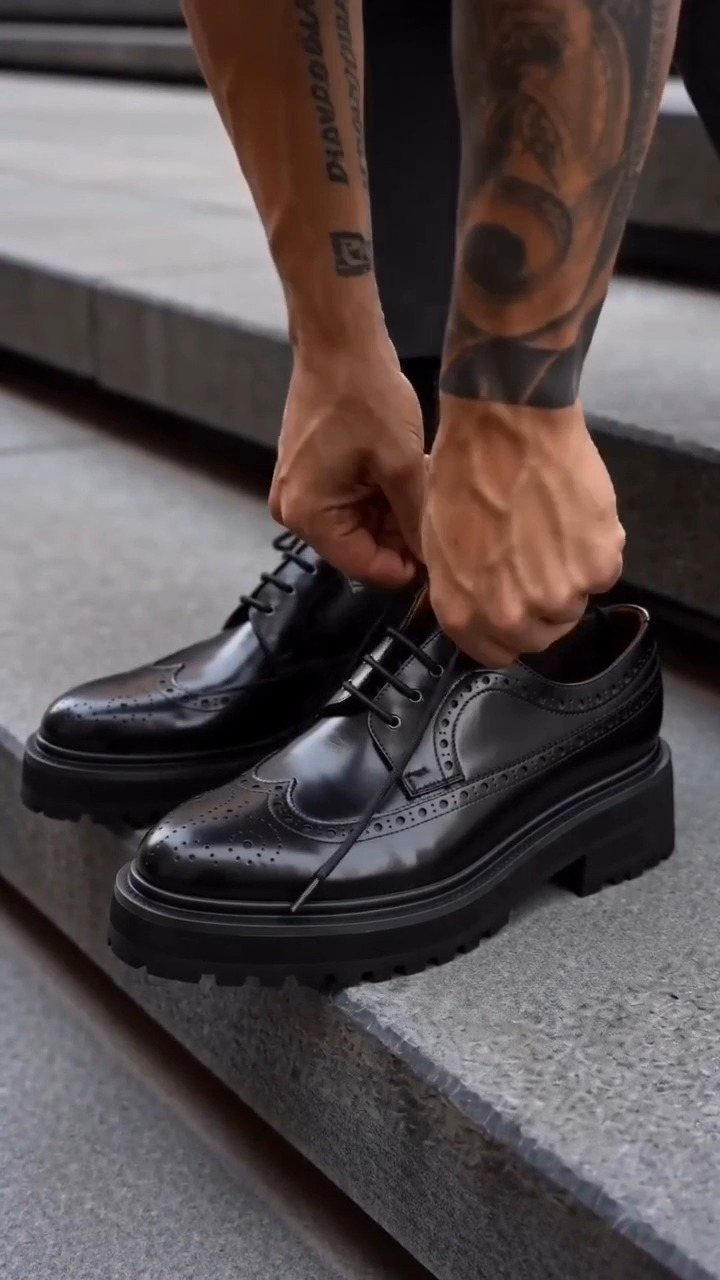
Thick lug soles turn a black leather oxford into a boot-like shoe that still laces up the classic way. Black keeps it sharp enough for a dark pair of trousers.
Because the sole is heavy, choose trousers with a straight or slightly tapered leg that clears the shoe. A skinny leg makes the foot look oversized.
Lace them snugly and double-knot, since a chunky shoe with loose laces looks sloppy. For jeans and weekends, I like this more than a sleek dress pair.
Oxford Shoe History
The name "Oxford shoe" first appeared in print in 1846.
A derby has open lacing, while an Oxford has a closed system, and that single difference tells the two apart.
Because the eyelet tabs are sewn beneath the vamp, pulling the laces draws both sides together snugly all the way up.
That construction gives the shoe its clean, uncluttered line and a slight heel. It is also why an Oxford looks dressier than almost any other lace-up, whatever the leather or color.
Oxford Shoe Pricing
Quality Oxfords run from $200 to $500, so there is a pair for most budgets.
Handmade pairs from a brand like Oliver Sweeney sit near the upper end of that range at around $400.
You are paying for fine leather and skilled work, and a pair like that should last for many years, which makes the price easier to justify.
Below that sits the mid-range, where construction and long-term value balance well. I would start there if this is your first serious pair.
Spend on one good pair before buying three cheap ones. A well-made shoe ages better and costs less per wear.
Oxford Shoe Customization
If off-the-rack sizes never quite fit, custom is worth a look. Hockerty builds Oxfords to your own measurements at entry-level prices, which is a real help if you have wide feet, a hard-to-fit shape or a non-standard size.
A plain toe keeps things minimal, while a wingtip brogue is the bolder option.
My advice is to pick the version you will wear most, usually a simple black or brown, and design that first. Save the experiments for a second pair, once you know how the fit feels.
Frequently Asked Questions
What is the difference between an Oxford and a derby?
The difference is the lacing.
The derby’s quarters stitch on top of the vamp and flare open when unlaced, while the Oxford’s sit underneath and pull closed. That one detail tells them apart and makes the Oxford the dressier of the two.
What type of leather is best for Oxford shoes?
Smooth calf is the classic choice, and shell cordovan is prized for resisting scuffs and aging well.
Suede and nubuck read casual and pair better with chinos or odd trousers than a business suit. Canvas works for summer but won’t last as long as leather.