Loafers run from a plain Venetian slip-on to a tassel loafer borrowed from Ivy League dress, and the range in formality is wider than the shoe’s reputation suggests.
Fit at the heel separates a loafer that works from one that slips, since there are no laces to close the gap.
1. Tassel Loafer
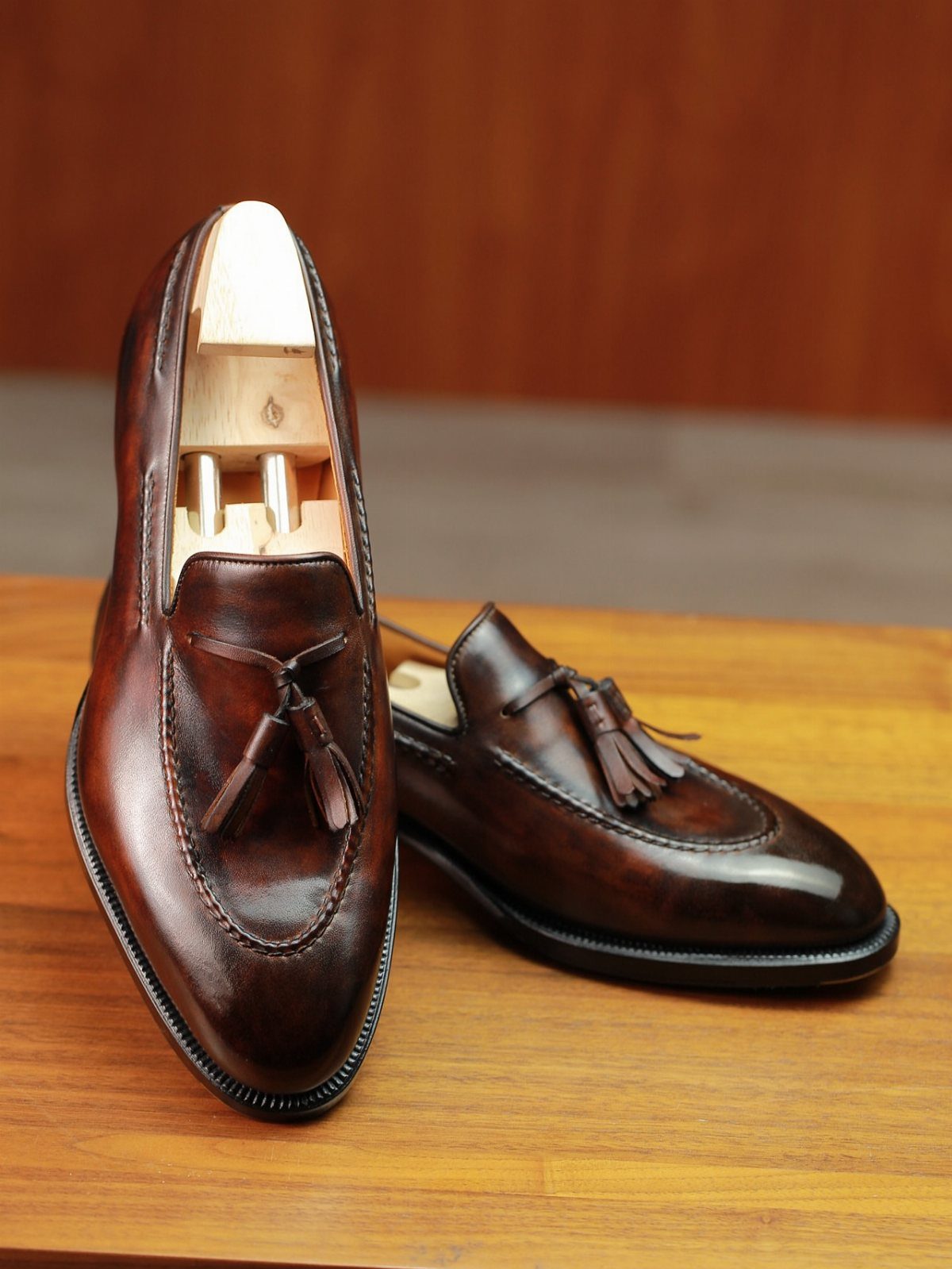
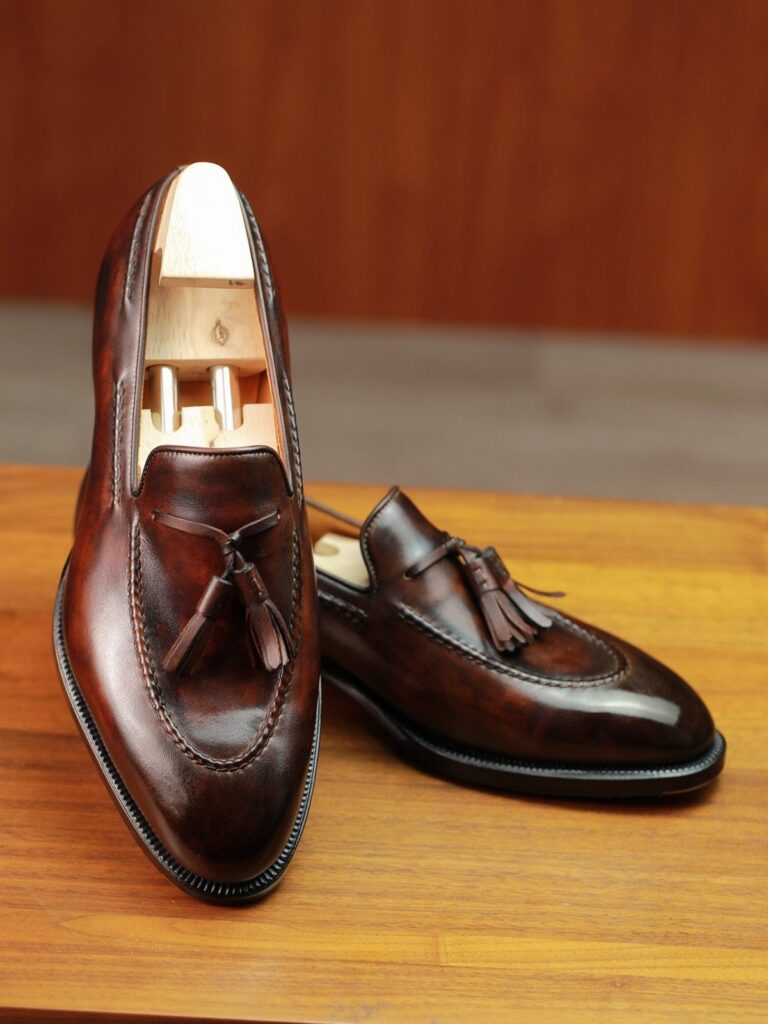
Tassels on the vamp make this the most decorative loafer on the list, and the polished dark brown leather pictured keeps that detail from looking fussy.
Brown is the color I’d start with, since it works with navy and gray trousers as easily as with jeans.
A shoe tree, like the one in the left shoe, helps the leather hold its shape between wears. Skip tassels if you want something quiet; this pair gets noticed.
2. Penny Loafer
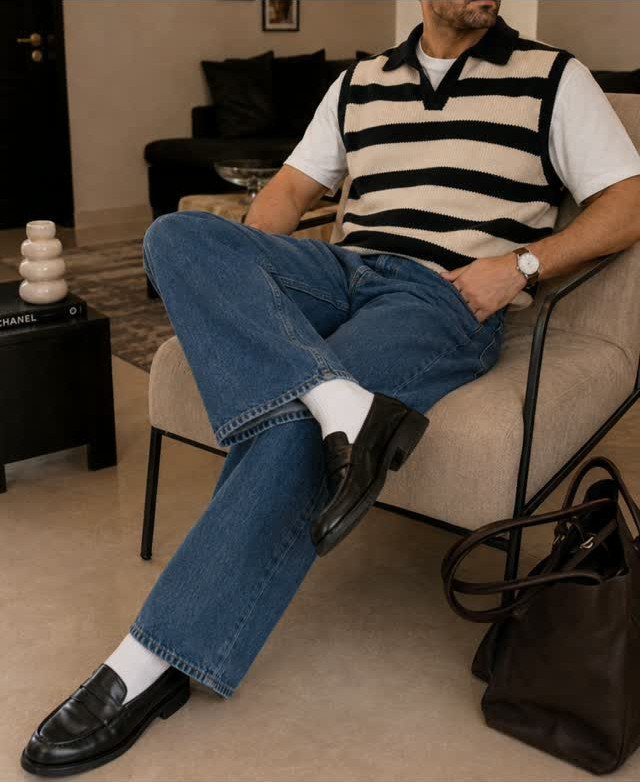
A penny loafer has a strap across the vamp and nothing else, which makes it the most straightforward version of this shoe.
Black leather works with a suit and also pairs well with jeans, which gives you more range than most dress shoes.
For work, swap in dark socks and trousers. If you want one loafer that asks little of you and goes with most of your closet, I’d pick this one.
Having been around since 1936, the Larson Weejun is the ultimate penny loafer that still looks great today. That being said, its durable leather upper does have a break-in period, and may feel a bit stiff the first few wears.
3. Horsebit Loafer
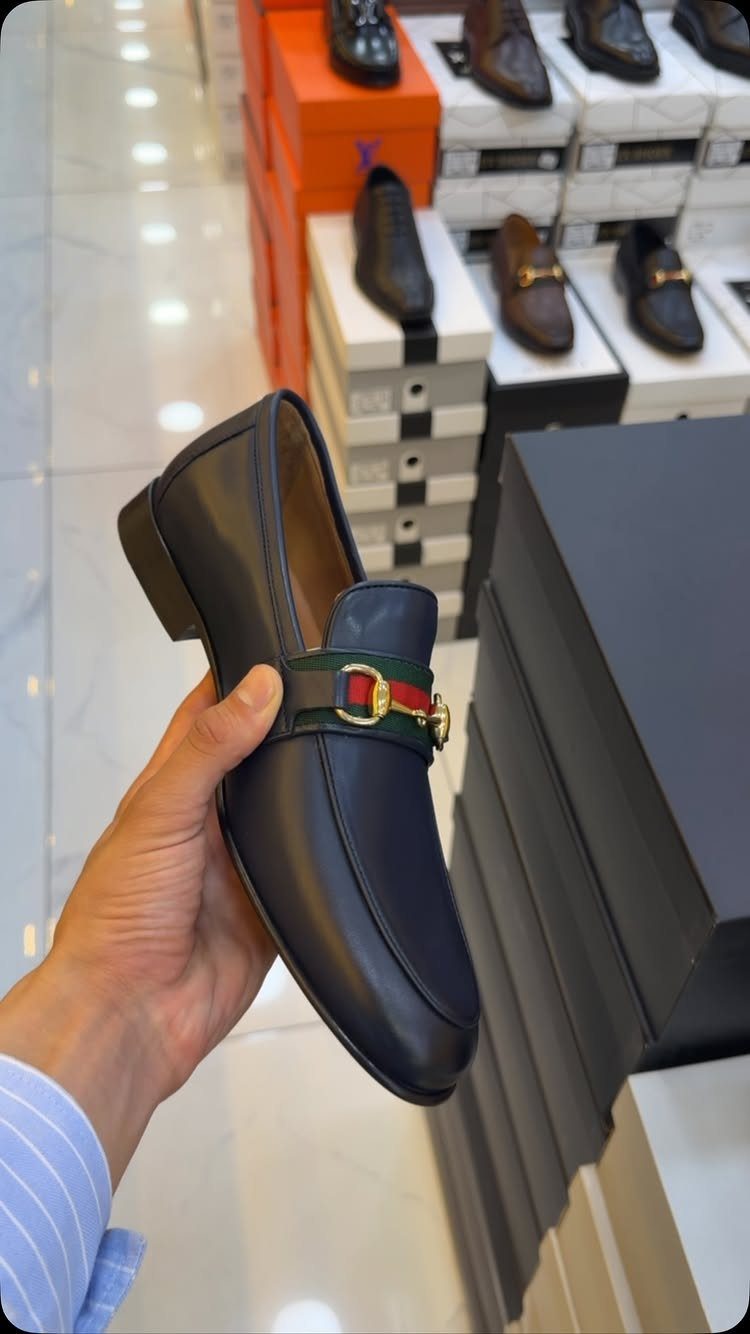
A metal bit across the vamp is what defines the horsebit loafer, and gold hardware on navy leather looks sharper than you’d expect.
I’d wear navy with gray or tan trousers and keep everything else plain, so the bit does the talking. Black or brown versions are easier to match if you want less attention.
4. Driving Shoe Loafer
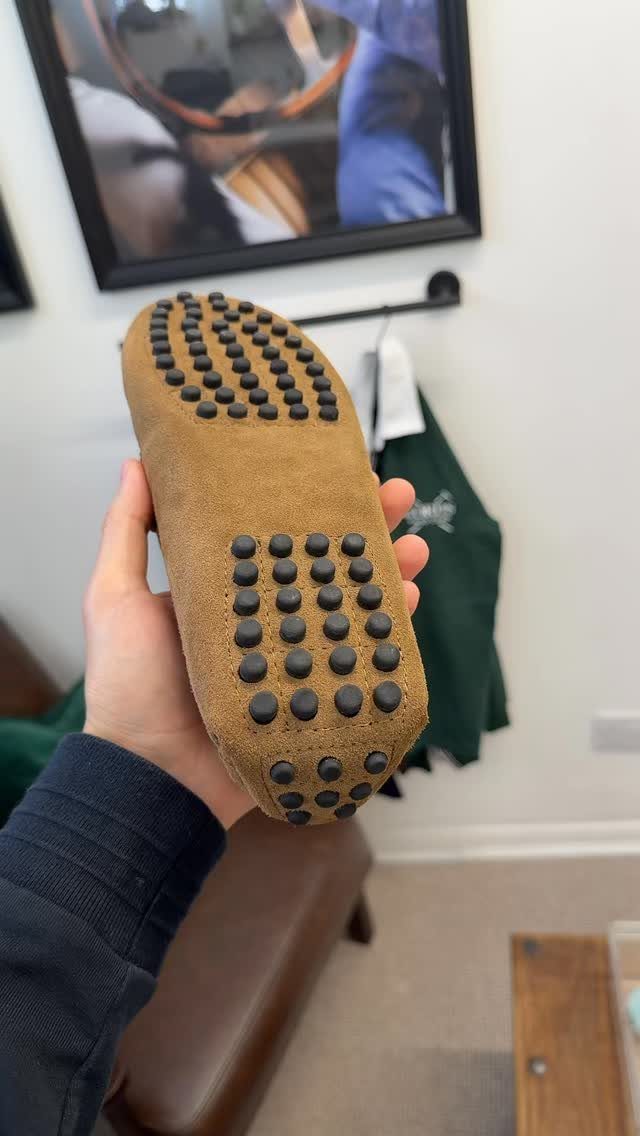
Built for comfort behind the wheel, the driving shoe has a rubber-nubbed sole that wraps up the heel, and the soft suede upper bends easily.
That sole is the giveaway, and it’s why these feel more like slippers than dress shoes.
Tan suede suits chinos and shorts in warm weather. Because the nubs are thin, I’d keep them for casual days rather than long walks on pavement.
5. Slipper Loafer
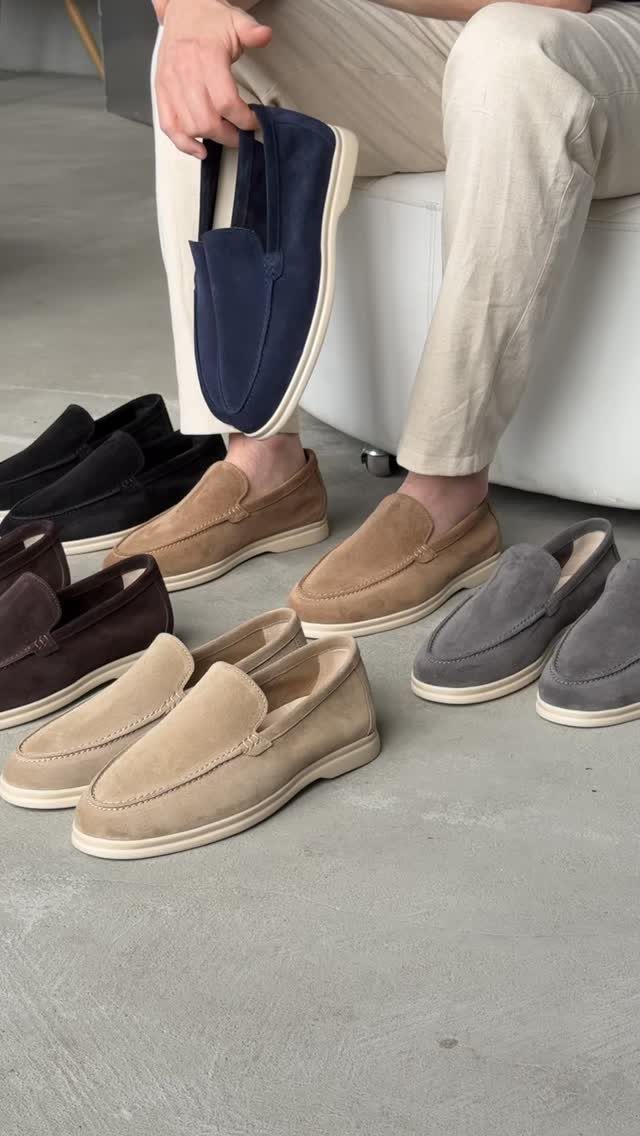
Slip-on and soft, the slipper loafer is the easiest pair to pull on and head out the door in. Suede in navy, black, brown, tan or gray covers nearly every outfit.
Navy is my pick for a first pair, since it pairs with beige pants as well as jeans. Suede looks best in dry weather, so keep these for casual days and leave leather for rain.
6. Kiltie Loafer
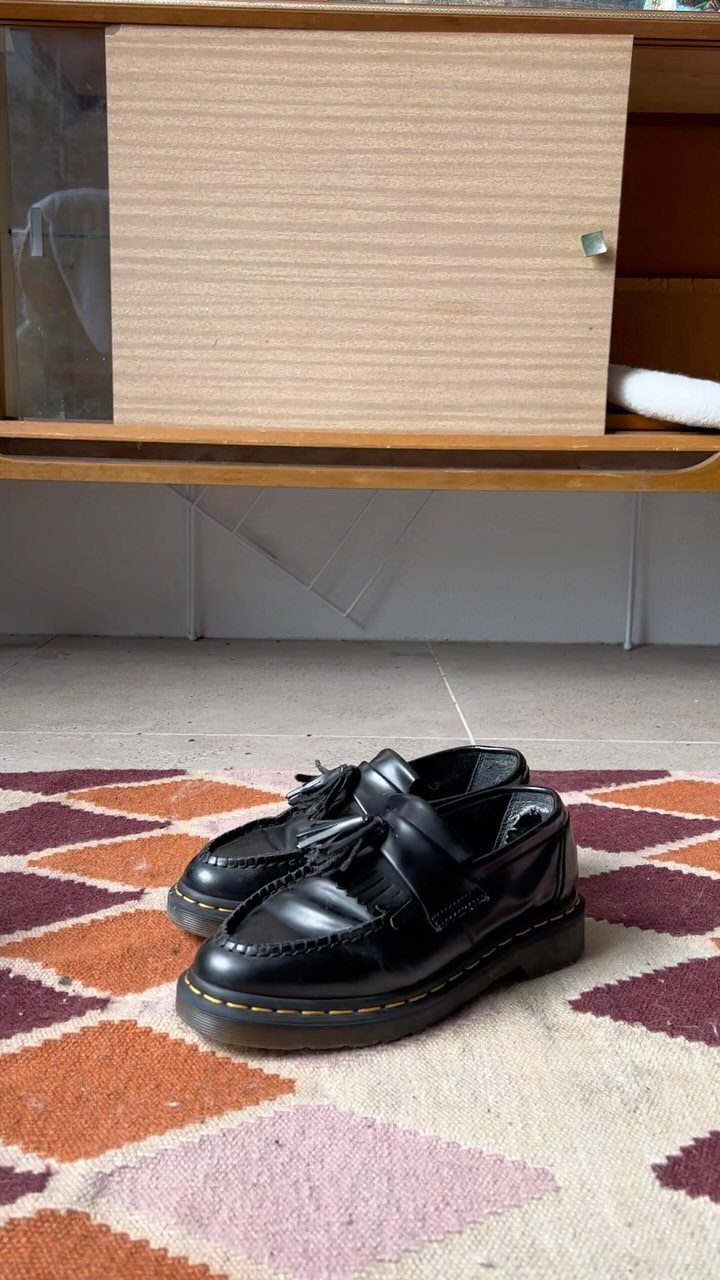
A fringed flap across the vamp, called a kiltie, gives black leather loafers more character than a plain pair. The yellow stitching on the soles is a small bonus, though it’s easy to miss.
Wear them with trousers or dark jeans so the fringe stays the focus. They’re a good second or third loafer, once a penny or tassel pair is already in the rotation.
7. Belgian-Style Loafer
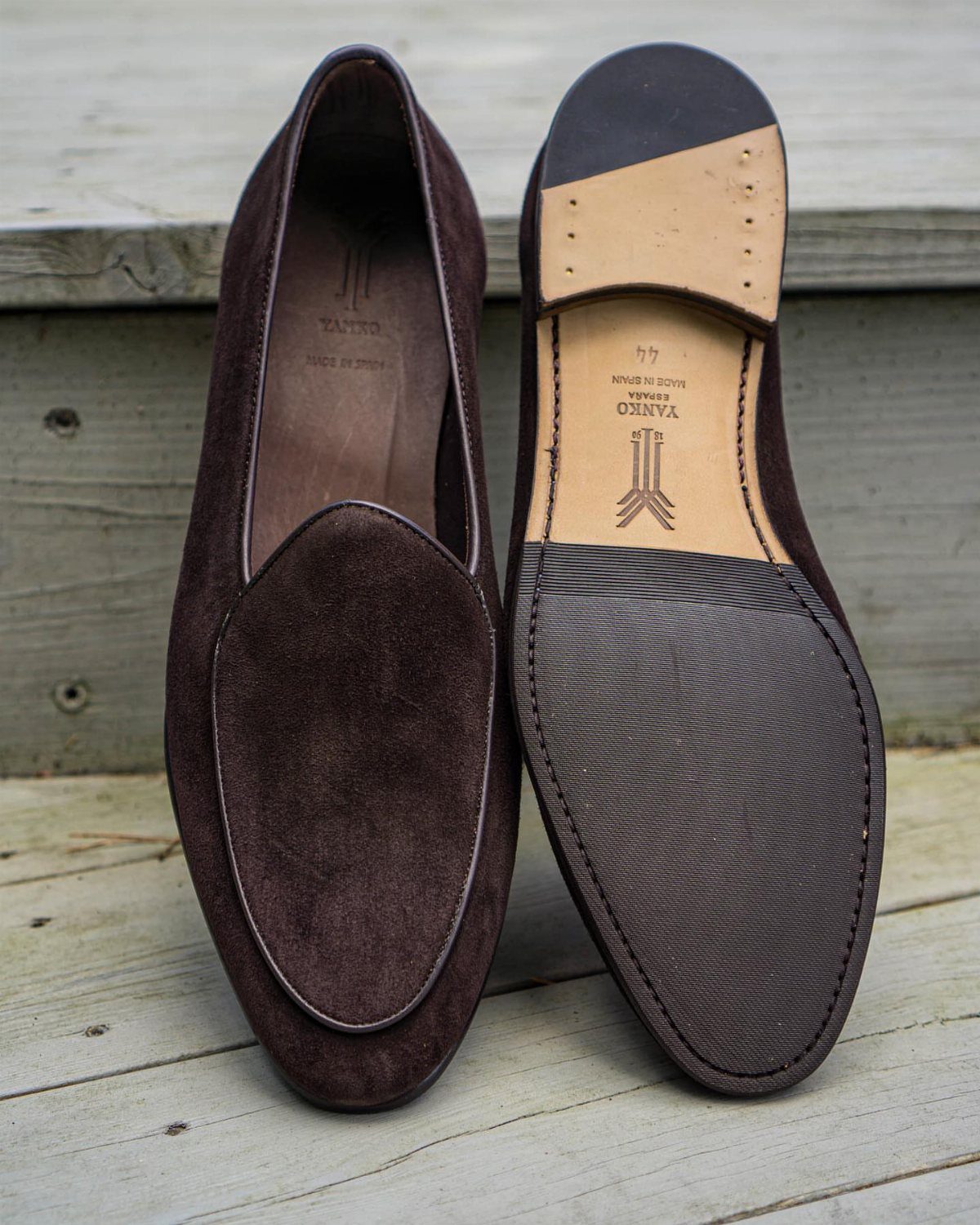
Brown suede with a soft, unstructured build is what makes the Belgian-style loafer so easy to wear. They stay light and flexible, and dark brown pairs as easily with chinos or jeans as it does with gray trousers.
I’d pick this over a stiffer dress loafer for casual days. Suede marks easily, so keep it out of the rain.
8. Espadrille Loafer
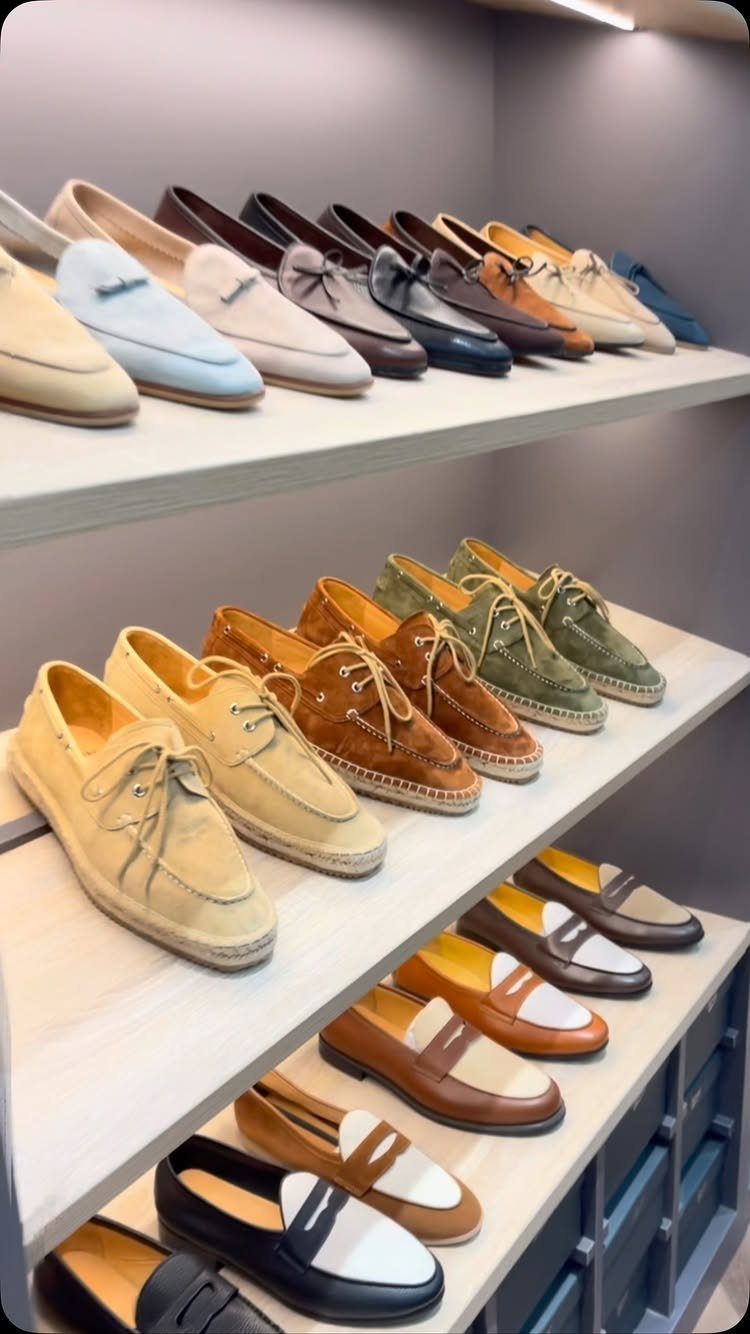
Jute soles and canvas uppers mark the espadrille loafer as a summer shoe, and the range of colors on offer means one pair can match almost any warm-weather outfit.
Wear them with shorts, light chinos or linen trousers. Canvas and jute are a poor match for cold or wet days, so I’d treat these as a seasonal pair, not an everyday one.
9. Sneaker Loafer
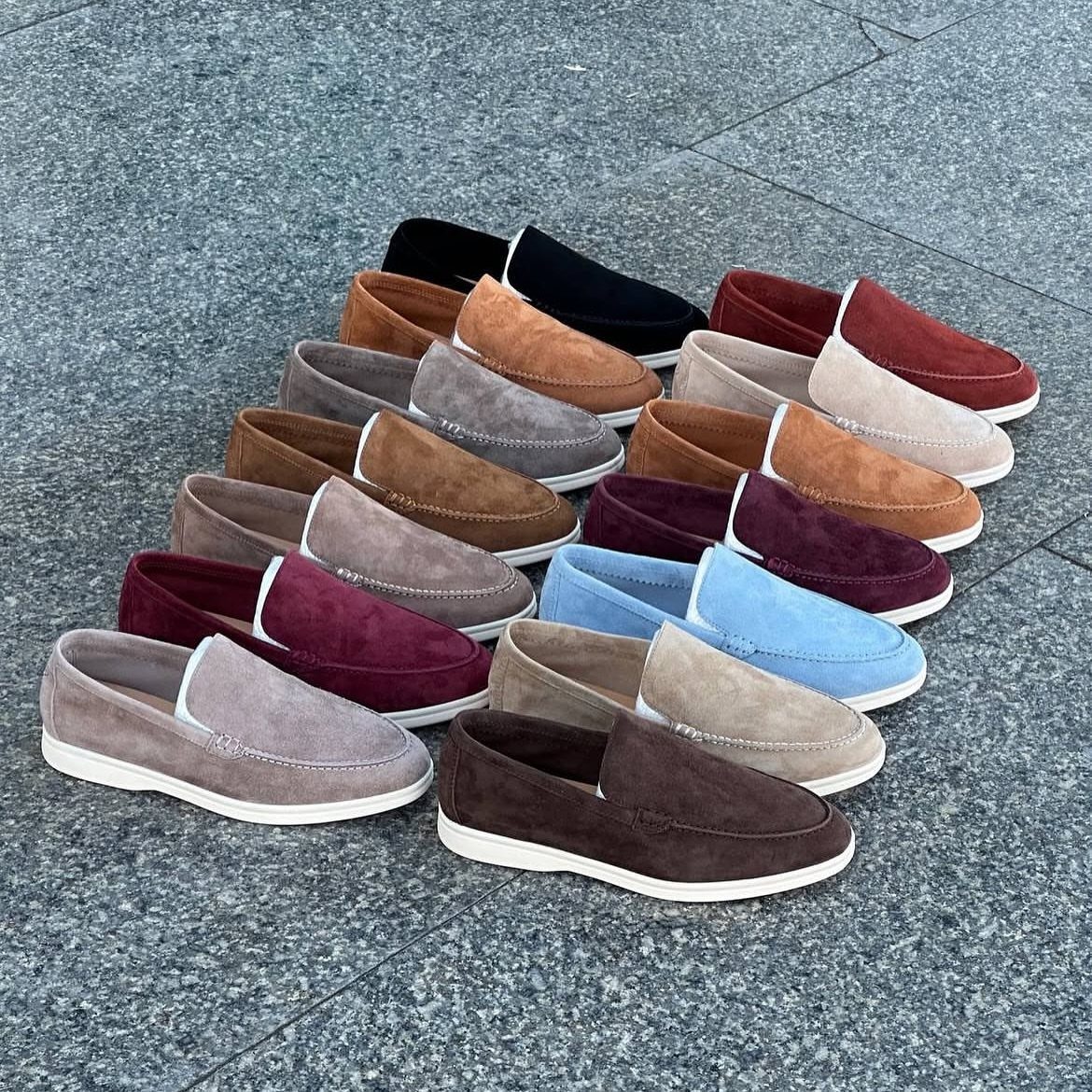
Part sneaker, part loafer: a suede upper with a white sneaker sole, and that mix is the whole appeal. Suede keeps the look softer than a plain trainer, while the sole adds comfort for a long day on your feet.
Jeans and chinos are the easy partners. I’d choose a neutral color first, such as navy or gray, before trying anything brighter.
10. Venetian Loafers
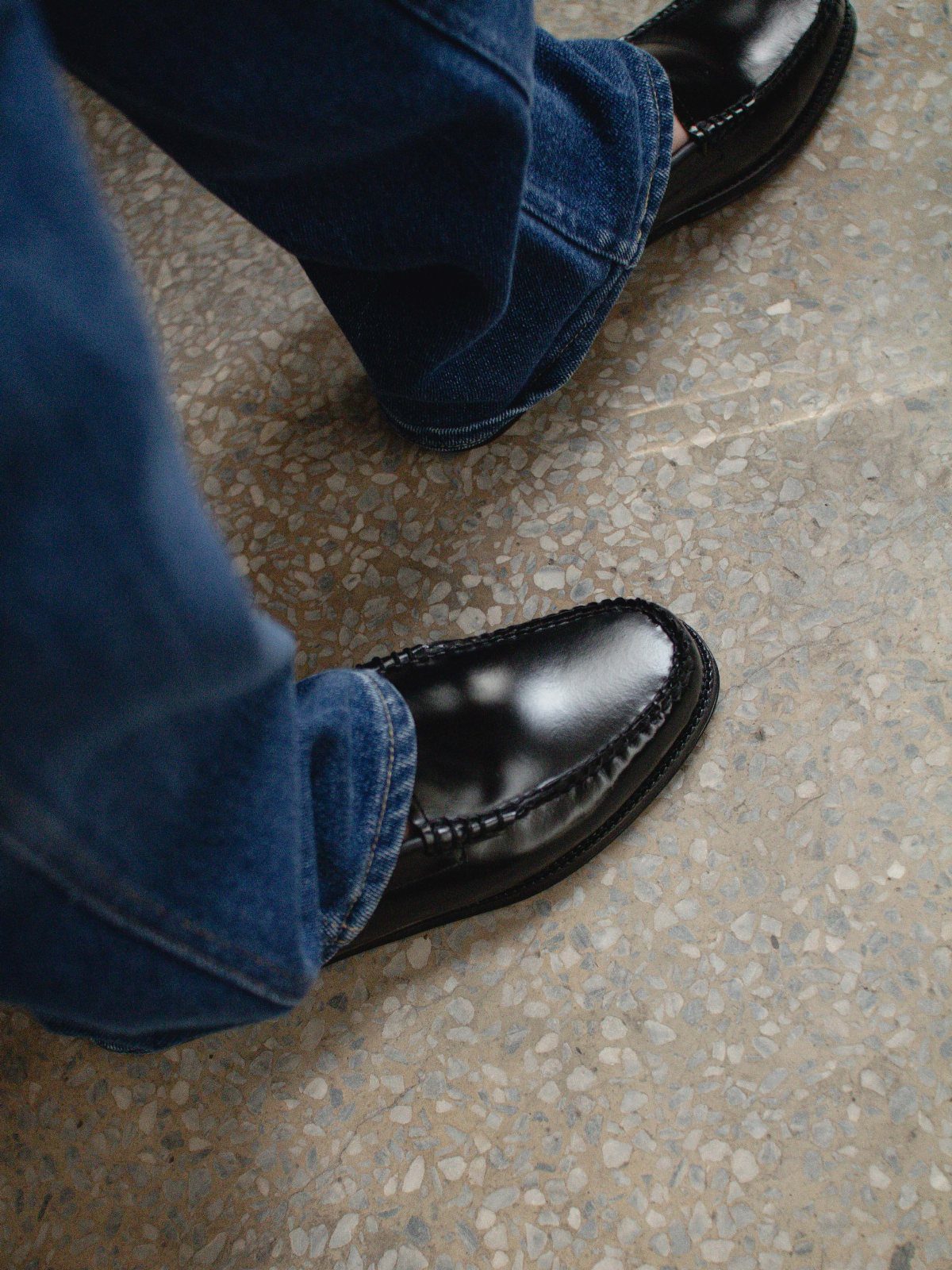
No strap, no tassel, no metal: the Venetian loafer leaves the upper completely bare, and that is its strength. Black leather pairs well with dark denim and gray trousers.
If you want a loafer that never competes with the outfit, this is the one. You get a cleaner line but less visual interest than a tassel or horsebit gives you.
How to Wear Loafers
A loafer pairs most naturally with chinos. Navy, stone, olive and camel chinos all work with suede or leather loafers, and the same shoe moves between a blazer and a linen shirt.
Dress trousers lean traditional; jeans read more casual but still polished.
A wide leg hides the shoe’s shape, so a slimmer cut shows the loafer better. Joggers with elastic cuffs are about the only pants I’d avoid.
A suit works too.
Higher-gloss leather is the bolder choice, while suede is quieter. Loafers also suit business casual, since they’re comfortable without looking sloppy.
Traditionally, loafers go without socks. No-show socks stop blisters and add barely any bulk.
Loafer Materials
Leather and suede are the 2 uppers most men will buy, and they behave differently.
Leather holds up well and asks for little. It takes longer to soften, but it develops an interesting patina over time, which is a good reason to choose it for a pair you plan to keep.
Suede feels more comfortable from the first wear and looks more distinctive. The price is higher maintenance, so expect to give it more attention.
If you want the least work, buy leather. If comfort out of the box and a softer look matter more, buy suede and accept the upkeep.
Loafer Fit
A loafer has no laces to take up slack, so fit matters more here than in almost any other shoe.
The heel should stay put. Some give during break-in is fine, but the heel should not slide around from the start.
The vamp should hold the foot firmly at the ball without squeezing.
If the ball of your foot runs wide, go for a wider width instead of a longer size. A longer shoe just creates new problems.
Size down a touch if you’re between sizes, since leather stretches and can’t be tightened afterward. Thin socks protect the lining; skipping them wears out the footbed faster.
Frequently Asked Questions
What are the different styles of loafers?
The main styles are penny, tassel, horsebit, driving shoe, slipper, kiltie, Belgian-style, espadrille, sneaker loafer and Venetian.
Each is defined by what sits on the vamp or how the shoe is built: a strap, tassels, a metal bit, a fringed flap, a rubber-nubbed sole, or nothing at all. That detail decides how dressy the pair looks.
Can you wear loafers with socks?
Yes, but keep them thin: no-show socks or thin socks work best.
How should loafers fit?
A loafer should hold your heel in place and grip the ball of your foot firmly without squeezing.
Are leather or suede loafers better?
Leather is better if you want the least work, since it holds up well and builds a nice patina, though it takes longer to soften. I’d choose by how much care you’re willing to give.