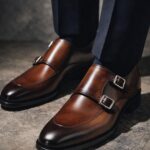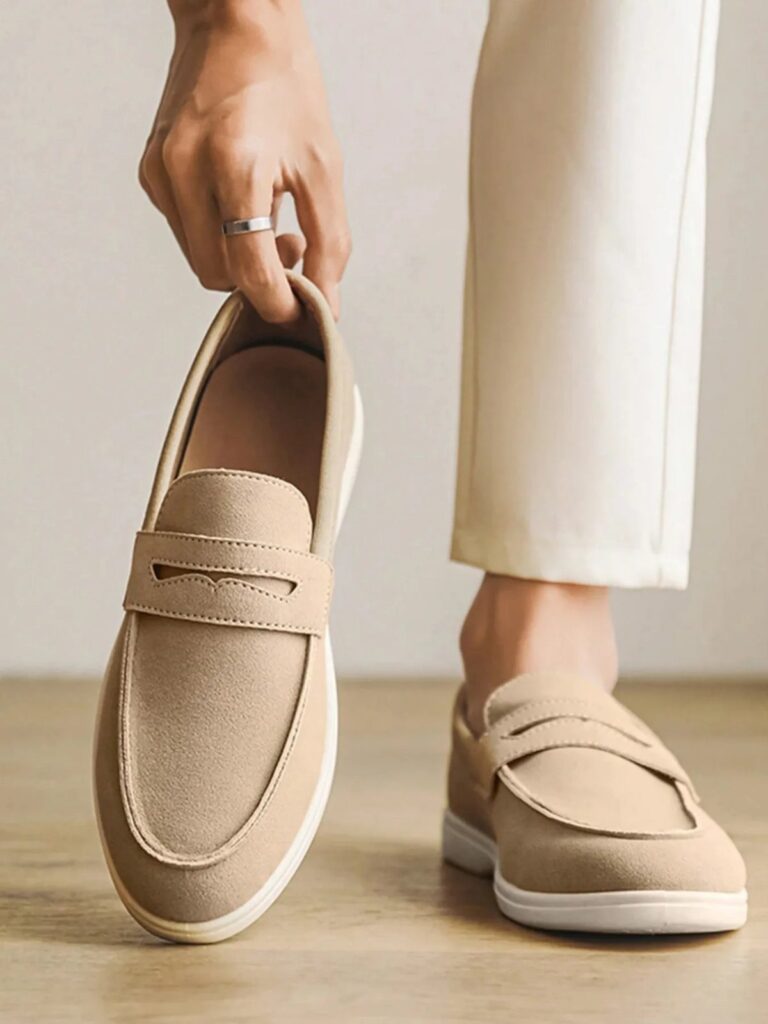
White pants work with shoes from soft beige suede to polished black leather, and the formality of the day picks the pair.
For a weekend errand, beige or tan suede in a low-contrast loafer is easy; for an evening, an event or an office, go darker and smoother with brown or black leather.
1. Beige Shoes with White Pants
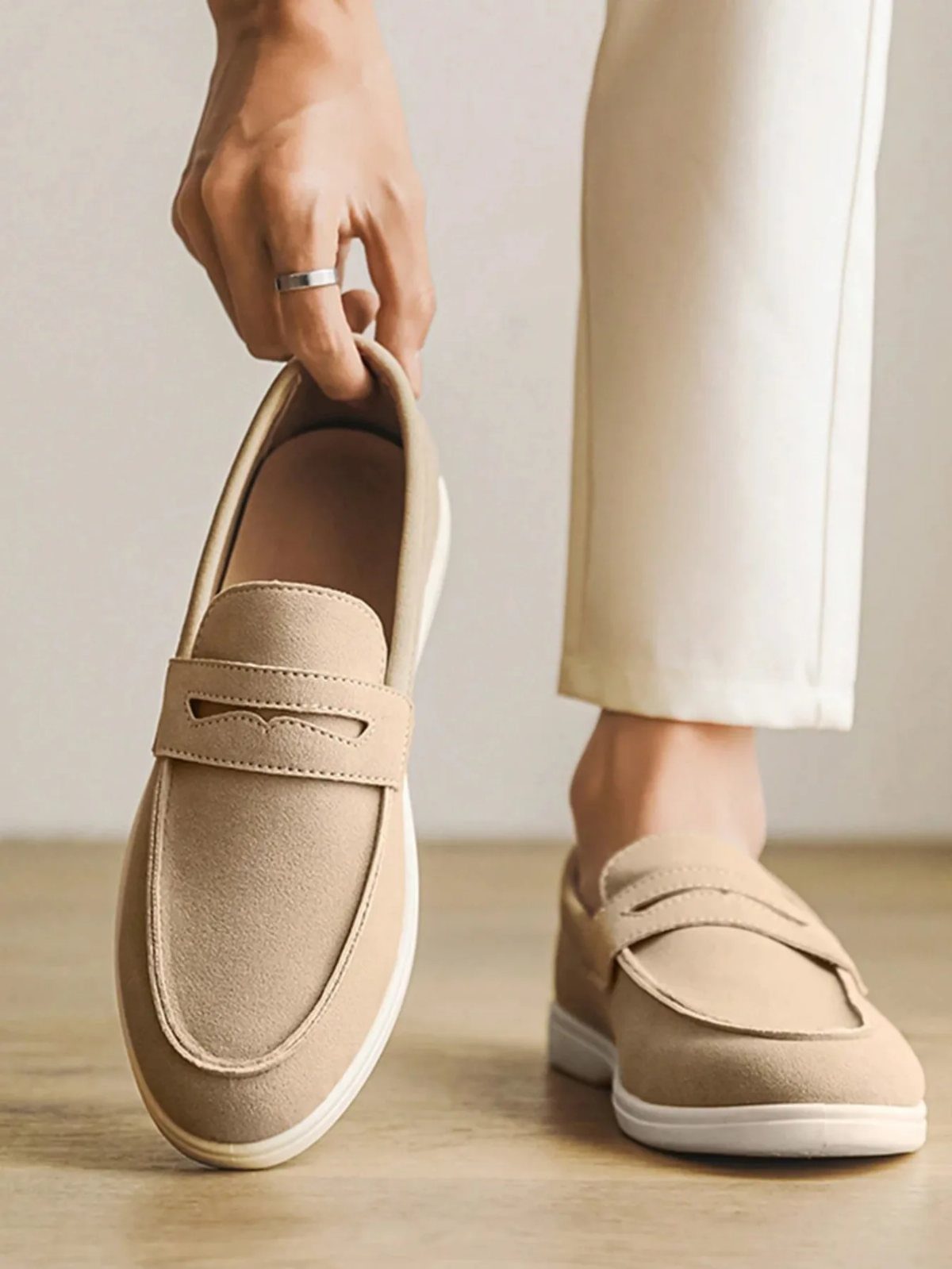
Beige suede loafers sit one shade off white, so the outfit reads soft and low-contrast instead of sharp. That works well on a warm day when you want the look to feel easy.
Suede is the right call here.
It has a matte surface that matches the flat finish of white trousers, where a shiny leather would fight it. Stick to sand, cream or pale blue for your shirt and jacket and the whole thing hangs together.
The cost is upkeep. Pale suede shows dirt fast, so I’d treat a new pair with a protector spray before the first wear.
2. Tan Shoes with White Pants

A tan loafer gives white pants a bit of warmth, and I like it most under a navy blazer, where the 3 colors balance each other. It looks put together without looking stiff.
Suede keeps it relaxed.
Wear the shoe with a striped shirt or a plain one, and let the blazer do the dressing up. Skip a belt in a different color: match it to the shoe, or leave it off with a clean waistband.
Tan is easier to wear than beige because it stands out more against the white, so the shoe reads as a choice. For a first pair, it’s the one I’d pick.
3. Brown Shoes with White Pants
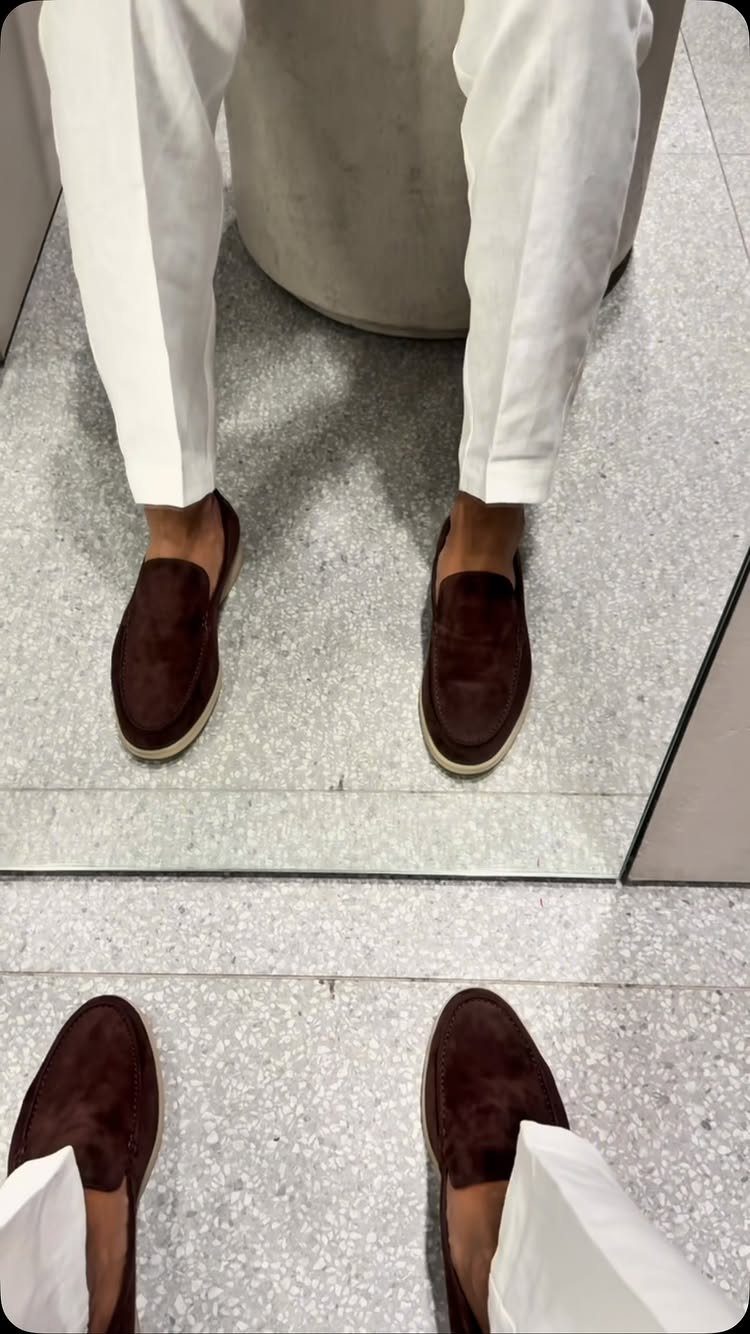
Dark brown is the safest answer to this question. Against white trousers it gives the strongest contrast of the 3 earth tones, and it goes with nearly any shirt or jacket you already own.
If your week leans toward the office, a smooth leather in the same dark brown dresses it up a notch.
Make sure the trousers are clean and pressed, since dark shoes draw the eye straight down to the hem. A small break or a slight crop keeps the shoe visible.
4. Navy Blue Loafers
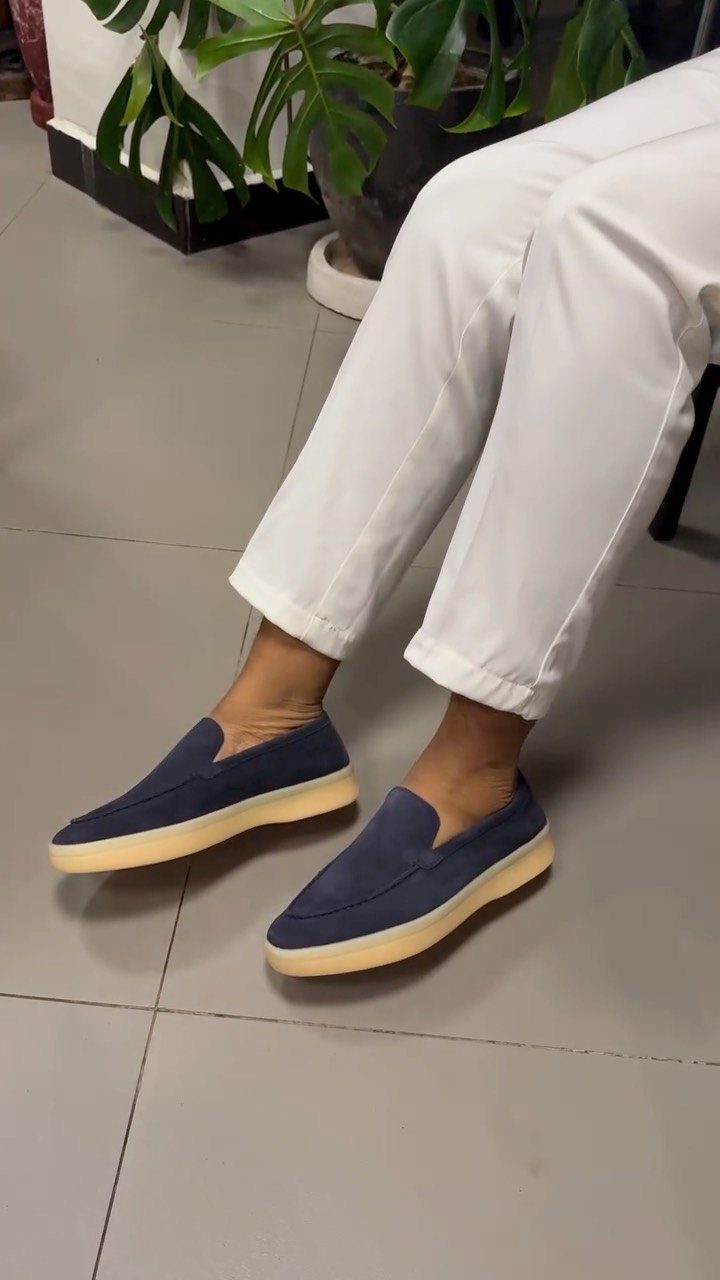
Navy slip-on loafers with cream soles are my pick if you want something less obvious than brown.
The cream sole echoes the white of the trousers, which ties the shoe to the outfit instead of leaving it as a dark block at the bottom.
Navy also sits well with a blue shirt or a navy knit on top, so the colors repeat from head to foot. Wear them with no socks or with low-cut ones that don’t show.
Stick to a cream sole. A black one would cut the look off hard at the ankle.
5. Black Leather Dress Shoes
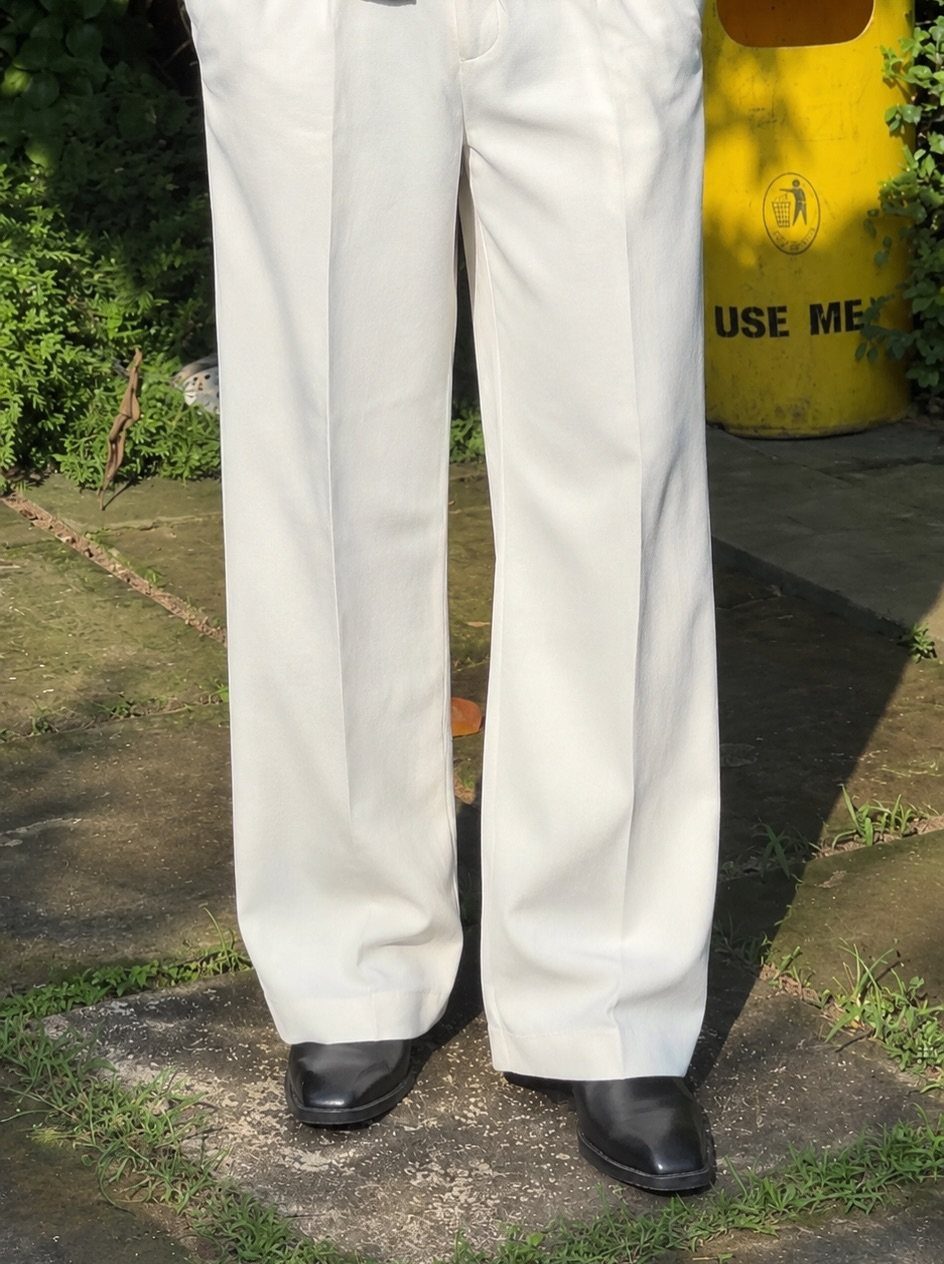
Polished black leather dress shoes against wide-leg white trousers is the boldest pairing here, and the most formal. The contrast is sharp, so it suits evenings, events and offices more than a weekend errand.
Wide legs need length to look right. Let the hem fall to the top of the shoe with a slight break, so the fabric doesn’t swallow it.
Keep the shine up, because scuffs show on black against white. A quick buff before you leave does it.
If this feels too stark, brown is the softer move.
Choosing the Right Style
Tailored trousers and a jacket call for a clean, minimal shoe with little stitching, no chunky sole and no loud branding.
Under a suit, men have worn lace-ups for generations: oxfords, wingtips and derbies are the usual picks. Loafers now show up at formal and semi-formal events too, and a white penny loafer works with gray suit pants.
A minimalist white sneaker also works with tailoring, as long as it stays plain.
The hem of your white pants, ideally cropped to hit at or just above the ankle, marks the line between smart and casual, and it keeps the shoe visible.
Sure, you’re probably well aware that flip-flops aren’t the perfect foil for a tailored three-piece (unless you want to be forcibly ejected from every wedding/job interview/funeral you ever find yourself in), but other footwear pitfalls are less obvious.
Maintaining White Shoes
Scuffed, dirty shoes will hurt a white-pants outfit faster than a questionable color choice, whatever shade you pair them with. A pair that looks scuffed or gray makes the pressed trousers above it look careless.
Wipe them down after each wear, before marks set in. Do it at home rather than in the hallway on the way out the door.
Match the care to the material. Smooth leather and clean minimal sneakers wipe off easily, while suede needs a dry brush and a protector spray.
Rotate between 2 pairs if you can. Shoes that rest a day between wears hold their shape and stay fresher.
If a pair is past saving, retire it. A worn white shoe does more harm than wearing no white at all.
Color Coordination
Keep the outfit’s colors in one family so nothing fights for attention. Pick two or three shades and repeat them from top to bottom.
A darker top balances a light shoe. Navy, charcoal or deep green on your upper half keeps the eye from landing only on the bright pair at the bottom.
Watch the metals and leathers too. Your belt, watch strap and shoes should sit in the same tone, such as brown with brown.
If the shoes are the loudest piece, quiet everything else. Solid colors beat busy patterns in that case.
Frequently Asked Questions
What colors look good with white shoes?
Neutral shades such as beige, tan and light blue pair well with white. Stick to 2 or 3 shades from one color family and repeat them from head to toe, so no single piece pulls the eye away from the rest.
Can I wear white pants in the fall?
Yes, as long as you move everything else you wear toward darker tones. Dark brown shoes in smooth leather also suit cooler days, and clean, pressed trousers keep the look sharp.